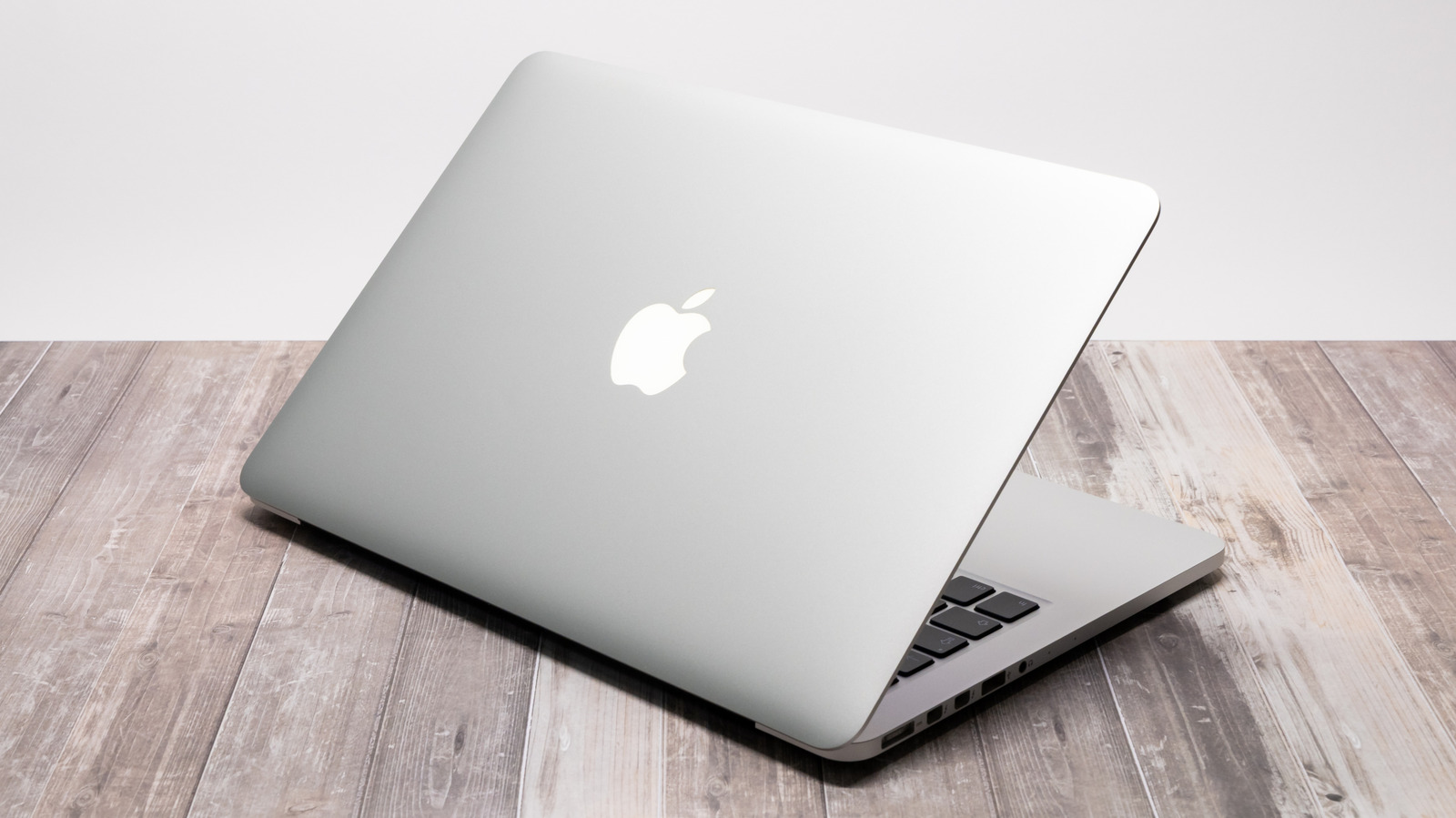
Apple’s MacBooks have iconic designs that competitors have been trying to replicate for years. They’re easy to recognize in schools, coffee shops, and offices, even though the company tweaked the MacBook design over the years to make the laptops thinner and lighter, while improving the performance significantly. In the ongoing process of refining the MacBook Pro and MacBook Air, Apple has made various decisions that buyers weren’t happy with, like removing all the ports except for USB-C from certain versions and introducing new keyboard designs. Apple also ditched one of the signature features of MacBook design, the glowing Apple logo on the lid that gave MacBooks a unique appearance. The removal of the logo was a consequence of Apple’s need to make thinner laptops than before. More than a decade has passed since the first MacBook model without a glowing logo debuted, and this design feature seems unlikely to return any time soon.
It all started with the radical 2015 MacBook design that introduced several concepts that the MacBook Pro and MacBook Air would inherit in the following years. The 12-inch model was Apple’s thinnest and lightest laptop ever, made possible in part thanks to a super-thin, energy-saving Retina display with a thickness of just 0.88 millimeters (0.034 inches). As for the Apple logo on the lid, Apple noted that the top case featured a stainless steel Apple logo, but did not explain directly why the MacBook lacked the glowing option that was still available on the MacBook Pro and MacBook Air models launched at the same time.
How the glowing Apple logo works
Apple introduced the glowing Apple logo on the PowerBook G3 Lombard way back in 1999. The way the logo worked was extremely simple. Rather than using a dedicated light source for the logo, Apple used the display backlight, which illuminated the screen when the laptop was in use, to shine through a cutout on the lid. Initially, the logo favored the user, who would see the apple cutout right-side-up when opening the lid. In 2001, Apple changed the orientation of the logo, so the glowing apple would be upright for people observing the laptop from the backside when the lid was open. Suddenly, Apple laptops used in public places would promote the company indirectly. Anyone looking at the logo would know exactly what it meant.
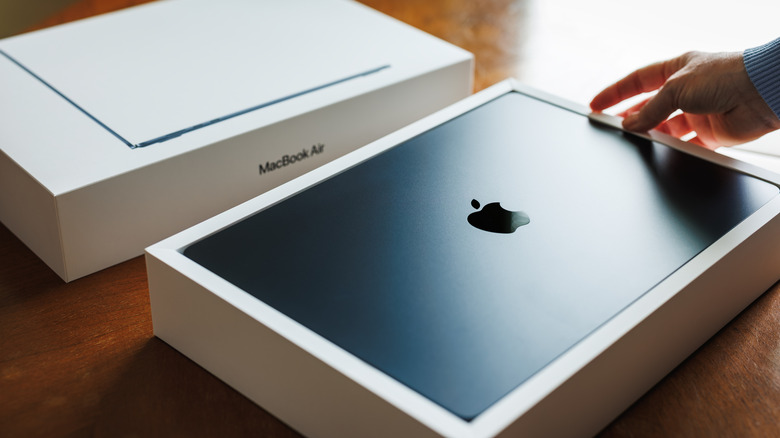
While Apple didn’t address the removal of the white glowing logo when it introduced the 12-inch MacBook in 2015, the implication was that the thinner screen design, which Apple emphasized, required this sacrifice. The MacBook Pro lost the glowing logo in 2016, when Apple introduced a brand new design for this laptop line, with the company also touting it as the most lightweight Pro design to that point.” In 2018, Apple introduced a new MacBook Air design, which also featured a stainless steel logo.
One can also assume that Apple wanted more uniformity when it comes to logos displayed on its products. The iPhone and iPad never had glowing logos on the back. Instead, the smartphones featured logos displayed on metal or glass (depending on the rear panel’s material), while the tablets had metallic logos. As of this writing, all iPhone, iPad, and MacBook models Apple sells feature non-glowing logos.
Why the glowing logo’s return seems unlikely
The 2015 MacBook didn’t just remove the glowing Apple logo. It introduced the butterfly keyboard and the fanless design. The laptop also featured a single USB-C port, a smaller logic board, and a terraced battery. Apple used these concepts in the 2016 MacBook Pro and 2018 MacBook Air that followed. The 2016 Pro featured a Touch Bar with Touch ID, dropped all ports in favor of USB-C, and came with a butterfly keyboard. The 2018 Air got the thin Retina display, Touch ID support, and butterfly keyboard, and came only with Thunderbolt ports. In 2020, the M1 MacBook Air was the first in the series to ship without a built-in fan. MagSafe support was also gone from all these models.
Apple eventually fixed some of the issues resulting from the changes above. In 2019, it launched a new keyboard design to replace the butterfly model. In 2021, it introduced a redesigned MacBook Pro that brought back MagSafe support and the other missing ports. The 2022 MacBook Air redesign brought MagSafe support to Apple’s thinnest laptop. But the glowing Apple logo never returned, as the MacBook stayed thin and slim.
Apple’s next major MacBook redesign may drop in late 2026 or early 2027, when the M6 MacBook Pro is slated to introduce an OLED panel and a touchscreen display. The glowing logo isn’t rumored to return, but if it were to come back, it would need its own illumination source. OLED screens do not feature a backlight, as each pixel lights up independently. Also, the M6 MacBook Pro models may be even thinner, which means the lid could be even slimmer than on current models. In such a scenario, it may be even more difficult to bring back the glowing white logo.