A digestible intro to procedural generation, occlusion maps, and ray tracing.
If you don’t live under a rock, then you may have heard of the rock-climbing game PEAK. This breakout indie hit, primarily crunched out from a one-month Airbnb stay in Seoul1, has since seoul-ed over 10 million copies.2
Much of the game’s success can be attributed to its replayability.
See, the goal of PEAK is to survive as you traverse six different biomes to get to the highest peak on an island to call for rescue. However, the layouts of these biomes (aside from the starting Shore and ending Peak) are completely different every day.
This means, every 24 hours, players are incentivized to tackle a brand-new 3D world.
It’s a genius design that keeps the main gameplay mechanic of climbing intact while ensuring that the game maintains addictively fresh.
But how does PEAK do this? And how does it do this without absolutely destroying your computer?
A Whole New World
It’s actually more simple than it seems.
Every single island is pre-made by the developers and shipped off during game updates. This means, players already have the maps installed on their devices, each taking up about 100 MB of data. Because these maps are so heavy, the game currently has 14 of those daily maps on file.3
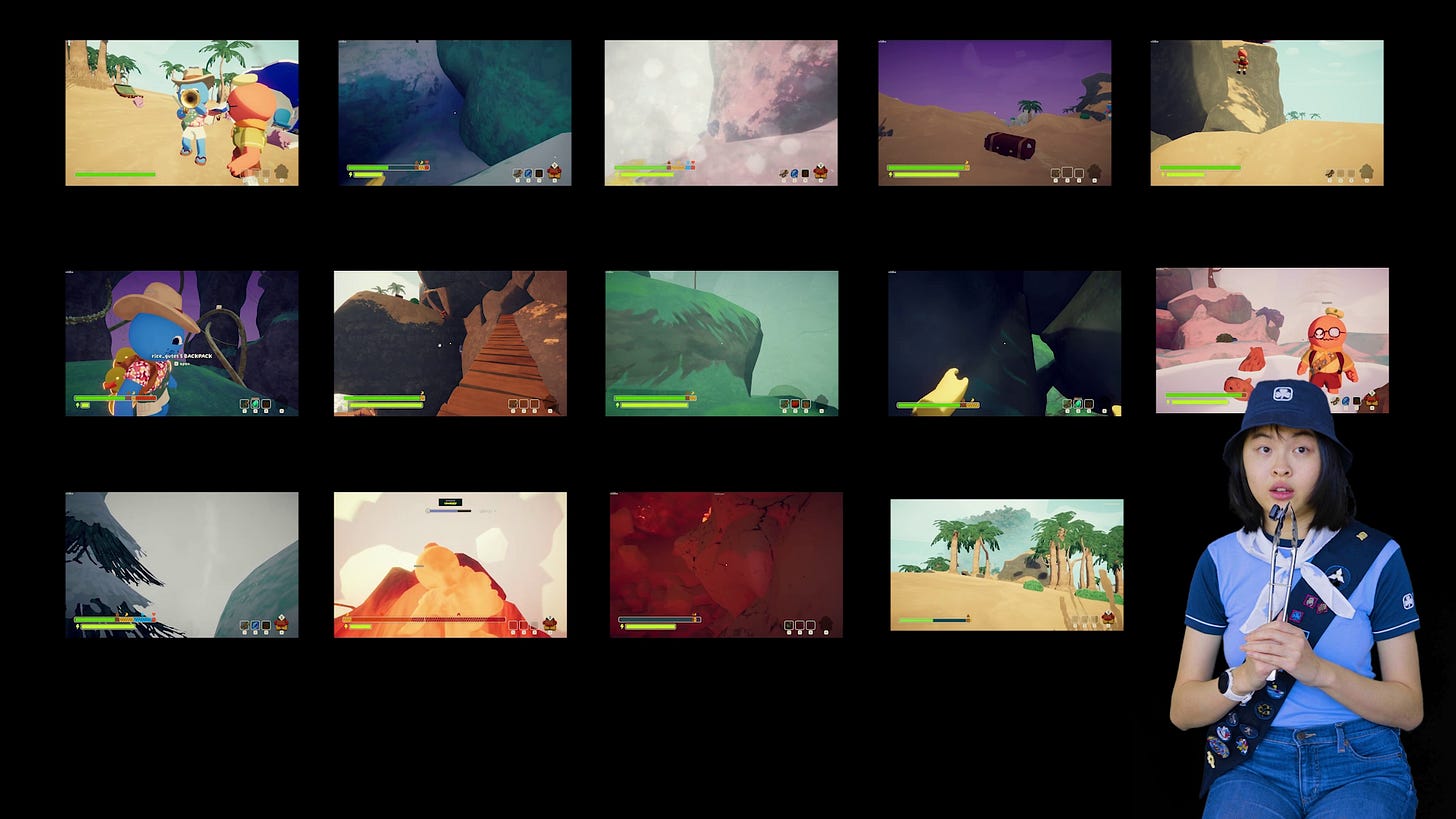
Then, at 17:00 UTC, one of these maps is chosen to be the Map of the Day.4
Now, are the PEAK developers locked in a basement, making each of these maps manually?
Nope! (At least, not according to my sources.)
In fact, there’s a pretty streamlined process for how they do it, and they don’t even perform quality control. Each terrain is randomly generated and not tested for climbability.5
So how do they do it? And how has every island so far been climbable?
Procedural Generation
There’s an entire chain of command for the parts of the island that are randomly generated.
First, each map has a base terrain. It’s a huge, mostly flat staircase that goes from level one (Shore) to the final level (Peak). This base terrain is always 1920 metres tall in in-game metres, and 1200 Unity metres tall in game-engine metres.6
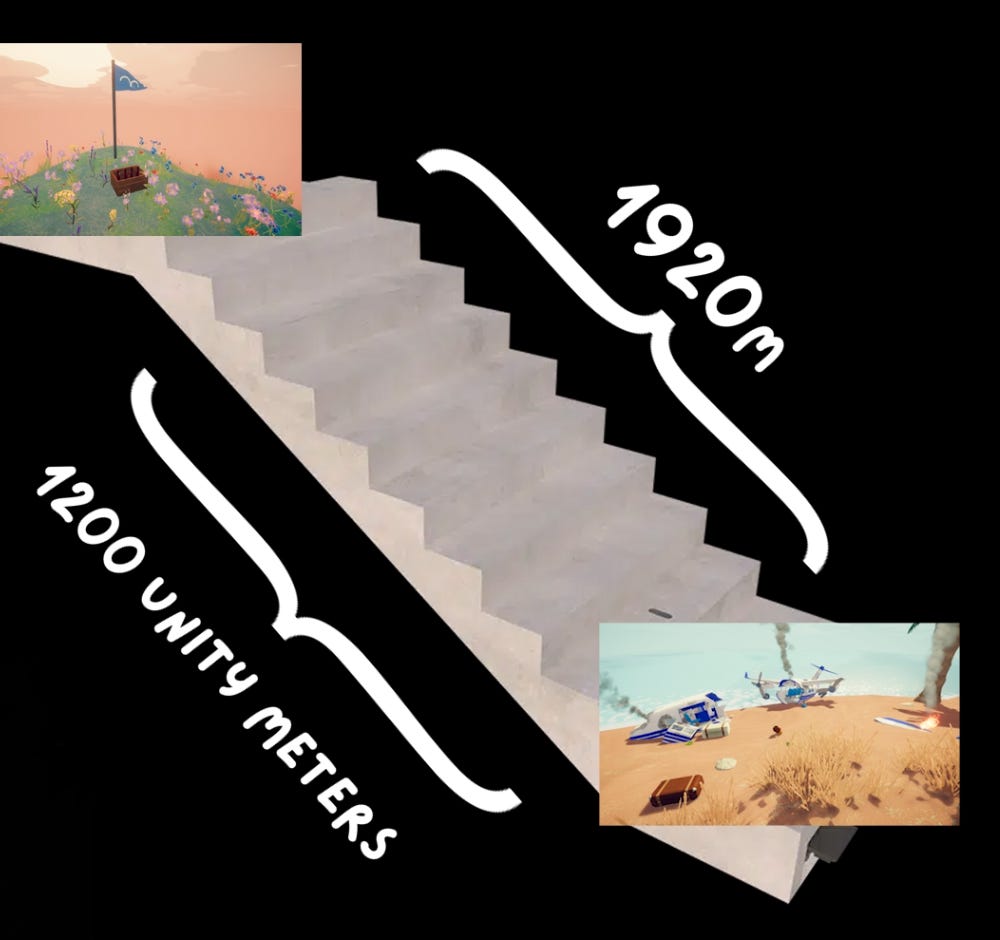
Then, the biomes are populated. Each biome has its own set of spawners, and each spawner is responsible for creating a certain item. Spawners have their own rules for 1) Where on the base terrain they can spawn, and 2) How many of its item to spawn.
One by one, this army of spawners layer on the base terrain by orders of magnitude. Biggest rocks first (impossible to climb), then medium (hard to climb), then small (easy to climb). One of the last spawners to make its move is the luggage spawner, which as players know, offers all the tools and power-ups you need to get to the Peak.7
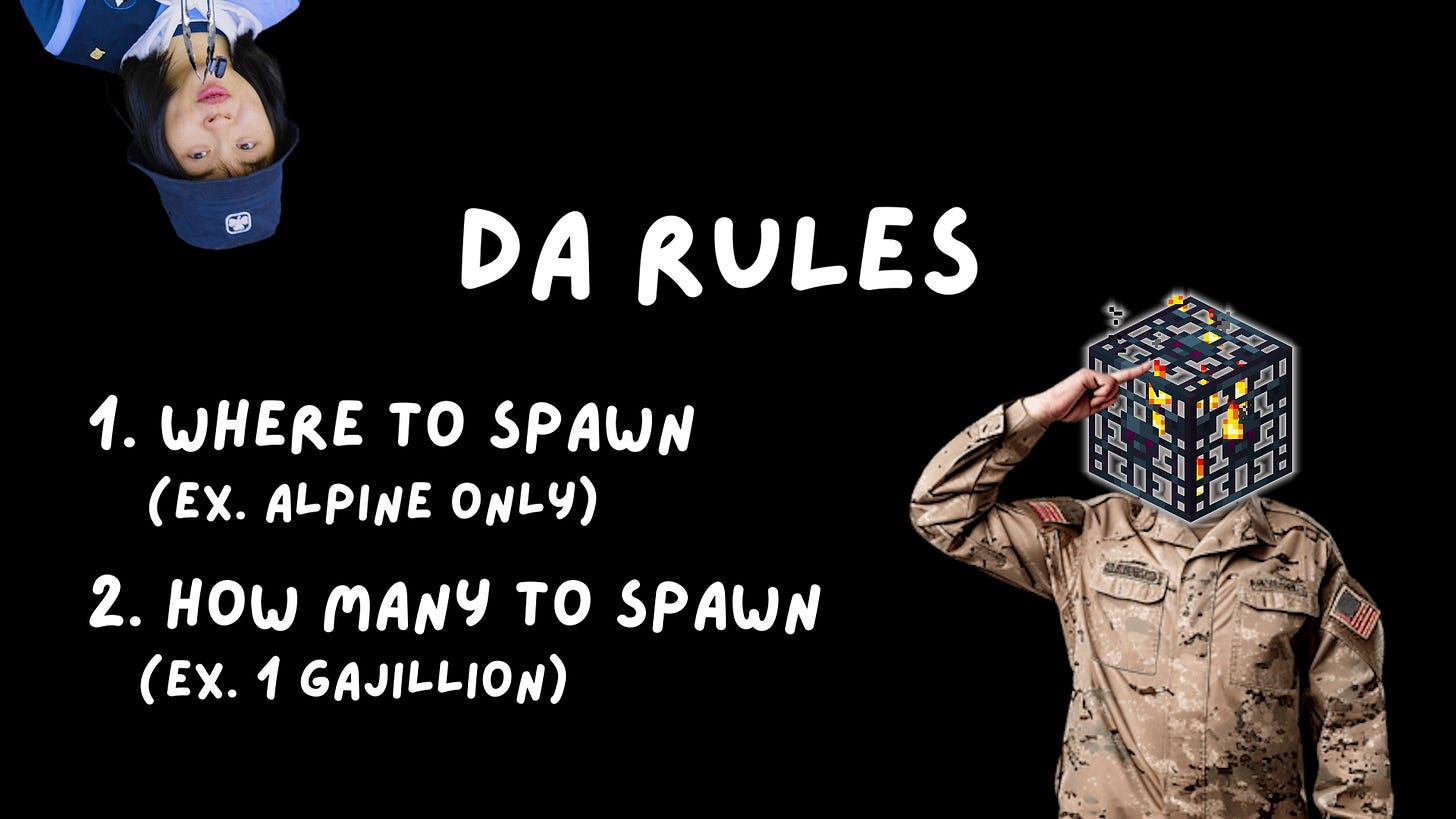
This kind of algorithmic creation and placement of items within a game is known as procedural generation, and is used in many games you may know, such as Minecraft or No Man’s Sky.
However, procedural generation does come with some risks. There may be a day when the island spawners create a map that is not climbable!
Why Pre-Make and Generate?
But why is it that these maps are pre-made and hide within game files, instead of say, generating on the fly?
Hardware limitations.
(Well, you know what they say, constraints fuel creativity.)
The hardware limitation in question is RTX, Nvidia’s platform for real-time ray tracing technology.

It’s a very important concept in modern gaming for rendering light. Essentially, ray tracing simulates how real-world light would bounce off objects within a digital scene. These simulations are used to create beautifully realistic visual effects, from reflections to shadows to, of course, light.
In PEAK, RTX is used to generate an occlusion map. An occlusion map is a shader that falls on your 3D objects and tells you which areas should be lighter and which areas should be darker.8
Aside from lighting up the island, this map is absolutely necessary for the entire gameplay experience.9
The PEAK developers use the occlusion map to determine many things, such as the strength of an echo that hits your ears, or the positioning of certain plants (a pine tree wouldn’t spawn inside a dark cave), or the amount of damage you take from a blizzard in a certain spot, which means that without this RTX-rendered map, PEAK is basically unplayable.10
And of course, not everyone has an Nvidia GeForce RTX lying around to generate these maps on their own, considering how sky-high prices are right now. Thus, the PEAK developers pre-made the maps for you, and simply change the maps each day.
Verdict
In conclusion, a combination of hardware limitations and a smart procedure of random generation are the magic formula behind this breakout indie game’s wonderfully climbable 3D worlds.
I’ve linked my sources below, but if I got anything wrong, please let me know (bars).
P.S. This article is an accompaniment to our YouTube video breakdown of PEAK. You can check it out below if you want!