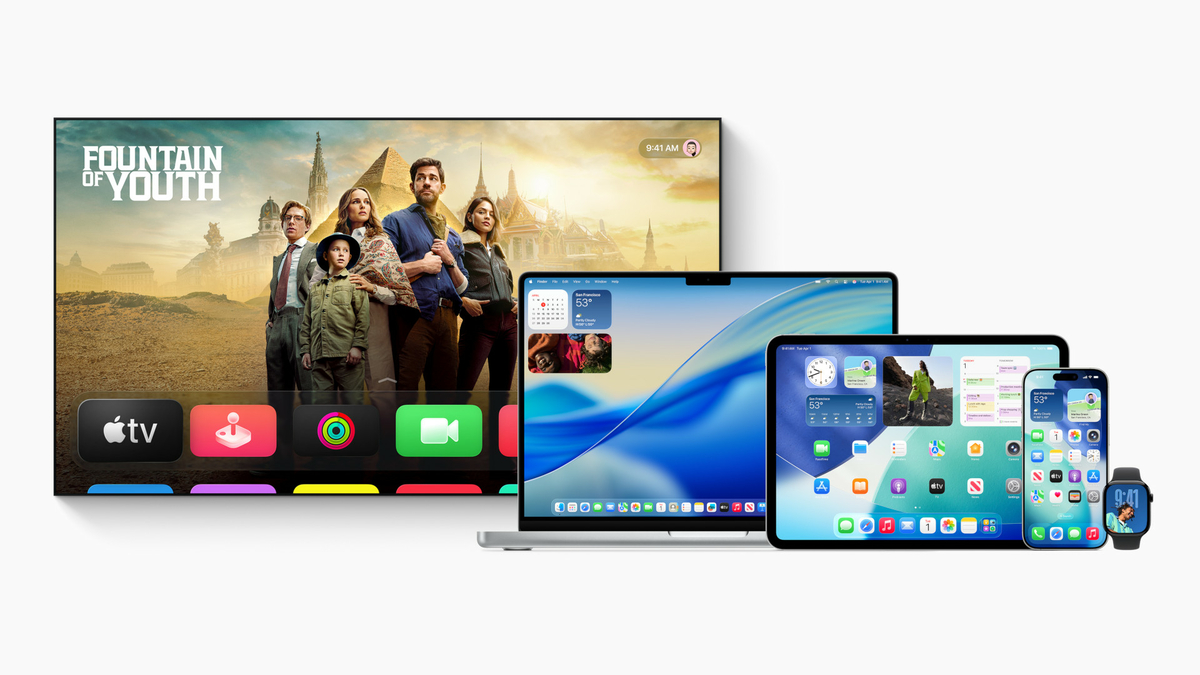
Introduced with macOS 26 Tahoe, the design Liquid Glass d’Apple garnered far more criticism on the Mac than on the iPhone or iPad. The main reason lies in material inadequacy.
The interface, with its transparency effects and shadows, was designed for OLED screens, while the majority of Macs still use less efficient LCD panels for this type of visual rendering.
A Liquid Glass interface that poses a problem on Mac
macOS 26 Tahoe users quickly noted issues with readabilityespecially in text-heavy areas like Control Center, Finder, or apps with sidebars.
Transparency effects and shadows, which are less well rendered on LCD screens, can reduce the clarity of text and create some visual confusion.
According to Bloomberg’s Mark Gurman, this is not a fundamental design problem, but rather a ” not completely successful implementation by Apple’s software engineering team “.
Changes expected in macOS 27
Apple is preparing what is described internally as a slight redesign for macOS 27. Far from removing Liquid Glass, Mark Gurman emphasizes that the update must specifically correct ” oddities of transparency and shadows ” which have been singled out.
More generally, the next major updates to Apple’s operating systems should focus on bug fixes, improving performance and autonomy.
This is an approach that Apple has already used in the past, notably after the major overhaul of iOS 7 in 2013.
Without forgetting the place of generative AI
The other major area of development for Apple’s operating systems is AI. Apple plans a significant Siri redesignwith a new dedicated application and an interface closer to an AI chatbot.