The fantasy of the robot butler comes closer, but the reality is, as is often the case, more complex. The company Weave Roboticsfrom the famous startup incubator Y-Combinator, has just announced the upcoming marketing of its Isaac 1 model. The idea? A mobile assistant on wheels, capable of tackling the most daunting chores. These are no longer simple laboratory prototypes. Marketing is announced for this fall. But behind the promise of an impeccable interior hides a hybrid mechanism which already challenges and divides.
What are the concrete promises of Isaac 1?
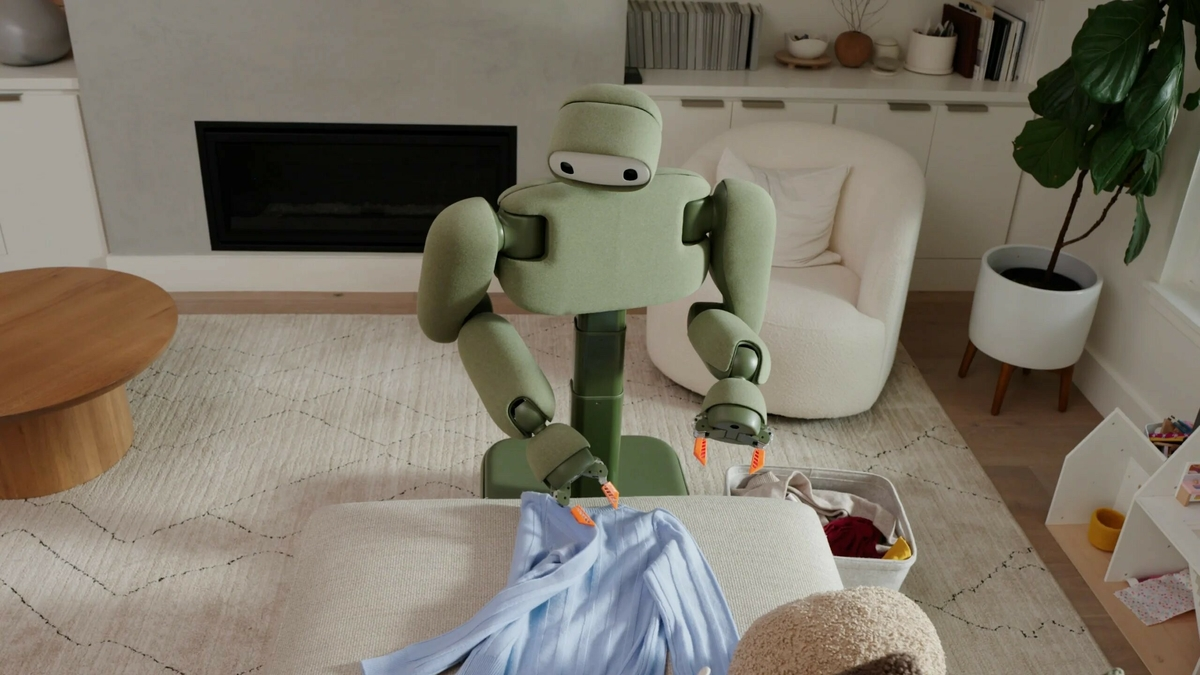
On paper, Isaac 1 has it all. This device, which looks like a robot vacuum cleaner topped with a telescopic torso and two gripper arms, is designed for very specific tasks. He patrols your home, picks up the toys lying around, puts the cushions back on the sofa and even tackles folding the clean laundry. The robot can adjust its size from 0.9 to 1.75 meters and moves on casters, allowing it to cover the entire home. Its design, with a fabric covering and a screen-shaped “face”, aims to make it less intimidating than a metal skeleton. An attempt to have it accepted as just another household appliance.
However, the sector of domestic robotics is a graveyard of broken promises. Isaac 1 has yet to prove that he can handle the complexity and variety of a real household. Managing different fabrics, unexpected shapes of objects… that’s the real challenge. The transition from an ultra-controlled demonstration video to reliable everyday performance is a technical chasm. Early feedback already describes it as “slow” and “clumsy.”
How does this hybrid system between AI and human work?
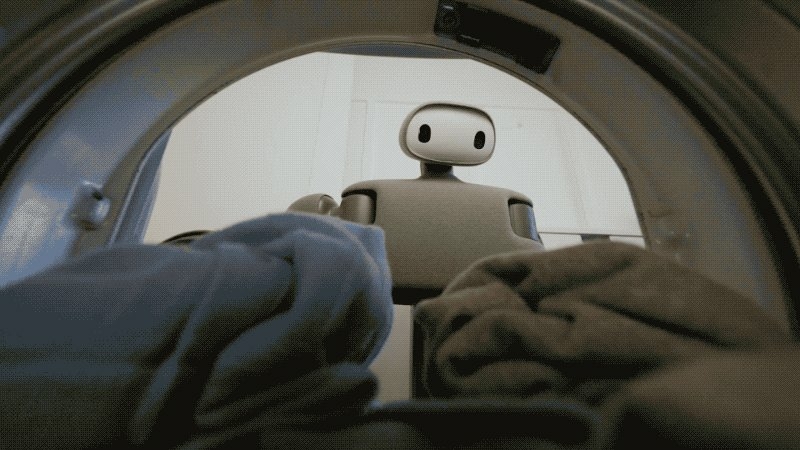
Weave Robotics admits it bluntly: 100% autonomy is a mirage. When Isaac 1 finds himself stuck facing an item of clothing that is too complex or a new situation, the system sends an alert. A human operator, an employee of the company, then takes remote control via the robot’s cameras to carry out the delicate manipulation. An intervention lasting a few seconds, before handing over to the AI. It is a human patch to overcome the weaknesses of the algorithm.
This approach raises a massive privacy issue. Having a stranger who can, at any time, look inside your home is a disturbing concept to say the least. The company assures that the field of vision is limited and that physical flaps on the robot’s “eyes” indicate its active status. A guarantee that seems very thin. This is the blind spot of this vision of the future: accepting a potential intrusion so that you no longer have to fold your socks. A compromise that not everyone will be willing to make.
Is the price justified compared to the competition?
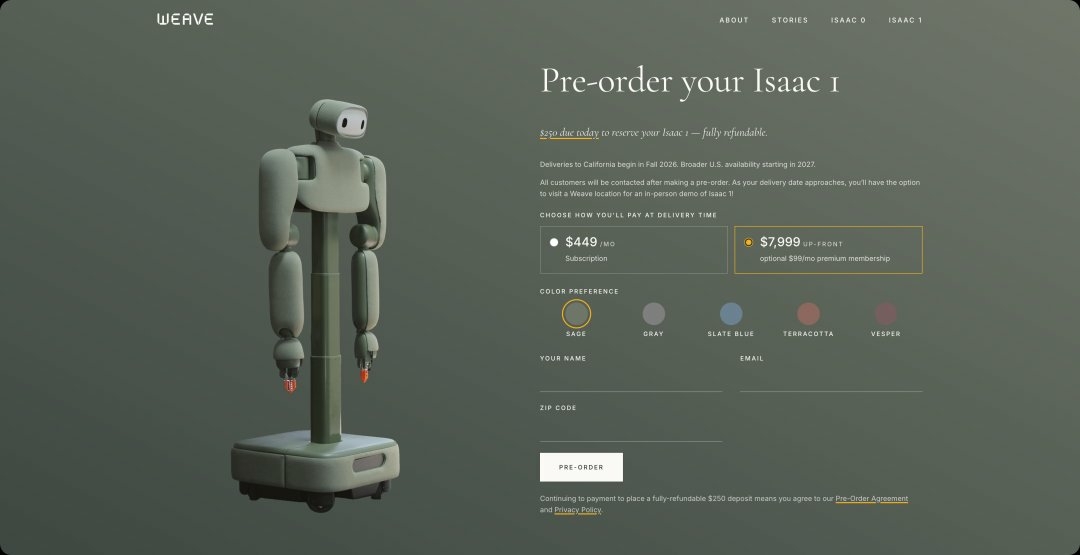
With a price listed at $7,999 for purchase, or $449 per month for subscription, Isaac 1 is clearly not for all budgets. It’s a luxury product. However, it is aggressively positioned against competitors like the Neo from 1X (more than 17,500 euros) or the Optimus from Tesla, the price of which is not yet known. The challenge for artificial intelligence embodied in these machines is to prove its added value. Why spend that much when a human laundry service costs around $30 an hour in Silicon Valley?
The calculation is quickly done. The investment in Isaac 1 represents an astronomical hourly cost for the few hours of folding laundry per month. The real target is undoubtedly wealthy “early adopters” and technology enthusiasts, ready to face the challenges of an emerging technology. Weave Robotics’ bet is that this full-scale test phase, financed by the first customers, will make it possible to collect the data necessary to make its AI truly autonomous. A bold strategy that focuses on the appeal ofautomation of household choreswhatever the initial cost.
Frequently Asked Questions (FAQ)
What if I don’t want a human to see inside my house?
Weave Robotics ensures that the robot’s cameras have physical covers to indicate when they are active. However, if the robot requires human intervention to operate, there is no option to disable this functionality, which is central to its current operational model.
Will Isaac 1 soon be available in France or Europe?
For now, no. The launch planned for fall 2026 is exclusively reserved for the American market. No date for international deployment, particularly in Europe, has been communicated by the company.
Is it a humanoid robot like Tesla’s Optimus?
No. Unlike humanoid robots that imitate human bipedalism, Isaac 1 is designed as a “device”. It moves on casters and its body is telescopic, a design more focused on function and integration into a domestic environment than on imitating the human form.