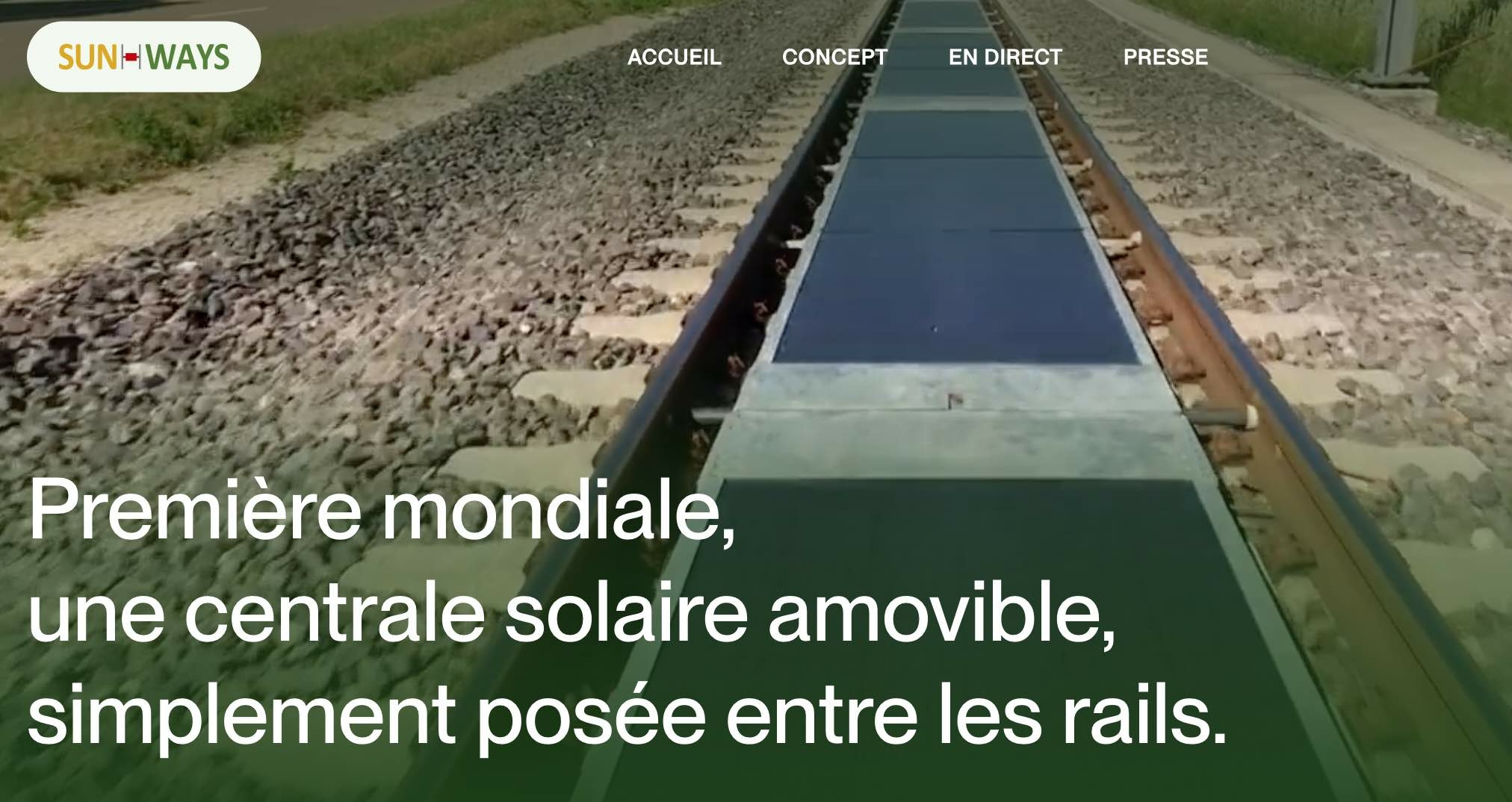
The concept, developed by the Swiss start-up Sun-Ways, is based on a simple but powerful idea: using the unexploited space between the rails to install photovoltaic panels. These panels, specially designed to withstand the constraints of rail traffic, are installed directly on the sleepers. A mechanical system developed by maintenance company Scheuchzer allows them to be deployed or removed quickly, at a rate of almost a thousand square meters per day, ensuring that track maintenance is not compromised. This approach makes it possible to generate electricity without consuming new land, by reusing a existing infrastructure.
How does this technology work at scale?
The pilot project, although modest with its 100 meters of equipped rails, demonstrated a energy potential considerable. Sun-Ways believes that if the entire rail network Switzerland of 5,317 km was equipped, annual production could reach around one terawatt hour (TWh). This quantity of electricity would represent almost 2% of the national electricity consumption of the country, equivalent to the needs of around 300,000 households.
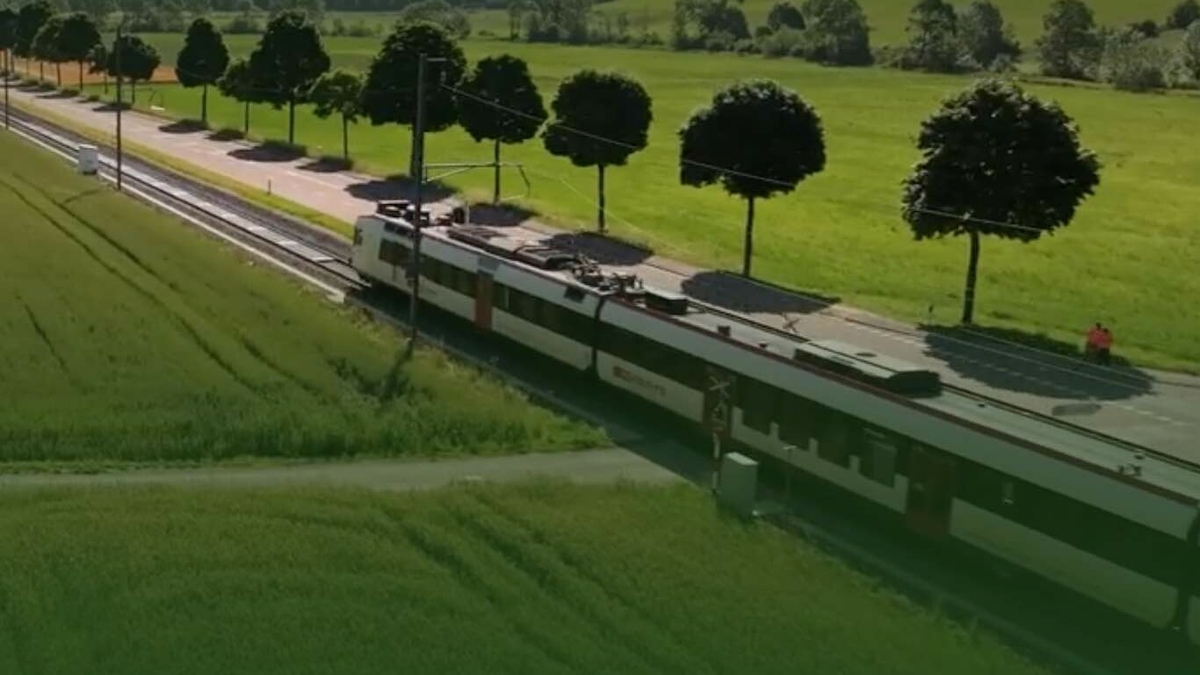
Solar panels deployed on an operating railway line in Switzerland.
Credits: Sun-Ways
For now, the electricity produced is injected directly into the local network, but the company is already working on solutions to directly power railway substations or even the train traction line. The long-term objective is to create an almost self-powered railway, a major step forward for the sustainable mobility and the energy autonomy of public transport.
What are the guarantees of safety and effectiveness?
Before getting the green light, Sun-Ways had to address legitimate safety concerns. securityin particular the risks of micro-fissures due to vibration, fire or driver distraction due to reflections. To counter these problems, the panels are more robust than roof models and are equipped with a anti-reflection filter. Built-in sensors continuously monitor their condition, and brushes attached to the trains clean their surface automatically, ensuring optimal operation.
Regarding theenergy efficiencythe flat position of the panels results in loss of production estimated at only 10% compared to an ideal inclined installation. Despite this, the pilot project Suisse generated around 16,000 kWh in a year, enough energy to power an average all-electric home in the UK for an entire year, proving the viability of the model.
What is the future of this technology in Europe and beyond?
The Swiss success quickly attracted international attention. L’Italy is now positioning itself as the next country to experiment with this technology. Sun-Ways has signed a collaboration contract with a Italian business partner in connection with Rete Ferroviaria Italiana, the manager of the national network. A pilot project is expected to be announced in the coming months, marking a key milestone for the deployment on a larger scale.
But the interest doesn’t stop there. Discussions are underway with the Netherlands, China, India and Singapore, while the South Korea has already given government approval for a similar facility. In France, SNCF has also signed a cooperation agreement. The main obstacle remains the regulatory challengeswith authorization in Switzerland taking almost three years, highlighting the need for more agile experimentation frameworks for such innovations.