By using this site, you agree to the Privacy Policy and Terms of Use.
Accept
World of SoftwareWorld of SoftwareWorld of Software
  • News
  • Software
  • Mobile
  • Computing
  • Gaming
  • Videos
  • More
    • Gadget
    • Web Stories
    • Trending
    • Press Release
Search
  • Privacy
  • Terms
  • Advertise
  • Contact
Copyright © All Rights Reserved. World of Software.
Reading: AI Agents Are Great at One Thing at a Time. Life Isn’t Built That Way. | HackerNoon
Share
Sign In
Notification Show More
Font ResizerAa
World of SoftwareWorld of Software
Font ResizerAa
  • Software
  • Mobile
  • Computing
  • Gadget
  • Gaming
  • Videos
Search
  • News
  • Software
  • Mobile
  • Computing
  • Gaming
  • Videos
  • More
    • Gadget
    • Web Stories
    • Trending
    • Press Release
Have an existing account? Sign In
Follow US
  • Privacy
  • Terms
  • Advertise
  • Contact
Copyright © All Rights Reserved. World of Software.
World of Software > Computing > AI Agents Are Great at One Thing at a Time. Life Isn’t Built That Way. | HackerNoon
Computing

AI Agents Are Great at One Thing at a Time. Life Isn’t Built That Way. | HackerNoon

News Room
Last updated: 2026/03/17 at 6:40 AM
News Room Published 17 March 2026
Share
AI Agents Are Great at One Thing at a Time. Life Isn’t Built That Way. | HackerNoon
SHARE

By: Meredith Bradford

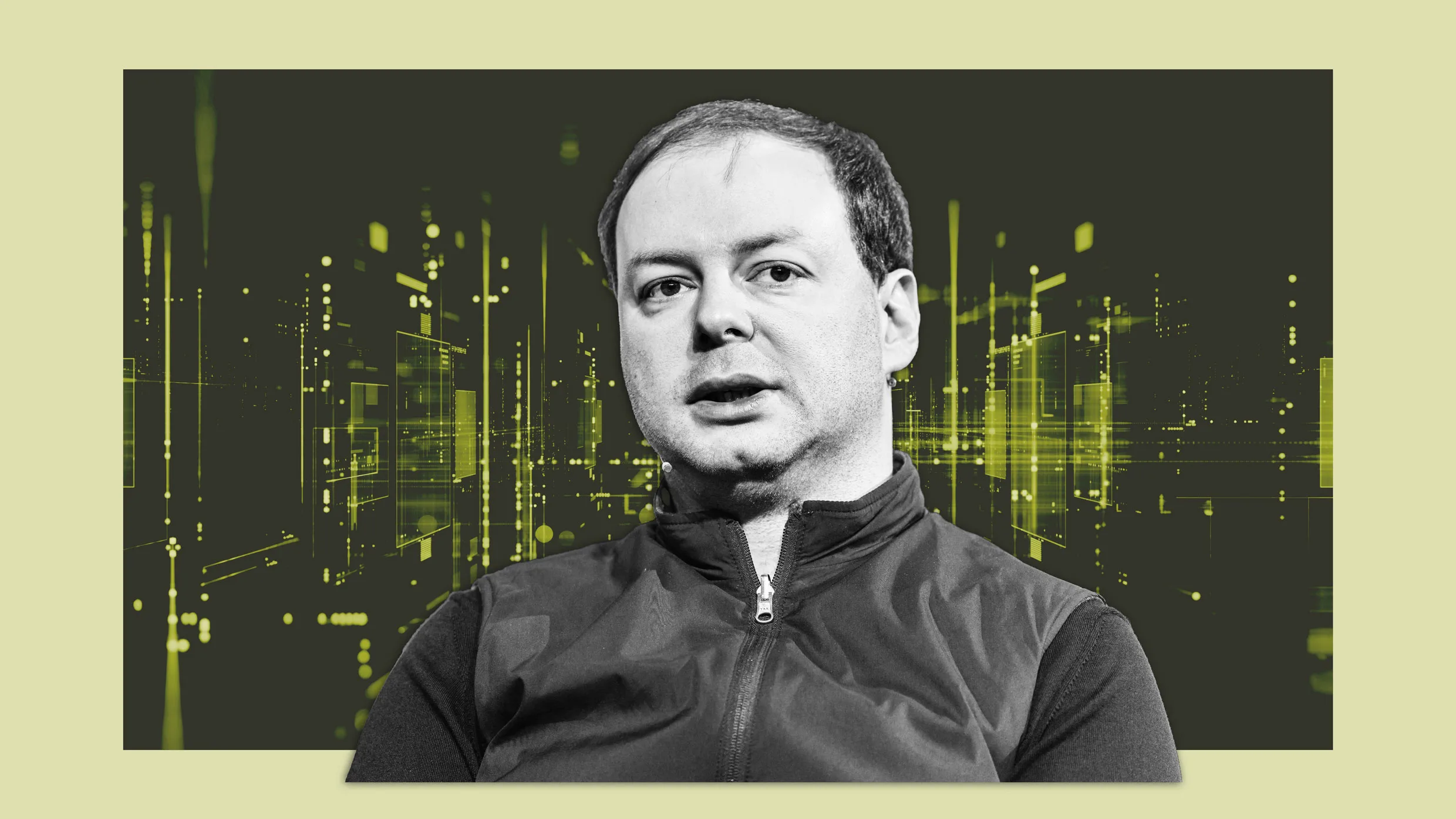
Photo Courtesy of Tethral

Your AI agent can turn on a light. It can check your calendar. It can set a timer. Each of those is a solved problem. But when you say “leaving in five minutes” and the house needs to arm security, step down lighting, adjust climate to away mode, kill the media, and queue a morning state for when you get back, no single agent call handles that. You need coordinated execution across five or six protocols simultaneously, and that is where the current stack falls short.

Where the Protocols Run Out

MCP gives agents structured access to APIs. A2A lets agents delegate to each other. OpenClaw is building open standards for translating agent skills into real-world activity. Each of these solves a real slice of the problem. But when the target is a Zigbee light, a Matter lock, a proprietary HVAC controller, and a calendar API that all need to respond as one coherent action from a single natural language intent, you need something that sits across all of them. The individual connections exist. The orchestration layer does not, or did not.

Tethral is building one. It sits between user intent and a device landscape that includes major smart home ecosystems, common IoT radios, and web-based services, interpreting natural language and decomposing it into coordinated actions across whatever protocols exist in a given environment.

How It Actually Works

Execution is local-first. Automation logic runs on the home network rather than round-tripping through cloud, which matters when coordination needs to happen in milliseconds across protocols with different latency profiles. Cloud round-trips add enough variability that tightly timed sequences break down. Running locally keeps the timing deterministic.

Intent decomposition is the interesting architectural choice. A command like “hosting tonight” is not a single API call. It is a coordination graph: lighting scenes across rooms, climate adjustments, audio routing, notification suppression, possibly doorbell behavior changes. That graph is not predefined. It gets generated at runtime based on available devices, user history, and current environment state. Tethral does not run static automations. It composes them on the fly, which is a different architecture from scene-based systems like HomeAssistant routines or IFTTT chains. Those are preconfigured sequences. This is runtime composition.

Who Built This

John Lunsford, Tethral’s founder, came at this from the operations side before the research side. He worked as a security engineer with the Department of Justice, then moved into a senior AI and safety research role at a major technology company where he shipped consumer products and co-led the enterprise design partnership with OpenAI. He holds a PhD from Cornell with fellowships at MIT and Oxford, focused on autonomous system-to-society adoption. Beyond the platform itself, he designed Tethral’s own transformer architecture and coordination protocol built specifically for multi-agent, multi-device orchestration, a new control plane rather than an adaptation of existing ones. He writes about the orchestration problem in more depth on Tethral’s blog.

His take is that the home is a convenient test environment but the architecture is not home-specific. Orchestrating intent across five incompatible IoT protocols with local-first execution and runtime graph composition is a general coordination problem. The home is just where you can build it with real users and real devices.

Tethral has a working product and a partnership with the Connectivity Standards Alliance. Early stage, actively building. If you work on the boundary between AI reasoning and physical execution, it is worth a look.

:::tip
This story was distributed as a release by Jon Stojan under HackerNoon’s Business Blogging Program.

:::

Sign Up For Daily Newsletter

Be keep up! Get the latest breaking news delivered straight to your inbox.
By signing up, you agree to our Terms of Use and acknowledge the data practices in our Privacy Policy. You may unsubscribe at any time.
Share This Article
Facebook Twitter Email Print
Share
What do you think?
Love0
Sad0
Happy0
Sleepy0
Angry0
Dead0
Wink0
Previous Article Whoa: Nvidia’s DLSS 5 Can Make PC Games Look Real Whoa: Nvidia’s DLSS 5 Can Make PC Games Look Real
Next Article Miro’s CEO is betting AI will change how teams work Miro’s CEO is betting AI will change how teams work
Leave a comment

Leave a Reply Cancel reply

Your email address will not be published. Required fields are marked *

Stay Connected

248.1k Like
69.1k Follow
134k Pin
54.3k Follow

Latest News

The TechBeat: Google Antigravity: 20 Game-Changing Prompts for Complete Automation (3/17/2026) | HackerNoon
Computing
QCon London 2026: Your Multi-Cloud Strategy Is a Product Problem — Treat It Like One
News
The Oppo Find X9 Ultra could come with a serious zoom upgrade
Gadget
Intel Graphics Compiler 2.30.1 Exposes HF8 Support For Crescent Island
Computing

You Might also Like

The TechBeat: Google Antigravity: 20 Game-Changing Prompts for Complete Automation (3/17/2026) | HackerNoon
Computing

The TechBeat: Google Antigravity: 20 Game-Changing Prompts for Complete Automation (3/17/2026) | HackerNoon

7 Min Read
Intel Graphics Compiler 2.30.1 Exposes HF8 Support For Crescent Island
Computing

Intel Graphics Compiler 2.30.1 Exposes HF8 Support For Crescent Island

2 Min Read
Japan’s Nissan receives more than 20,000 non-refundable orders for China-specific N7 sedan · TechNode
Computing

Japan’s Nissan receives more than 20,000 non-refundable orders for China-specific N7 sedan · TechNode

1 Min Read
How Oyster’s AI turns a selfie into a skincare analysis
Computing

How Oyster’s AI turns a selfie into a skincare analysis

12 Min Read
//

World of Software is your one-stop website for the latest tech news and updates, follow us now to get the news that matters to you.

Quick Link

  • Privacy Policy
  • Terms of use
  • Advertise
  • Contact

Topics

  • Computing
  • Software
  • Press Release
  • Trending

Sign Up for Our Newsletter

Subscribe to our newsletter to get our newest articles instantly!

World of SoftwareWorld of Software
Follow US
Copyright © All Rights Reserved. World of Software.
Welcome Back!

Sign in to your account

Lost your password?