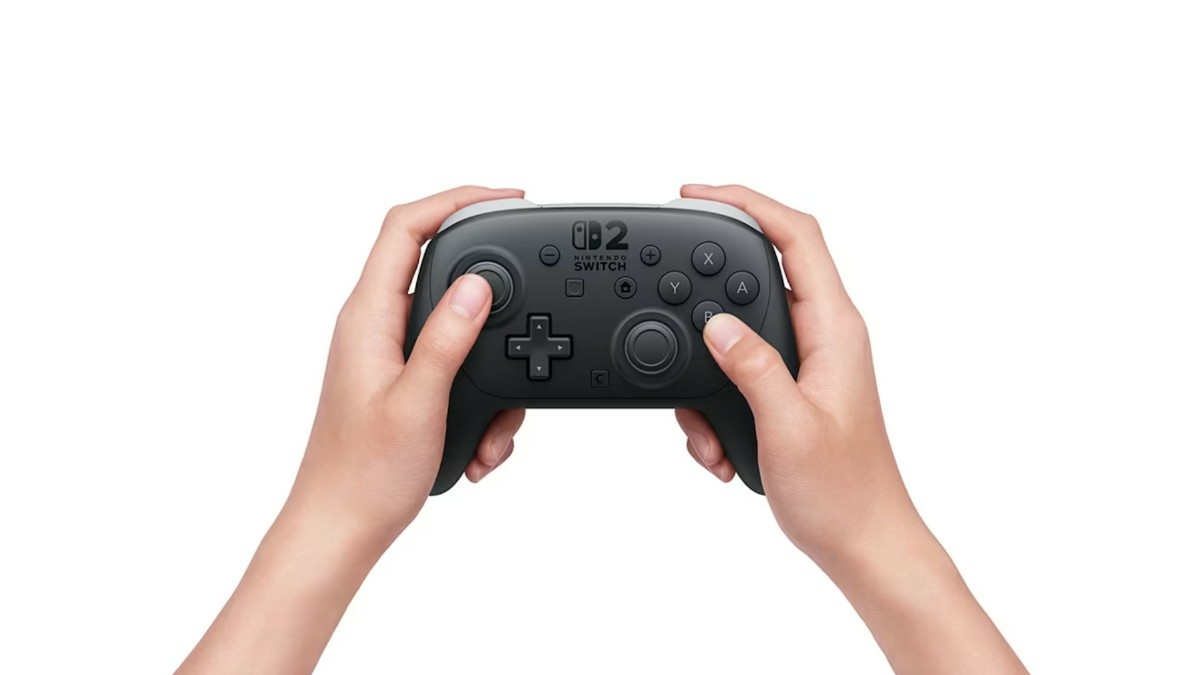
Barely on the market, and already the first glitches. THE highly anticipated Pro Controller Nintendo Switch 2an accessory considered essential by many players, is showing worrying signs of weakness. A Japanese content creator highlighted the problem after around 350 hours of gameplay: his left analog stick became sticky, his movement hampered by a abnormal friction. This is not the ghost of drift that haunted the first generation of the console, but a very different problem
What is the exact origin of this “stickiness” problem?
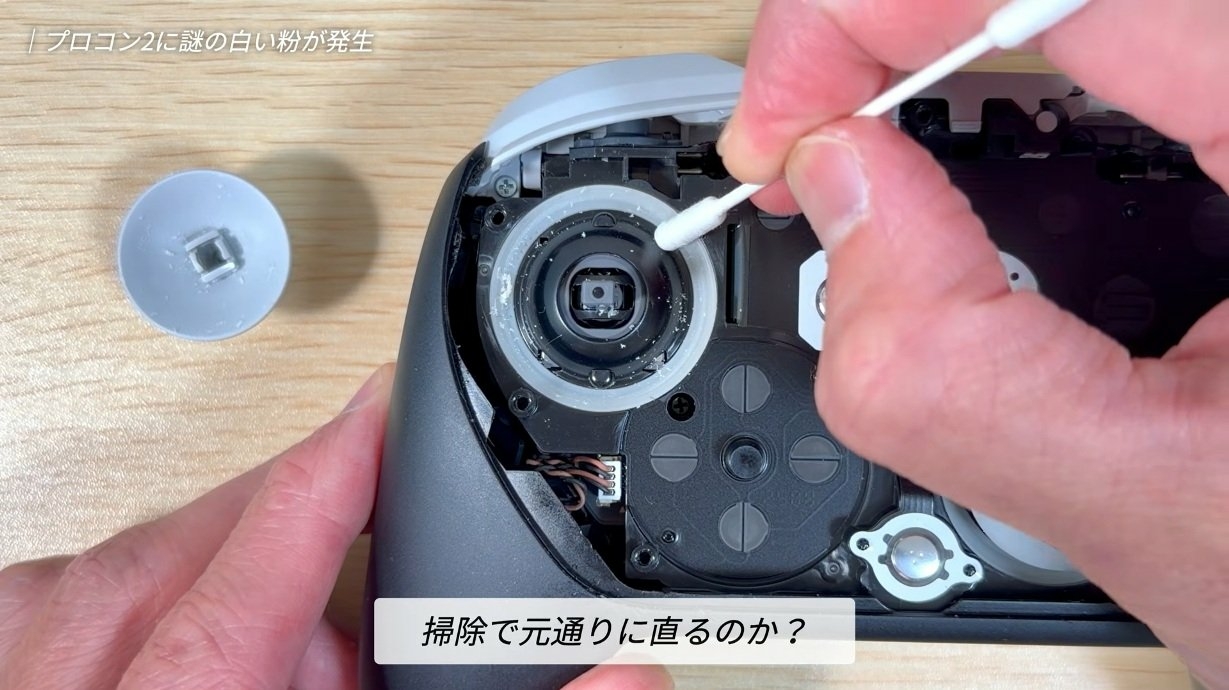
The culprit is not electronic, but mechanical. By disassembling his controller, the player discovered that the origin of the problem was nestled under the “mushroom” of the stick. A base ring, against which the joystick stem constantly rubs, wears prematurely. This wear generates fine glitter of plastic which accumulates and ends up seizing the mechanism. It’s simple, brutal and terribly disappointing for a premium accessory.
After using his Pro Controller 2 for ~350 hours, a Japanese content creator found small flaks on the left analogue stick (imgs 1-2), and the stick also felt a bit sticky around the circumference. He opened the controller and identified the culprit (imgs 3-4): 1/
— Nintendo Patents Watch (@ninpatentswatch.bsky.social) 2026-05-15T17:46:40.206Z
The most ironic thing about this affair is that the patents filed by Nintendo for the Nintendo Switch 2 Pro Controller explicitly mentioned a “wear-resistant” material for this part. However, it seems that in the final version, the manufacturer opted for a more flexible component. The probable reason? Reduce the noise of friction. A questionable arbitration which sacrifices durability on the altar of acoustic comfort.
Should you really be worried about the durability of the controller?
So, panic on board? Not quite. It is crucial to differentiate this problem from the industrial disaster of Joy-Con drift. Here, no ghost input that makes games unplayable. This is a gradual degradation comfort, an unpleasant feeling of resistance that sets in. For now, reports are still rare, but the console and its handcuffs are still very young on the market.
The real question is that of long-term reliability. If the problem becomes widespread, Nintendo could face a new wave of discontent. Certainly, the problem is not as critical as for the Joy-Con, but seeing its joystick to deteriorate so quickly on an accessory sold at a high price is enough to make one cringe. The one-year manufacturer’s warranty will cover first-time buyers, but after that? The mystery remains.
How can this defect be repaired or prevented?
For those who are already affected, there are solutions. The simplest, in the short term, is to disassemble the stick to meticulously clean accumulated plastic debris. This operation restores fluidity to the movement, but does not solve the cause of the problem: wear will continue. This is a patch, not a permanent solution.
The only real solution is to replace the defective ring with a more resistant part. Such repair is not accessible to everyone and can be complex. The safest option is to go through the official Nintendo supportespecially if the controller is still under warranty. Outside of the warranty, however, the bill could be steep to correct what amounts to penny-pinching on the part of the manufacturer.
Frequently Asked Questions (FAQ)
Is this sticky stick issue the same as Joy-Con drift?
No, absolutely not. Joy-Con drift is an electronic glitch where the controller randomly sends commands without the player touching the stick. The Pro Controller’s “stickiness” is a purely mechanical friction problem, caused by the wear of a plastic part which creates debris.
What should I do if my controller has this defect but is no longer under warranty?
After the one-year warranty period, you have two options. Either attempt a repair yourself by cleaning or replacing the part if you have the technical skills, or contact Nintendo after-sales service for a paid repair, the cost of which could be high.