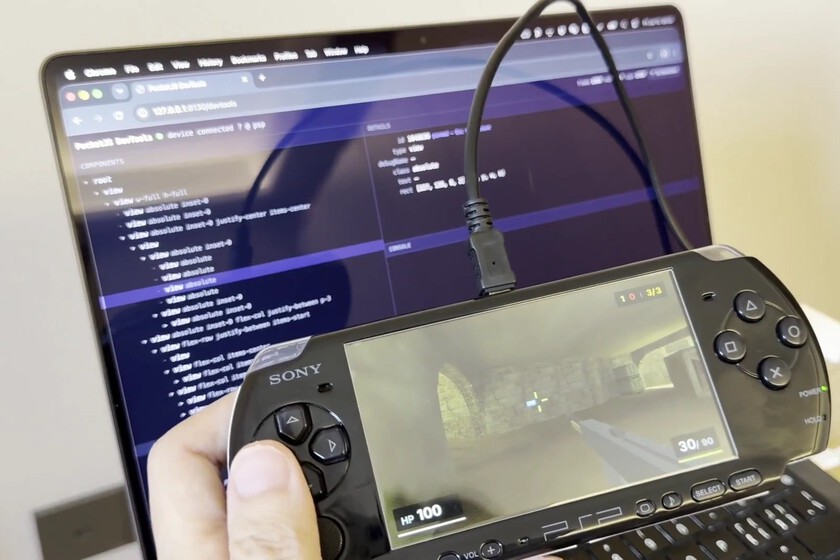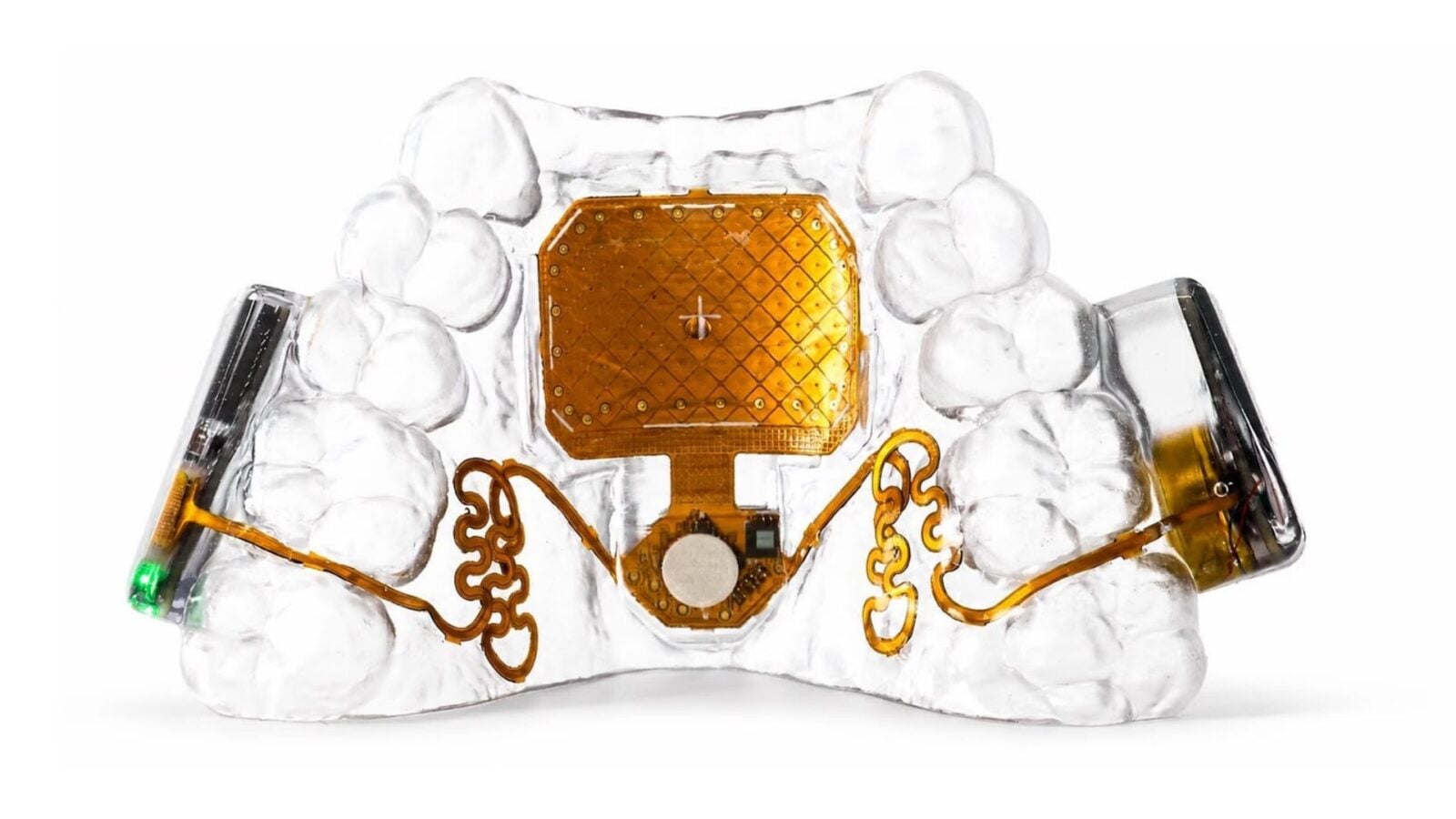
Long confined to its first users and CES demos, Augmental’s MouthPad is on public sale in the United States. A $1,400 palattal sensor that transforms tongue movements into computer commands, via Bluetooth.
For years, controlling a computer without hands required choosing between two bad options: voice dictation (very practical for writing an email, much less so for navigating a spreadsheet or selecting a layer in Photoshop), and eye tracking (precise, but with an infrared camera screwed under the screen and a price that would make you sigh). Augmental, a Californian startup born at the MIT Media Lab, sought a third way on the side of the mouth.
The MouthPad is a palattal sensor (a discreet device that is slipped behind the upper molars, halfway between the orthodontic tray and the Bluetooth device) which reads tongue movements via a tactile surface and translates them into computer commands. A drag moves the cursor. A press triggers a click. Head gestures complete the navigation. The connection is wireless, the device invisible from the outside, silent. Available now in the US for $1,400.
MouthPad is a touchpad you drive with your tongue.
Now available across the US. pic.twitter.com/n8Gvq2Y37Q
— Augmental (@augmentaltech) July 22, 2026
From first users to public sales: the MouthPad changes ground
Presented for the first time to the general public during CES 2024, the MouthPad mainly circulated for two years in the corridors of hospitals and rehabilitation centers. Its target users: patients with amyotrophic lateral sclerosis (ALS), paraplegics, quadriplegics or people in the post-stroke recovery phase. Non-verbals constitute another central target: for a person who cannot speak or type, the palatal tactile surface opens up possibilities that other interfaces do not allow. Tomás Vega, co-founder of Augmental, sums up the ambition in a fairly straightforward formula: “Technology should go where humans are, not the other way around. »
The opening to public sales is accompanied by a second product: Vox, a complementary voice accessory ($200, currently in beta, delivery planned for the end of 2026) which superimposes a layer of voice control above the palatal sensor. For people who can vocalize but not navigate, or vice versa, the idea is a hybrid system combining the two modalities. The market is not anecdotal. Around 1.3 billion people worldwide, or one in six, live with a significant disability, a large proportion of whom do not yet have a suitable digital assistance device.
👉🏻 Follow tech news in real time: add 01net to your sources on Google, and subscribe to our WhatsApp channel.
Source :
Augmental