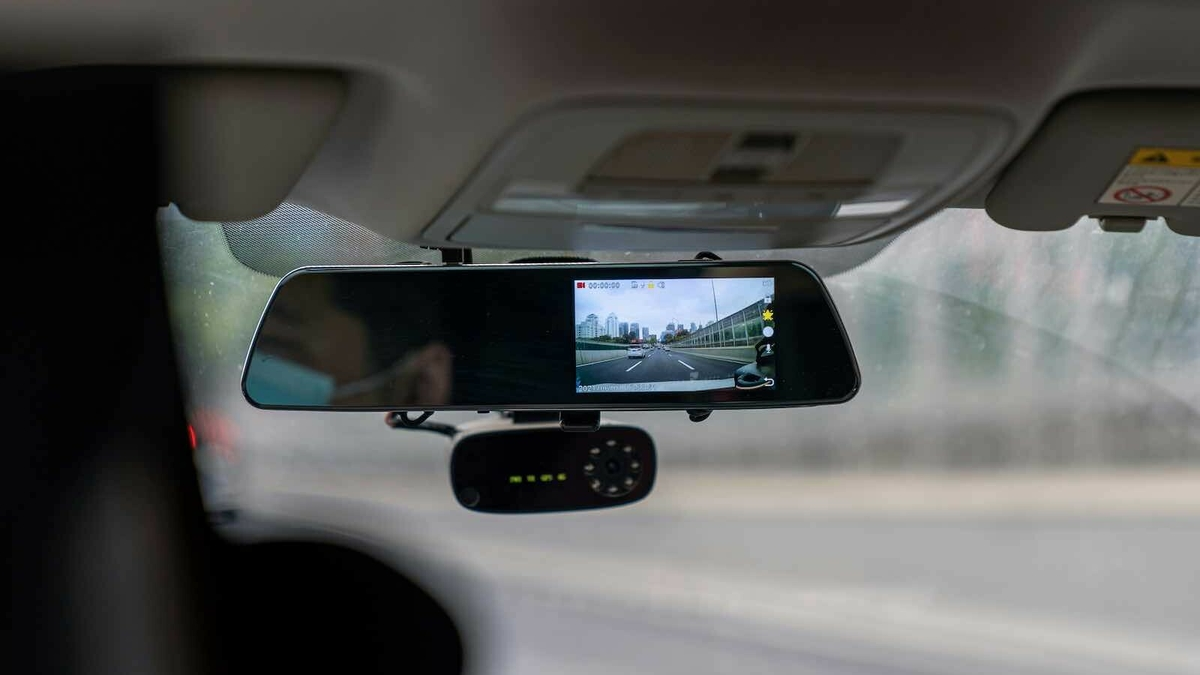
This is the final stage of the European GSR2 regulation, adopted in 2019 and gradually deployed. The objective stated by the European Commission is ambitious: save more than 25,000 lives and avoid 140,000 serious injuries by 2038. All manufacturers are concerned, without exception, for a market which represents around 15 million vehicles per year. In addition to the camera, the new models must also be equipped with a automatic emergency braking (AEB) capable of detecting pedestrians and cyclists.
How do these new security features work?
The most discussed system is undoubtedly ADDW, for “Advanced Driver Distraction Warning”. This is a surveillance camera infrared, often placed on the steering column or near the rearview mirror, which continuously analyzes the position of the driver’s head and the direction of gaze. It operates day and night to guarantee constant monitoring.
The trigger thresholds are very precise. If the driver takes his eyes off the road for more than 6 seconds at a speed between 20 and 50 km/h, a visual and audible alert is issued. This deadline is reduced to 3.5 seconds above 50 km/h. The system is therefore intended to be very responsive to capture moments of distraction, whether it is a glance towards the central console or your smartphone. The other major equipment is the extension of automatic emergency braking to vulnerable users such as pedestrians and cyclists.
Smarter cars mean safer roads.
From 7 July 2026, all new passenger cars and vans across the EU will require these built-in features ↓
— European Commission (@EU_Commission) July 5, 2026
What are the implications for the daily driver?
The first consequence is financial. The integration of these technologies represents an estimated additional cost between 400 and 800 euros per vehicle, an amount directly absorbed in the final purchase price. Some manufacturers have already withdrawn entry-level models from their catalog, their compliance being considered too expensive. For the road safetythe stakes are high.
In use, the first feedback describes a system that is sometimes “ irritant “. Tests have shown that ordinary behaviors, like looking at the scenery or changing a song on the touchscreen, can trigger repeated alerts. Although it is possible to disable ADDW, it reactivates automatically each time the vehicle is started, a constraint imposed by the regulations. Drivers will therefore have to get used to these “beeps” and this permanent electronic eye.
Is privacy protection really guaranteed?
The issue of data confidentiality is at the heart of concerns. In theory, European regulations are strict: image processing must be done in closed circuitin the vehicle, without transmission to external servers. The information captured must be deleted immediately after analysis, and the system does not perform any facial recognition. This is a strong promise to reassure motorists.
However, the past calls for caution. A report from the Mozilla Foundation found that 84% of manufacturers share or sell their customers’ data. The case of General Motors, which resold driving data to brokers, shows that the risk is not zero. Even if the law prohibits it for ADDW, the infrastructure is there: a camera that films continuouslyopening the door to potential abuses if no independent audit is put in place to verify compliance with the “closed circuit” by manufacturers.