By using this site, you agree to the Privacy Policy and Terms of Use.
Accept
World of SoftwareWorld of SoftwareWorld of Software
  • News
  • Software
  • Mobile
  • Computing
  • Gaming
  • Videos
  • More
    • Gadget
    • Web Stories
    • Trending
    • Press Release
Search
  • Privacy
  • Terms
  • Advertise
  • Contact
Copyright © All Rights Reserved. World of Software.
Reading: Digital lenders stay cautious after CBN lowers MPR to 26.5%
Share
Sign In
Notification Show More
Font ResizerAa
World of SoftwareWorld of Software
Font ResizerAa
  • Software
  • Mobile
  • Computing
  • Gadget
  • Gaming
  • Videos
Search
  • News
  • Software
  • Mobile
  • Computing
  • Gaming
  • Videos
  • More
    • Gadget
    • Web Stories
    • Trending
    • Press Release
Have an existing account? Sign In
Follow US
  • Privacy
  • Terms
  • Advertise
  • Contact
Copyright © All Rights Reserved. World of Software.
World of Software > Computing > Digital lenders stay cautious after CBN lowers MPR to 26.5%
Computing

Digital lenders stay cautious after CBN lowers MPR to 26.5%

News Room
Last updated: 2026/02/24 at 8:34 AM
News Room Published 24 February 2026
Share
Digital lenders stay cautious after CBN lowers MPR to 26.5%
SHARE

Digital lenders in Nigeria may begin cautiously lowering borrowing costs after the Central Bank of Nigeria (CBN) cut the Monetary Policy Rate (MPR) to 26.5% from 27% on Tuesday, signalling a potential easing of the country’s prolonged high-interest-rate environment.

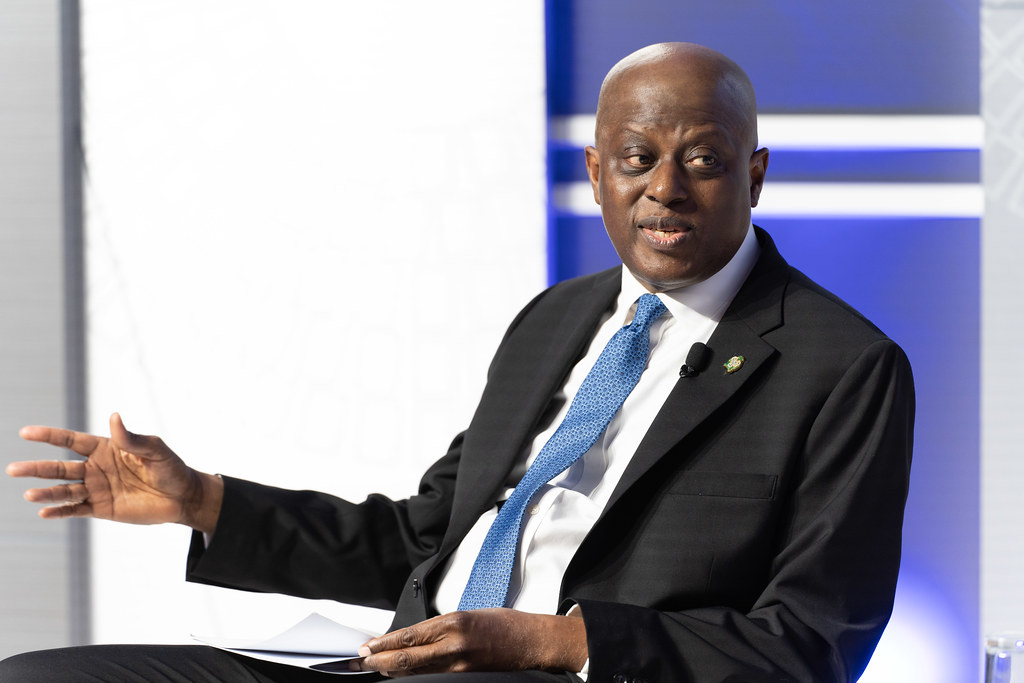
The rate cut, the first since September 2025, follows signs of moderating inflation. According to Yemi Cardoso, CBN governor, this decision followed the sustained drop in inflation, which has fallen for 11 consecutive months. Headline inflation stood at 15.10% in January.

The MPR is the benchmark interest rate set by the CBN to control inflation, manage money supply, and influence borrowing costs in the economy.

A lower benchmark rate could ease funding costs for digital lenders that rely heavily on borrowed capital rather than customer deposits, potentially reshaping loan pricing, borrower access, and risk appetite.

“Digital lenders and members of the Money Lenders Association usually borrow at interest rates linked to MPR, so any change in such MPR will have a significant impact on our cost of lending to customers,” Gbemi Adelekan, president of the Money Lenders Association, an industry group for registered digital money lenders, told in an interview on Wednesday.

Unlike commercial banks, which rely heavily on low-cost customer deposits, most digital lenders depend on wholesale funding, private capital, or institutional borrowing, making them more sensitive to benchmark rate movements.

Higher MPR levels over the past year have forced many lenders to either raise borrowing costs for customers or absorb thinner margins amid growing competition.

Currently, commercial banks’ interest rates exceed  30% annually in many cases. Loan apps are currently charging between five and 15% monthly, according to Adelekan.

Rate cuts may take time to reach borrowers

Industry experts do not expect the rate cuts to provide immediate relief.

“Everyone benchmarks around MPR and their cost of borrowing,” said Babatunde Akin-Moses, co-founder of Sycamore, a digital lending app. “Rates should come down as the cost of funds becomes cheaper, but it may not happen immediately since some loans are already in effect, and may not have agreed variable rates with customers.”

Existing loan books and previously negotiated funding arrangements mean lenders may adjust pricing only gradually.

Adeshina Adewumi, CEO of Trade Lenda, a digital bank for small businesses, also expects only modest changes.

“I do not envisage any significant impact,” he said.  “However, a lower MPR means lower cost of funds to digital lenders, and we can afford to relax our numbers slightly.”

Adelekan expects loan app interest rates to remain largely within the current range for now.

Digital lenders adapting

Nigeria’s digital lending market has expanded rapidly as households turn to short-term credit to cope with rising living costs and limited access to traditional bank loans. As of February 24, 2026, the Federal Competition and Consumer Protection Commission (FCCPC) had authorised 469 digital lenders operating across the country.

Consumer credit stood at ₦3.11 trillion ($2.31 billion) in the third quarter of 2025, according to the CBN, with personal loans accounting for more than two-thirds of lending activity.

However, the high-interest-rate environment has forced digital lenders to adapt.

According to Adelekan, many companies are moving away from small nano loans, typically under ₦10,000, that powered the early growth of Nigeria’s loan app ecosystem.

“High MPR rates led to a tightening of credit by our members,” he said. “Lately, most of our digital lenders are shifting away from high-risk, small-ticket nano loans (under  ₦10,000) toward quality and customers with verifiable income to reduce our non-performing loans. ”

This shift reflects a broader industry recalibration as lenders prioritise portfolio quality over rapid user acquisition.
Sign Up For Daily Newsletter

Be keep up! Get the latest breaking news delivered straight to your inbox.
By signing up, you agree to our Terms of Use and acknowledge the data practices in our Privacy Policy. You may unsubscribe at any time.
Share This Article
Facebook Twitter Email Print
Share
What do you think?
Love0
Sad0
Happy0
Sleepy0
Angry0
Dead0
Wink0
Previous Article A cheap A18 Pro MacBook would crush the M1 Air and I have the numbers to prove it — but here’s the catch A cheap A18 Pro MacBook would crush the M1 Air and I have the numbers to prove it — but here’s the catch
Next Article A TikTok and MLB partnership is bringing more baseball to the platform A TikTok and MLB partnership is bringing more baseball to the platform
Leave a comment

Leave a Reply Cancel reply

Your email address will not be published. Required fields are marked *

Stay Connected

248.1k Like
69.1k Follow
134k Pin
54.3k Follow

Latest News

Hesai secures over  million LiDAR order from leading US Robotaxi company · TechNode
Hesai secures over $40 million LiDAR order from leading US Robotaxi company · TechNode
Computing
Today's NYT Connections: Sports Edition Hints, Answers for March 16 #539
News
Chinese Display Manufacturer TCL to Build World’s First 8.6-Generation Printed OLED Line in Guangzhou · TechNode
Computing
Meta’s AI plans are forcing it to make a move its employees don’t want to be a part of
News

You Might also Like

Hesai secures over  million LiDAR order from leading US Robotaxi company · TechNode
Computing

Hesai secures over $40 million LiDAR order from leading US Robotaxi company · TechNode

1 Min Read
Chinese Display Manufacturer TCL to Build World’s First 8.6-Generation Printed OLED Line in Guangzhou · TechNode
Computing

Chinese Display Manufacturer TCL to Build World’s First 8.6-Generation Printed OLED Line in Guangzhou · TechNode

1 Min Read
Li Auto to Launch i6 EV SUV on Sept 26 · TechNode
Computing

Li Auto to Launch i6 EV SUV on Sept 26 · TechNode

1 Min Read
Nothing Raises 0M in Series C to Advance AI-Native Consumer Devices · TechNode
Computing

Nothing Raises $200M in Series C to Advance AI-Native Consumer Devices · TechNode

1 Min Read
//

World of Software is your one-stop website for the latest tech news and updates, follow us now to get the news that matters to you.

Quick Link

  • Privacy Policy
  • Terms of use
  • Advertise
  • Contact

Topics

  • Computing
  • Software
  • Press Release
  • Trending

Sign Up for Our Newsletter

Subscribe to our newsletter to get our newest articles instantly!

World of SoftwareWorld of Software
Follow US
Copyright © All Rights Reserved. World of Software.
Welcome Back!

Sign in to your account

Lost your password?