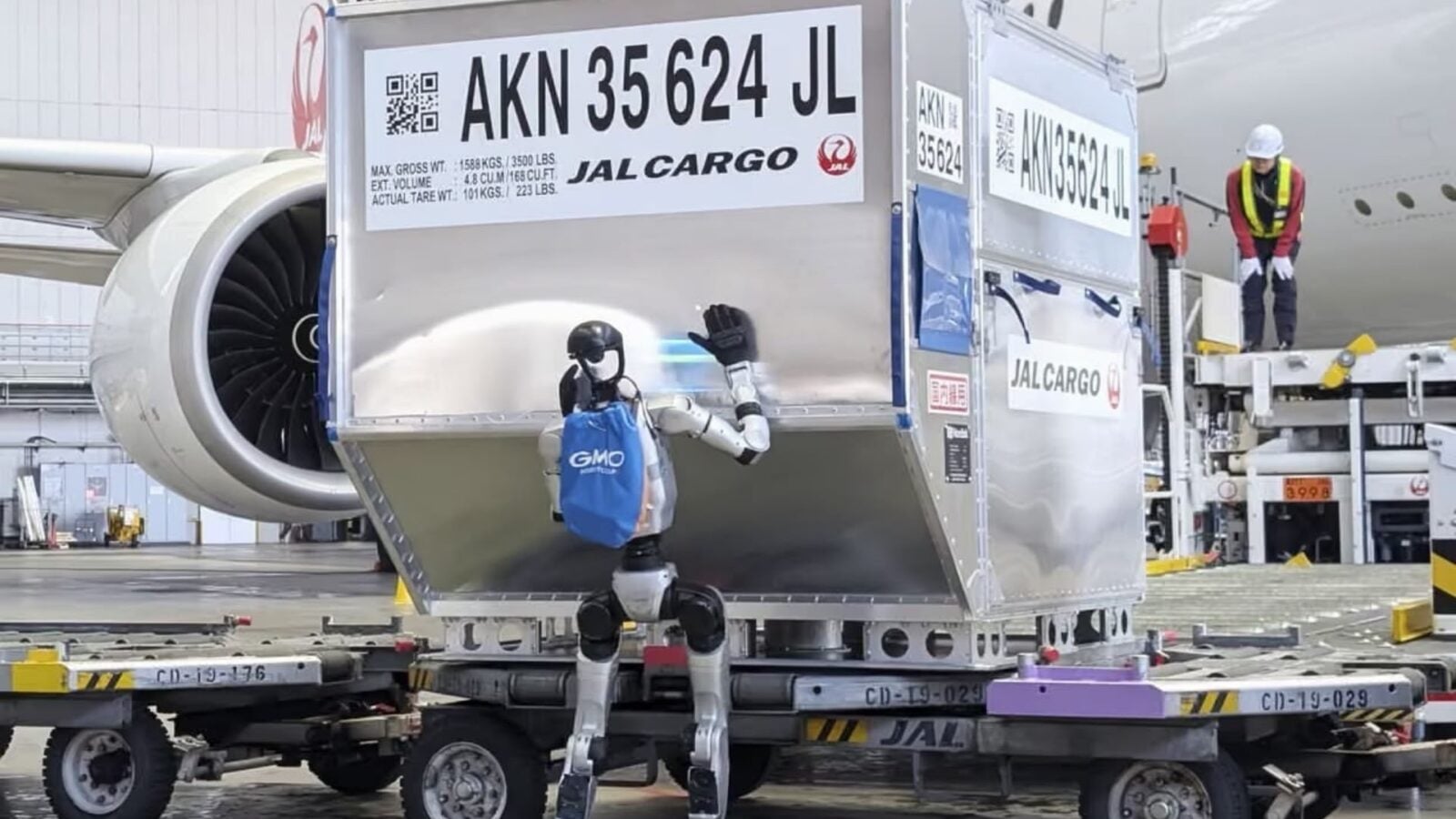
The key question regarding edge artificial intelligence (AI) is no longer about its vast business potential, but about where it can be most efficient and deliver faster, measurable results. Early uses across the manufacturing, retail and infrastructure sectors have to date focused on issues such as predictive machine maintenance, tailored, localised analytics in retail stores, and grid monitoring.
However, cost constraints, latency and data residency continue to require careful consideration by organisations looking to scale edge AI strategies.
“Early deployments should focus on narrow beachhead use cases where ethical, legal and security risks are limited – or clearly outweighed by the benefits,” observes Michaël Bikard, professor of strategy at the Insead business school. “That’s how new technologies have historically entered safety-sensitive domains.”
Edge AI is being used practically right now
Many global businesses have adopted edge AI in some capacity. However, most deployments remain relatively small and highly specialised, prioritising speed, reliability and energy efficiency over huge, datacentre-like models. They also depend significantly on human oversight and intervention.
Current models focus on minimising edge AI’s limitations, rather than ultra-sophisticated models. Most deployments are still hybrid, with humans handling most of the training and performance evaluation, while the model handles local inference.
Edge AI systems are optimised to recommend the best course of action, rather than make fully independent decisions. In highly regulated or safety-critical businesses, humans still have the final say.
Successful deployments highlight that edge AI is more about ensuring that reliable decisions can be taken closer to where the data is generated, rather than more intelligent technology itself.
What’s working: Predictive machine maintenance in manufacturing
Schneider Electric believes it has significantly advanced the industrial internet of things (IIoT) by using edge AI for real-time predictive maintenance on the factory floor, through local controllers, servers and devices. This is designed to improve operational efficiency while strengthening data security and decreasing latency as well.
The company uses edge AI systems to analyse factors such as real-time temperature, vibration and performance to predict machine issues before they occur, which helps decrease production stoppages.
It also employs edge AI for automated inspection and image-based barcode reading, which improves product quality. The Cognex AI-based technology can detect objects and shapes, allowing conveyor cameras to automatically reject flawed products.
Predictive maintenance succeeds when AI is embedded into operational workflows and decision processes, not deployed as a standalone analytics layer Himanshu Rai, director at IIM Indore
Schneider Electric also focuses on enhanced autonomous machine control through its EcoStruxure Automation Expert virtualised controller system. This connects shop floor IoT devices to edge controllers. The company also uses edge AI to grow yield by analysing variables in real time and reducing waste.
Automotive giant Renault has also deployed edge AI tools for predictive manufacturing maintenance. This is mainly achieved by supervising welding robots to ensure that welding defects and failure anticipations are flagged in real time, to minimise downtime.
Renault’s Industrial Metaverse uses edge AI heavily to analyse real-time data from 12,000 connected machines, which strengthens production lines. This is said to have helped Renault Group save €270m in 2023. Similarly, Renault’s autonomous control systems conduct visual inspections through edge AI, further freeing up operator time.
“Predictive maintenance has emerged as one of the most commercially successful AI use cases; however, technology alone is insufficient. Stalled or underperforming deployments may cite poor data integration, fragmented ownership, or constraints from legacy systems as root causes,” says Himanshu Rai, director at IIM Indore. “Predictive maintenance succeeds when AI is embedded into operational workflows and decision processes, not deployed as a standalone analytics layer.”
Real-time inventory tracking and decreasing food waste in retail
Fast fashion retailer H&M has partnered with Avassa in using edge AI to modernise in-store facilities, streamline operational efficiency and improve customer experience. Another focus is making sure applications keep working even when connectivity is down.
One of the biggest uses of edge AI is through RFID-enabled tracking, a highly accurate system allowing inventory to be tracked with real-time data. This helps staff find in-store items immediately, significantly cutting down on customer wait times.
Other in-store edge AI deployments include smart mirrors in fitting rooms, which connect to local networks and deliver product recommendations. They let buyers see which items are in stock in real time and ask for other sizes if required, without having to leave the fitting room, which considerably enhances the customer experience.
Customers can look for items using photos through the TensorFlow Lite edge AI system on the H&M app, too, further speeding up performance.
H&M is partnering with Honeywell to use edge AI to optimise lighting, heating and air-conditioning across 90 European stores as well. By gathering data from smart meters and sensors, the system improves real-time energy usage, decreasing costs and carbon footprint at the same time.
Similarly, grocery giant Tesco has leaned heavily into edge AI with a recent three-year partnership with Mistral AI to optimise its supply chain and reduce food wastage. One of the models employs dynamic expiry pricing. The system evaluates expiry dates and how fresh produce is, and automatically reduces prices for items expiring soon.
This has helped bring Tesco a step closer to its goal of reducing food waste, with wastage levels across UK operations down by 45% in 2025, compared with 2016/2017 levels. Another major deployment is real-time logistics and shipments tracking across more than 3,000 locations through solar-powered sensors. Tesco also saves 100,000 miles per week by using AI to search for the most efficient delivery routes.
Edge AI is used for product demand prediction as well, improving fresh produce shelf life, which decreases the risk of overstocking. This reduces the need for manual checking and improves inventory management across the board.
Self-checkout processes have been upgraded with edge AI too, with stores now including smart systems with cameras that use AI and computer vision to monitor real-time packaging behaviour and flag incorrectly scanned items.
Grid monitoring and maintenance in energy and infrastructure
Siemens Energy is successfully revolutionising legacy grid infrastructure to active, intelligent networks through edge AI, enabling them to automatically handle rising demand and fluctuating renewable energy levels.
The process includes AI systems such as substations, transformers and sensors, which allows predictive grid maintenance and real-time decision-making. Online sensor devices, such as the Sensformer advanced unit, keep tabs on high-voltage equipment and transformers.
Edge AI flags irregularities in temperature, vibration and torque through local data analysis. Operators can then maintain machines as per their current condition, rather than routine checks, avoiding expensive surprise downtimes.
Some sensors are virtual physics-informed neural networks (PINNs), used to virtually predict hotspots on things like transformer bushings without physical sensors.
New technologies gain traction not by being universally superior, but by outperforming the status quo in narrow contexts. In infrastructure, that often means environments requiring continuous, real-time monitoring at a scale or speed that humans or centralised systems cannot sustain Michaël Bikard, Insead
Another edge AI deployment, dynamic line rating (DLR), analyses line data factors like wind speed and temperature in real time and remits current transmission line capacities. Unlike potentially conservative static numbers, this unlocks 10% to 15% of additional capacity more than 90% of the time.
Siemens also implemented intelligent substations for a hybrid approach, which processes data locally and only shares relevant information to the cloud, improving bandwidth.
“New technologies gain traction not by being universally superior, but by outperforming the status quo in narrow contexts. In infrastructure, that often means environments requiring continuous, real-time monitoring at a scale or speed that humans or centralised systems cannot sustain,” Bikard observes.
Similarly, Ørsted uses edge AI systems for wind farm optimisation, by analysing data from thousands of turbine sensors, which optimises predictive maintenance too. It also monitors and analyses localised weather patterns like cloud cover and sun intensity, using the technology to better boost battery storage utilisation and solar energy production.
Edge AI failures
Despite several successful edge AI deployments in the past few years, there are some models which have failed – often very publicly. McDonald’s AI-driven voice ordering trial, deployed across about 100 drive-throughs, was one such case. The fast-food chain launched a three-year partnership with IBM for this project in 2021, which ended in 2024 following several bad reviews.
Viral, embarrassing social media videos posted by customers highlighted the system misunderstanding orders, sometimes resulting in hundreds of dollars’ worth of food being included. Mistakes such as adding bacon to ice cream were also common.
Other problems included issues with background noise, different human accents and dialects, and unusual local requests.
What drove success – and where models broke down
Successful edge AI deployments across Schneider Electric, Tesco and Siemens Energy, among others, had one common trait: they all focused on extremely narrow processes, within broader organisational structures. Launched in very controlled environments, they only scaled incrementally, after rigorous testing and iterations.
“Each stage generates learning, not just about performance, but about failure modes, governance and acceptable risk. Those lessons make it possible to move from tightly controlled settings to more complex environments,” Bikard points out.
These models also have a very clear ownership and accountability structure, with specific people being responsible for outcomes or issues. These include operators, supervisors, production line managers, shop managers or similar.
Data quality and domain expertise are more critical than algorithmic sophistication Florian Stahl, Mannheim Business School
Constant human supervision meant that any issues or downtime with the models could be immediately addressed with minimal repercussions. A hybrid approach between cloud and edge AI was consistently prioritised as well.
Successful deployments did not involve any absolutely critical processes either. Even in cases of predictive maintenance, both on factory floors and grids, their purpose was mainly to speed up and optimise the process, rather than take over completely.
On the other hand, one of the biggest pitfalls of the McDonald’s model was taking human oversight almost completely out of the loop and giving the system more autonomy than it was designed to handle as a pilot project. This led to serious mistakes, such as adding hundreds of dollars of extra food to orders going nearly unchecked, with customers having little recourse.
Another mistake was launching the initial trial across around 100 locations, instead of a few, well-monitored locations, and introducing far too much data at once through various human accents.
The model in question was also ill-suited to handling open-ended inputs, the kind which should be expected in a fast food restaurant, which sees a high volume of personalised requests.
Finally, McDonald’s being a well-recognised global brand also meant the company had a very small margin of error to launch new features before being potentially criticised by clients, thus requiring far more testing before launch.
“One key lesson is that data quality and domain expertise are more critical than algorithmic sophistication,” observes Florian Stahl, chair of quantitative marketing and consumer analytics at Mannheim Business School. Many early failures can be traced to poorly labelled data, sensor drift, or insufficient understanding of underlying physical processes.
What’s next?
As successful edge AI use cases increase, businesses are likely to move away from isolated experiments to more widespread deployments, through cameras, sensors, robots and other machines.
This may decrease cloud reliance while speeding up decision-making at the edge. However, the fundamental principle driving successful deployments will remain the same.
The most successful edge AI models will still be those that address highly specific tasks and scale incrementally, while having clear oversight, ownership and accountability structures, even if the number of endpoints grows.
“Framing adoption as a human-versus-AI contest misses where the real opportunities lie. What matters instead is identifying situations where existing solutions are clearly insufficient,” Bikard concludes.
Sign Up For Daily Newsletter
Be keep up! Get the latest breaking news delivered straight to your inbox.
By signing up, you agree to our Terms of Use and acknowledge the data practices in our Privacy Policy. You may unsubscribe at any time.