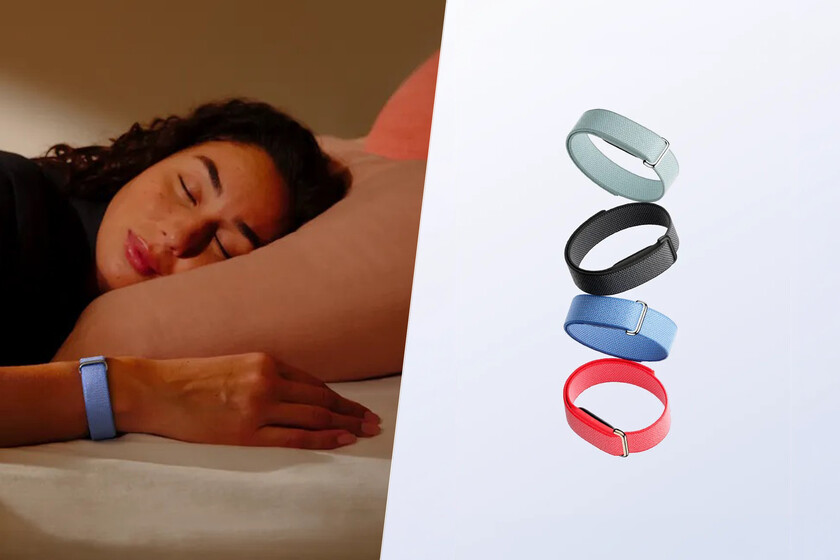
Fitbit seemed to have taken a backseat within the Google ecosystem, almost like a brand that was still there by inertia while the spotlight fell on the Pixel Watch. Now come back with Fitbit Aira simple and light bracelet, which points just in the opposite direction to that of many smart watches: fewer visible functions, less complications and a more contained price. The paradox is that this return of hardware also comes with a less obvious reading: the brand, loved by many users, is beginning to become increasingly diluted within the search giant.
It is not just any release within the Google catalog. The Fitbit Air is Fitbit’s first hardware device in almost four years, so its arrival could be read as a small resurrection for the brand. But the entire movement points in another direction. Google bought Fitbit a few years ago for $2.1 billion and, since then, has been bringing that technology closer and closer to its own ecosystem. Now the step is even more visible: Google is already presenting the old Fitbit app under the name Google Health, a step that reveals part of its strategy.
Fitbit Air technical sheet
|
Fitbit Air |
|
|---|---|
|
dimensions and weight |
Largo: 34,9 mm Ancho: 17 mm height: 8.3mm 5.2g without strap 12g with strap |
|
Memory |
Saves 7 days of detailed minute-by-minute motion data. Save 1 day of training data Save daily totals for the last 30 days Stores heart rate data in 2 second intervals |
|
battery and charging |
Up to 7 days of autonomy Lithium polymer battery Charge from 0 to 100% in 90 minutes |
|
connectivity |
Bluetooth 5.0 |
|
sensors |
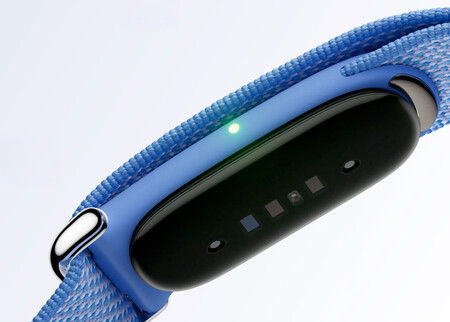
Optical heart rate monitor Three-axis accelerometer Red and infrared sensors to monitor oxygen saturation (SpO2) On-device temperature sensor (skin temperature variation available in the Google Health app) vibration motor |
|
Endurance |
Water resistant up to 50 meters. |
|
colors |
Obsidian, mist gray, raspberry, lavender |
|
precio |
From 99.99 euros |
A simple bracelet for a much more ambitious strategy
Fitbit Air is quick to understand because it doesn’t try to do everything. It has no screen, it has no buttons and you don’t want to become another device to look at every few minutes. The idea is simpler: you put it on, wear it during the day or at night and let it record activity, sleep and some health metrics without asking you too much attention. We are looking at a product that weighs 12 grams with the strap and 5.2 grams without it, so Google’s promise seems to go in the direction of having more functions in sight as well as wearing something comfortable that almost disappears on the wrist.
That simplicity doesn’t mean that the Fitbit Air arrives empty inside. It incorporates an optical heart rate sensor, gyroscope, accelerometer, blood oxygen sensor and skin temperature sensor for sleep monitoring. It also withstands immersion up to 50 meters and promises seven days of battery life on a charge, plus one day of use with five minutes plugged in. Another important detail is that it can work simultaneously with a Pixel Watch.

So it doesn’t seem designed for you if you just want to respond to messages, receive notifications, or have a screen full of data on your wrist. That’s what smart watches are already for. But if you are looking for a simple way to measure your activity, your rest and some health signals without getting too complicated, Fitbit Air may be an option to consider. It also fits if you already have a Pixel Watch and prefer to leave the watch for the day, but wear something lighter to sleep or train.
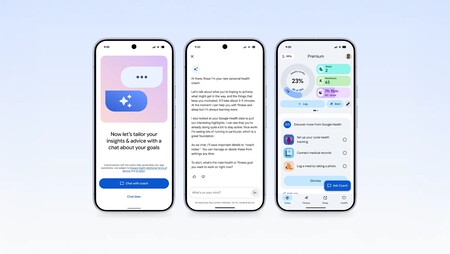
The other big change you will not notice on your wrist, but on your mobile. If you used Fitbit as a reference application, as we pointed out above, that space is renamed Google Health. Google’s idea is to bring together health monitoring, wellness data and personalized coaching, all in one place. The change also involves integrating Health Connect, the Android layer designed to organize health data between applications. On paper, it may seem like just a name change, but it says a lot about what’s happening: Fitbit continues to appear on the band, while the daily experience begins to move more and more towards Google.
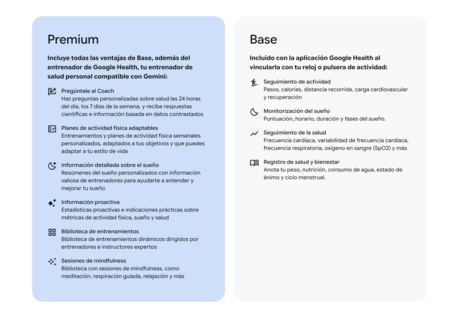
The subscription layer also changes location. Google explains that Fitbit Premium becomes Google Health Premium. This is where the most ambitious features come in, such as the personal health coach integrated with Gemini, plans that adapt to progress, rest and recovery, or the possibility of receiving more personalized information on well-being.

Price and availability of Google Fitbit Air in Spain
Google Fitbit Air can now be reserved in Spain from 99.99 euros and will be available from May 26. The device also includes a three-month trial of Google Health Premium for new members, with subsequent automatic renewal for 8.99 euros per month if not canceled.
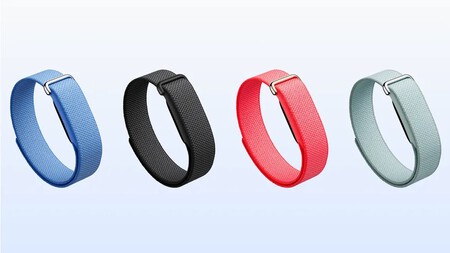
The colors and finishes available are the following:
- Obsidianwith matte black stainless steel buckle
- Fog graywith polished silver stainless steel buckle
- Raspberrywith polished champagne gold stainless steel buckle
- Lavenderwith polished silver stainless steel buckle
Google will also sell accessories for Fitbit Air. The official charger costs 29.99 euros and, according to the company, allows you to fully charge the device in just five minutes. There is also a more elegant strap with a stainless steel clasp, available for €59.99 in moonstone and polished silver, obsidian and matte black, and porcelain and polished champagne gold finishes.
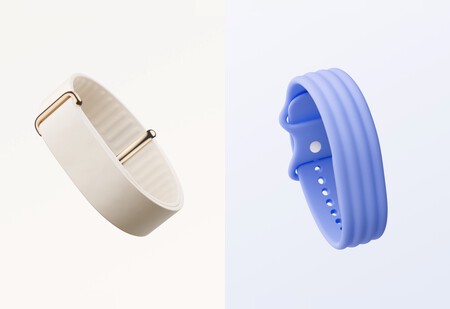
For training, Google offers a silicone strap resistant to sweat and humidity for 44.99 euros, available in obsidian, lavender, raspberry and fog gray. The standard strap of the product, made with recycled polyester, nylon and elastane thread, and with a stainless steel buckle, can also be purchased separately for 44.99 euros in any of its colors.
Images | Google
In | A Chinese company has created AI glasses without a camera. Their message is very simple: they are not spying on you.