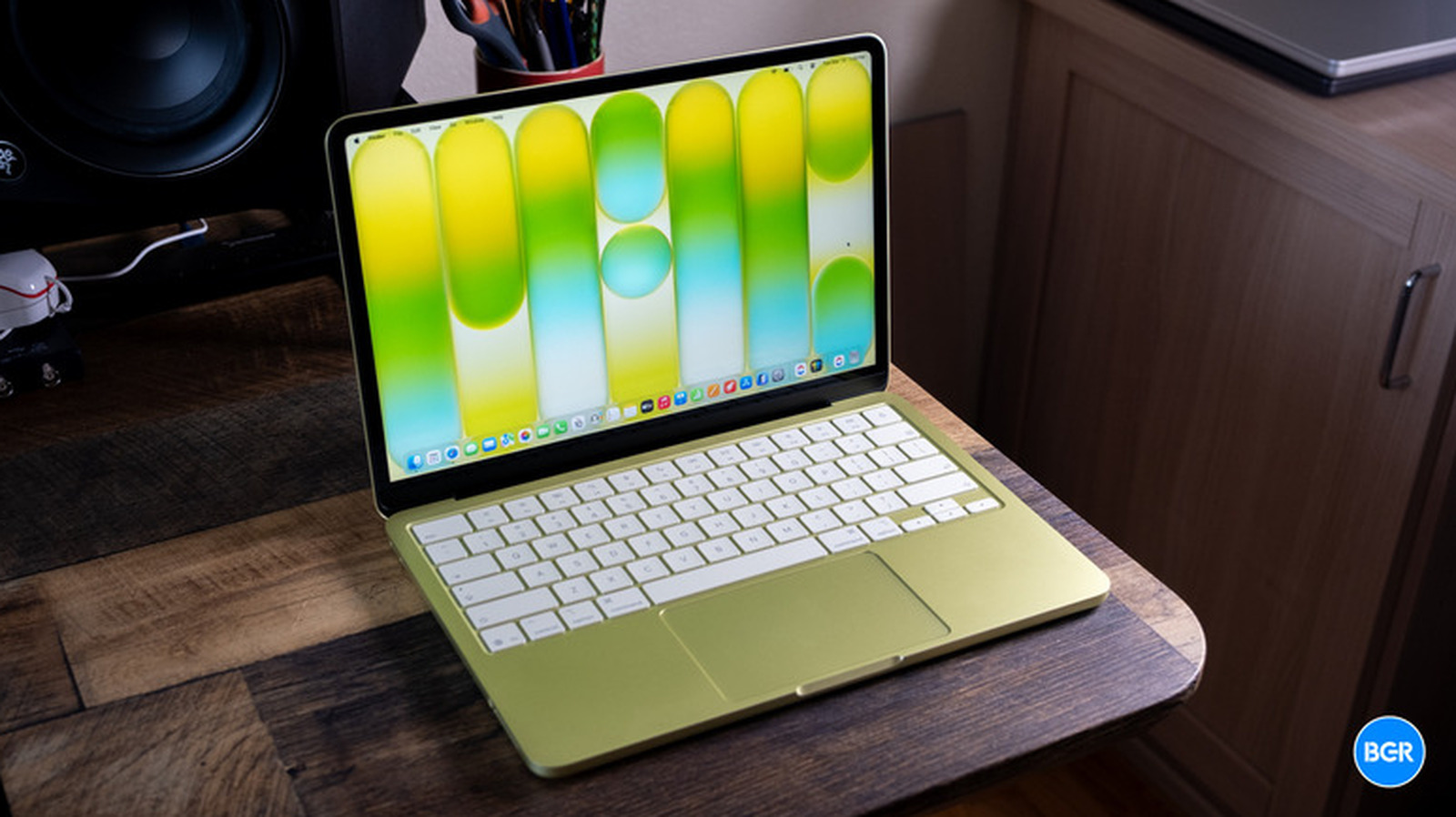
On March 4, 2026, Apple launched its new entry-level MacBook Neo laptop. The MacBook Neo is a budget laptop from the American tech company that’s powered by the A18 Pro chip (this is the same chip that powers the iPhone 16 Pro) and starts at just $599, making it the cheapest MacBook that the company has ever released. We’ve already published our review of the MacBook Neo, and it stands out for offering unbeatable value with several reasonable compromises.
While many are praising Apple for launching an incredible laptop for a budget price to offer users a cheaper entry into its laptop ecosystem, Framework CEO and founder Nirav Patel, who is also an ex-Apple employee, hasn’t missed the chance to criticize the company on one of its choices. In a 33-minute video posted on YouTube, Patel compares Apple’s MacBook Neo laptop to the Framework Laptop 12, another entry-level laptop that starts at $599.
Despite having similar starting prices and both targeting students and light laptop users, Patel’s teardown of both devices reveals two different philosophies behind each product. Specifically, he criticizes Apple for making the Neo less repairable. In Patel’s words, “a computer should be yours,” but Apple’s philosophy of locking down some components and preventing them from being easily swapped, unlike in Framework’s laptops, doesn’t encourage repairability. For example, the MacBook Neo has soldered RAM and storage, which prevents you from easily upgrading these components whenever you feel that you need more.
Framework’s repair-first vision challenges Apple’s closed design
Although the MacBook Neo isn’t as repairable as Framework’s laptops, iFixit named it Apple’s most repairable laptop in 14 years. iFixit found it has a relatively easy opening process and a handful of components strategically placed for ease of access, such as the battery, speakers, trackpad, and USB-C ports, and a lack of part pairing. Despite the improvement in repairability compared to other MacBooks, Framework’s CEO challenges Apple’s closed design and feels the company ought to do more. That said, he acknowledges that it has made some strides in the right direction in terms of repairability with the Neo, such as allowing the USB-C ports to be replaced.
That means that if your USB-C port is broken, you don’t need to replace the entire logic board; instead, you only swap out the affected part. Unlike the MacBook Neo, which has soldered RAM and storage, Framework lets you easily upgrade the two components, and even more, as you see fit to meet your changing needs. Unlike Framework, Apple doesn’t include any labels or QR codes on the inside, and even though it uses proprietary pentalobe screws, the tech giant doesn’t ship the Neo with a compatible screwdriver out of the box.
Framework’s CEO says that if you have one of its laptops, you should be able to “upgrade it so that it works well for you for as long as you need to.” That view is centered around the company’s philosophy that prioritizes consumers fully owning the product and using it as long as possible, helping reduce electronic waste. Patel insists that he doesn’t want some of Framework’s products to be a stepping stone to other offerings in its portfolio. He notes that “a computer should be yours. It should be modular. It should be upgradeable,” and should “last as long as you need it to.”