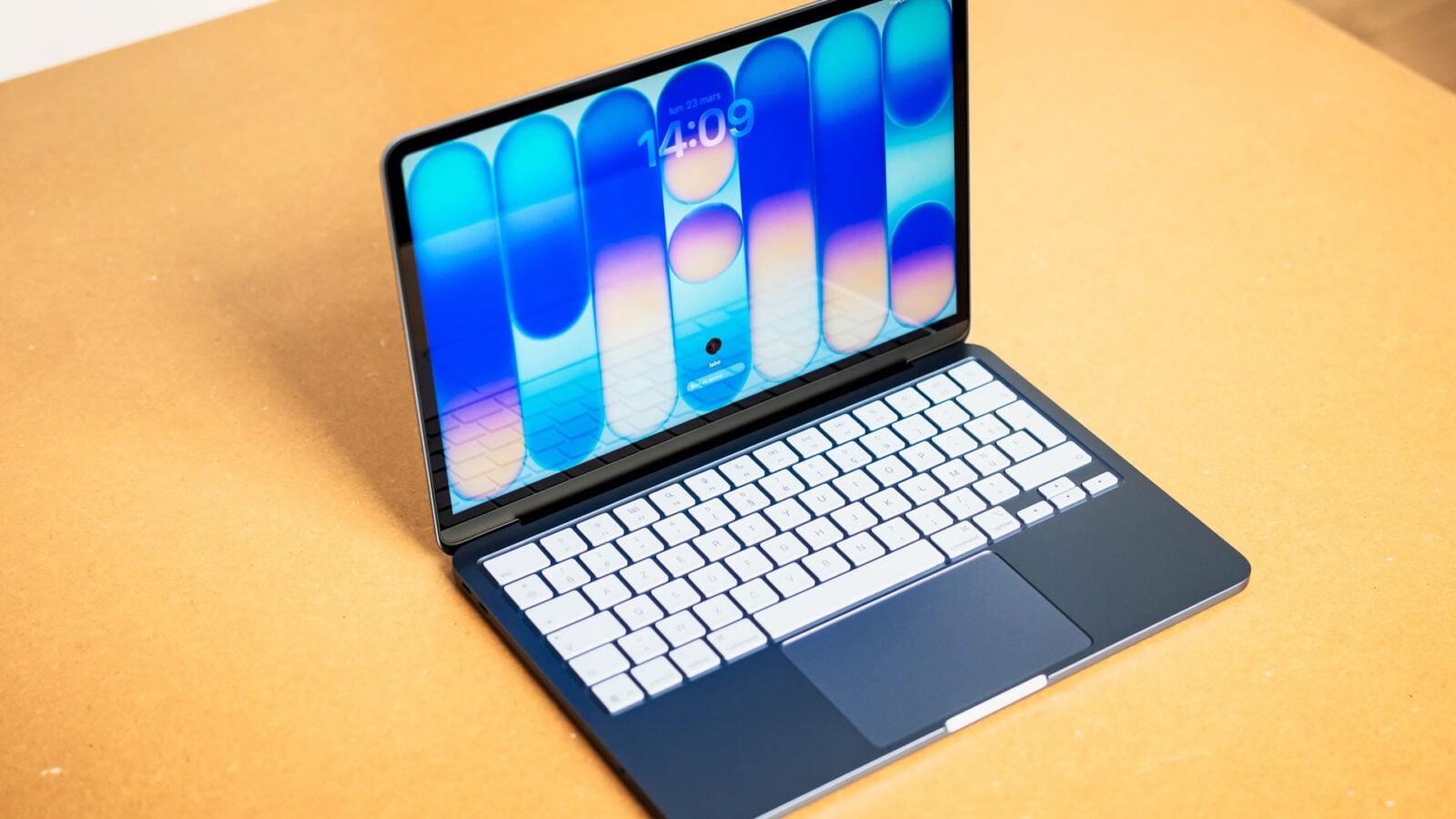
Are the chips defective or imperfect? For Apple, throwing them in the trash is out of the question. The strategy is rather to sort them, to “correct” them if necessary, to finally integrate them into a brand new device. Zero waste, almost zero chip manufacturing costs.
In recent years, Apple has adopted a winning strategy: recycling its defective chips. The MacBook Neo integrates a chip initially intended for the iPhone 16 Pro. The company simply “patched” faulty chips in order to integrate them into an entry-level computer. The iPhone 17e uses chips that are too inefficient for the iPhone 17. There are many examples. This strategy has proven to be more than a winner for Apple, but it also has its limits, and not the least.
Chip recycling: a winning strategy for Apple
The chip manufacturing process is not perfect, resulting in chips of varying quality. But at Apple, defective or imperfect chips are not thrown in the trash, quite the contrary: they are sorted and set aside based on their performance. Here we arrive at the heart of Apple’s strategy: the company can implant an imperfect chip in another device which will be able to integrate it without this recycling being directly perceptible. In some cases, a chip can even be “patched” to fit optimally into a new device.
For example, the iPhone 17e uses chips that perform too poorly for the iPhone 17. As for the iPhone Air, it uses chips that did not meet the performance criteria of the iPhone 17 Pro. But the best-known example now is that of the MacBook Neo. This entry-level computer integrates an A18 Pro chip from the iPhone 16 Pro production lines. Copies with a defect in a GPU core were set aside during the production of the iPhone 16 Pro. During production of the MacBook Neo, Apple simply disabled the faulty core, reducing the chip from 6 to 5 cores. If such an architecture could not meet the requirements of the iPhone 16 Pro, it integrates without problem into the MacBook Neo, an entry-level computer which makes some sacrifices in terms of its performance.
A strategy that has its limits
By recycling its imperfect chips, Apple was able to produce devices at lower costwhile achieving significant margins. The success of the MacBook Neo sold for 699 euros is the perfect example. As chip prices rise everywhere due to the skyrocketing prices of RAM and SSDs, Apple is pulling faulty chips out of its drawers in order to implement them in brand new devices.
However, the stocks of defective chips are not not infinite. So what happens for Apple when stocks are empty and yet it must continue to equip new devices? This is precisely the heart of the problem with this strategy. Apple was able to sell its MacBook Neo for 699 euros by recycling defective A18 Pro chips intended for the iPhone 16 Pro, but stocks are now empty. To deal with this situation, Apple could adopt three strategiesbut the initial promise of a consumer computer seems to be gradually fading away. Regardless, recycling faulty chips has proven to be a winning strategy for Apple.
👉🏻 Follow tech news in real time: add 01net to your sources on Google, and subscribe to our WhatsApp channel.
Source :
The Wall Street Journal