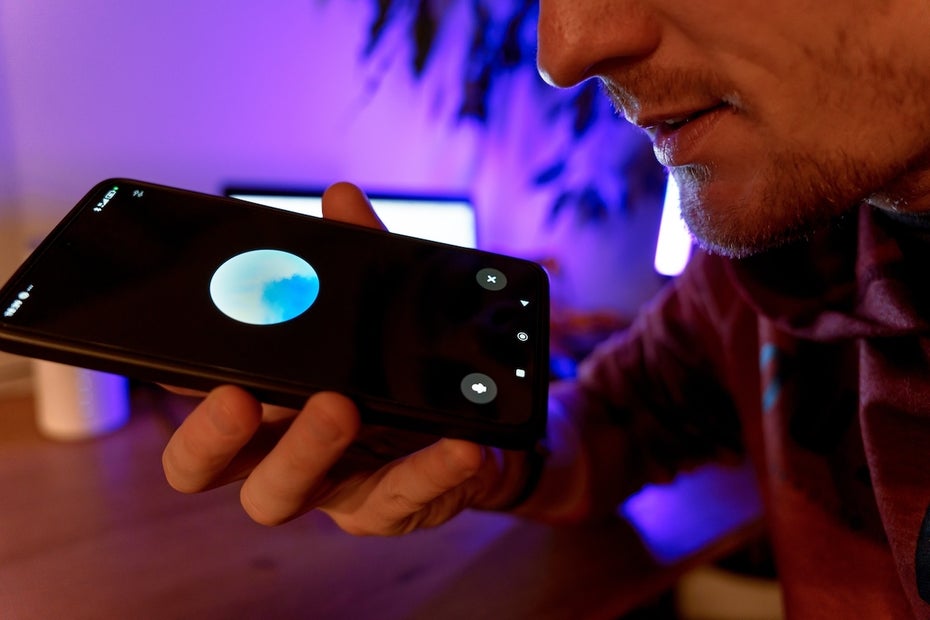
Conversations with ChatGPT Voice should feel more natural thanks to GPT-Live. (Image: Shutterstock/Rokas Tenys)
Designing conversations with AI so that it feels like you are having a real conversation – this is the goal OpenAI wants to achieve with GPT-Live, a new generation of language models. The two versions GPT-Live-1 and GPT-Live-1 Mini will initially be launched.
GPT-Live: OpenAI brings new language models
As OpenAI reports, the new language models should be available to ChatGPT users worldwide in the coming days. While GPT-Live-1 is intended for subscribers of the Go, Plus and Pro tariffs, users of the free version of ChatGPT Voice have to resort to the slimmed-down mini model.
Top Article
${content}
${custom_anzeige-badge}
${custom_tr-badge}
${section}
${title}
In the future, ChatGPT Voice will be able to delegate difficult tasks or search queries to a large language model during conversations. With the new models as a basis, ChatGPT Voice should also be able to display visual maps of weather forecasts, stock prices or sports results during the conversation.
The difference between the two GPT Live models is, among other things, that the mini model only uses GPT-5.5 Instant. Paying subscribers, on the other hand, can also search for ChatGPT Voice with GPT-5.5 Thinking or have it work for them.
Listen and speak at the same time
According to OpenAI, both models should be based on a “full duplex” architecture, meaning they should be able to listen and speak at the same time. In internal tests, GPT-Live-1 and GPT-Live-1 Mini are said to have demonstrated their strengths especially in longer conversations – between five and ten minutes.

Google’s new AI search backfires
In order to enable a conversation with the AI that is as natural as possible, OpenAI GPT-Live missed the opportunity to signal its attention with phrases like “mhmm” or “yes”. The AI should also take part in short dialogues or simply remain silent if the users want to think for a moment.
Video and screen sharing will be delivered later
The live video function and screen sharing known from Advanced Voice Mode are not yet on board with the new voice models. According to OpenAI, it is working on being able to provide these functions “soon”.