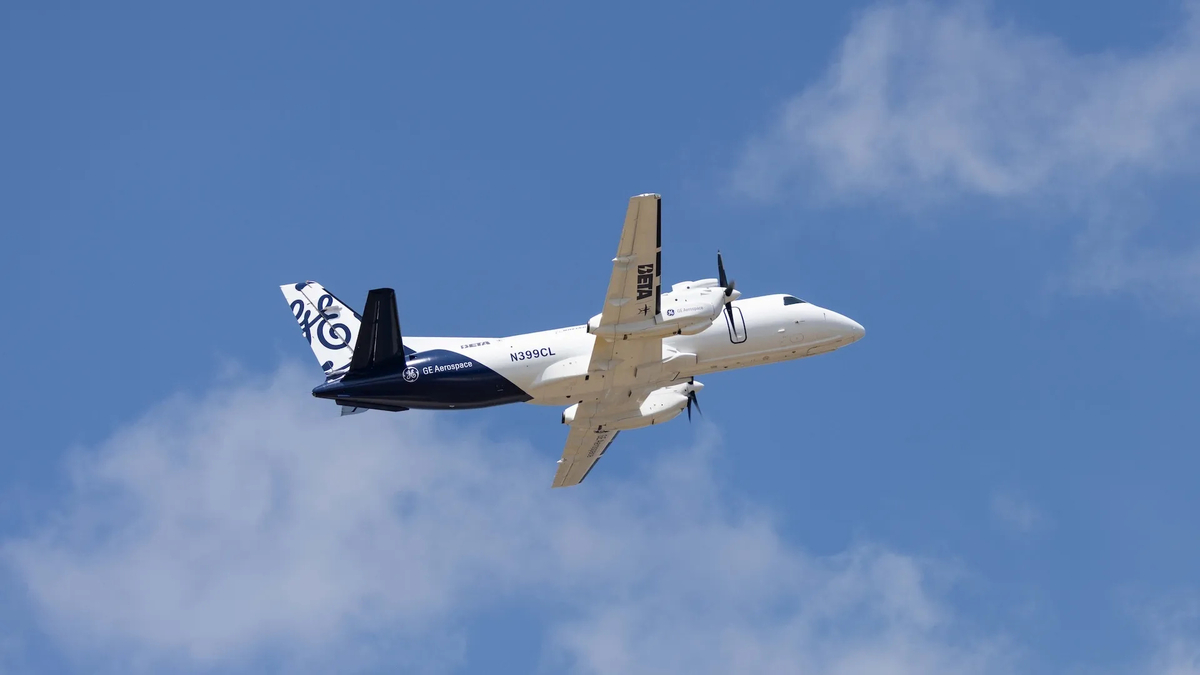
This is a step forward for sustainable aviation. In partnership with NASA, GE Aerospace successfully completed the first flight of a megawatt-class hybrid-electric propulsion at an altitude above 30,000 feet, that used by commercial airliners.
The test was conducted on board a modified Saab 340B aircraft, which operated in hybrid mode for more than two hours.
As part of NASA’s EPFD project
The tested system integrates electric motors, a gas turbine and energy storage capabilities.
Designed as part of the Electrified Powertrain Flight Demonstration project (EPFD) from NASA, it must reduce fuel consumption and operating costs without sacrificing the performance of regional-sized airliners.
This project is the result of a extended collaboration including Boeing, via its subsidiary Aurora Flight Sciences which designed the nacelle, and BETA Technologies. The goal was to overcome challenges unique to aviation, such as thermal management and low air pressure at altitude.
Long-term work
The flight is the culmination of more than 15 years of work. Initially, the whole idea of using electric motors to power the huge jet engines of airliners was almost science fiction.
Years of fundamental research and ground tests were necessary to achieve this. The system was notably tested in NASA’s Electric Aircraft Testbed installation, which made it possible to simulate flight conditions up to 45,000 feet.
Next steps for this technology
The demonstration is just the beginning. The technology is intended to be integrated into more advanced engine architectures. It is highly compatible with alternative fuels and concepts like Open Fan, for high energy efficiency.
The stated ambition is a reduction of more than 20% in fuel consumption compared to current engines. The next major step will be integration and testing on larger flying testbeds, such as the Boeing 747 by GE Aerospace.