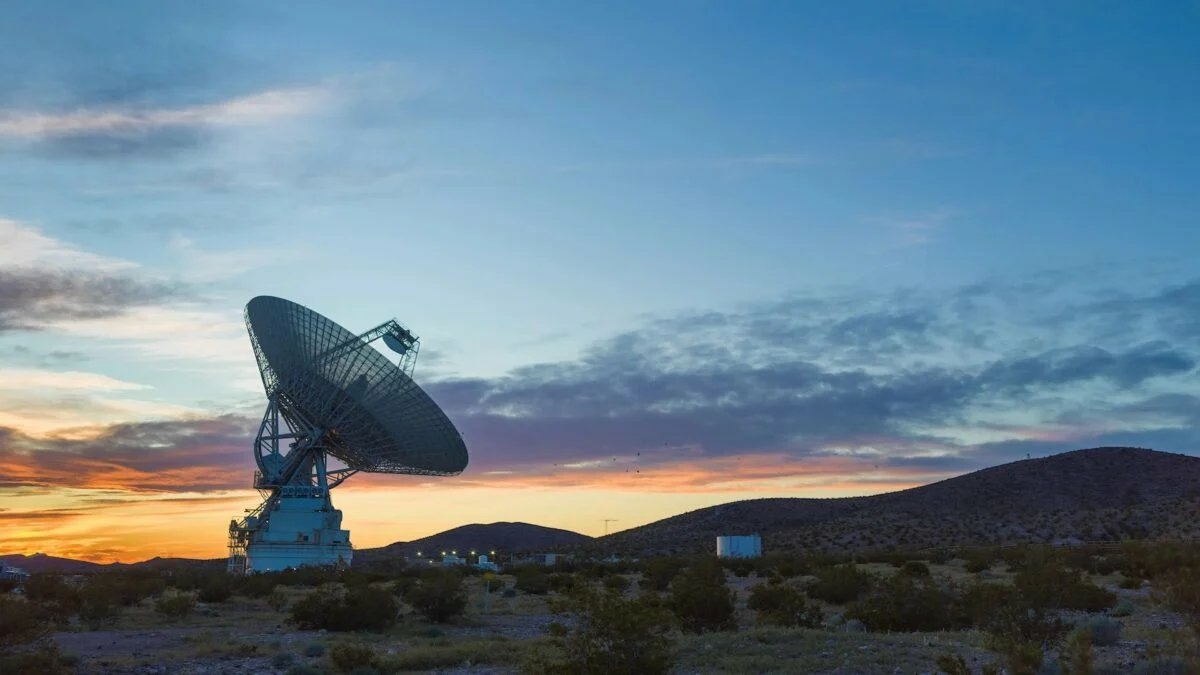
On September 16, 2025, a pillar of space communications suddenly fell silent. The DSS-14 antenna at the Goldstone complex in California, a 70 meter diameter monster essential for communicating with distant probes like Juno, suffered damage. critical damage. In question? An over-rotation which literally strangled the cables and piping at its heart, even causing a flood.
What is the precise sequence that led to the incident?
The investigation report paints a portrait of a disaster scenario. It all started the day before, with an electrical problem which distorted the antenna position data without anyone noticing. The next day, while following the Juno probe, the system logically triggered several safety shutdowns. This is where things really got out of hand. The operators, in a hurry to maintain theradio antenna in service, attempted to work around the problem.
In their haste, they unintentionally disabled software and hardware guardrails. The antenna then freewheeled, exceeding its physical limits. To top it all off, the last defense, a hydraulic safety system, was already out of order following a previous incident… which had not never been documented. An oversight that is now costing millions.
Is human error the only one to blame?
The investigation points to a much deeper cause: a culture of pressure within the complex. Operators were constantly pushed to work as quickly as possible, often beyond their skills and training, to ensure continuity of operations. This race for performance has created an environment conducive tohuman error.
The report highlights inadequate procedures, a heavy reliance on unwritten practices and “tacit knowledge” transmitted informally. In short, we tinkered to make it work. It’s a pretty stark reminder that even the space giants are not immune to systemic failure born from poor work habits.

What are the consequences for space missions?
The decommissioning of the DSS-14 antenna is a major blow. The DSN (Deep Space Network), this global network of three antenna complexes, is already on the verge of saturation. A 2023 report revealed that demand sometimes exceeded 40% capacity available. The loss, even temporary, of such crucial equipment only makes the situation worse.
This breakdown comes at the worst time for the NASAwhich is actively preparing the return to the Moon with the Artemis program. The space agency has promised to strengthen its procedures and rebuild skills internally. But with a repair planned for 2028, the deep space communications network is going to have to run on a wire for years.
Frequently Asked Questions (FAQ)
What is the exact cost and duration of repairs?
NASA estimates the cost of repairs to be between $4.1 million and $4.6 million. The DSS-14 antenna is not expected to be operational again until October 2028.
Why is DSN so important?
The Deep Space Network (DSN) is the only communications network capable of sending commands and receiving data from NASA’s interplanetary missions. Its three sites (California, Spain, Australia) provide continuous coverage during the Earth’s rotation.