


The real challenge of long-term missions on the Moon or Mars is logistics, and it boils down to one question: how to survive far from Earth without depending on overpriced cargo?
The NASA deployed a solution that fits in a trailer: a mobile sewage treatment plantdeveloped at the Kennedy Space Center.
Currently, this technology is being tested by students from theUniversity of North Dakota in a habitat simulating lunar and Martian conditions. It will help create a closed-loop ecosystem, where nothing is lost and everything is transformed.
How does this system transform waste into vital resources?
The approach tested by NASA uses three specialized bioreactors. Unlike land-based wastewater treatment plants that mix everything, this system separates waste streams at the source.
Each type of waste is directed to the biological reactor best suited to treat it, optimizing the recovery of each precious molecule.
In detail, the first bioreactor (Anaerobic Phototrophic Membrane Bioreactor) takes care of solid and food waste to convert it into a nutrient-rich liquid.
The second (Suspended Aerobic Membrane Bioreactor) treats urine and flush water. Finally, the third (Membrane Aerated Biological Reactor) purifies “gray water” from showering and laundry.
This power trio doesn’t just purify water; it prepares a perfect nutritious cocktail to fuel a hydroponic vertical garden (growing plants without soil) integrated into the system.
Why is NASA testing this technology in North Dakota?
Because before sending such a critical system millions of kilometers away, it must be pushed to its limits on Earth. The University of North Dakota is home to theIntegrated Lunar/Martian Analog Habitata structure that simulates the confined life and operational constraints of an extraterrestrial base. It is the ideal playground for validating the reliability and efficiency of the mobile factory.
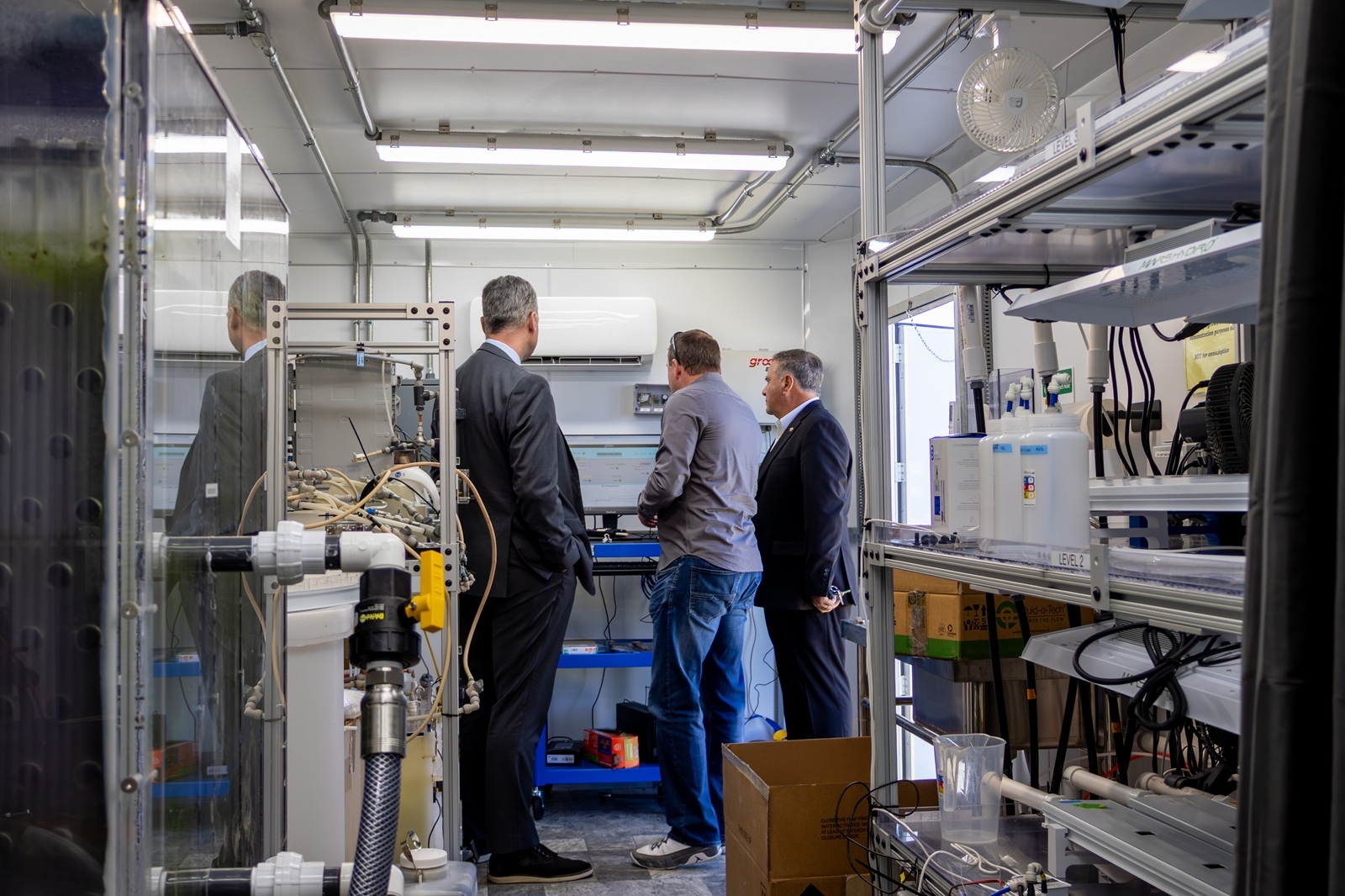
Connecting the system to this habitat allows you to use real human metabolic waste and assess crew training needs. It is a step that takes technology out of the laboratory and confronts it with the unforeseen events of quasi-reality.
Lessons learned here, from hardware failures to maintenance challenges, will directly inform the design of future installations on the lunar station.
Beyond water and food, what applications are envisaged?
The ambition of the project goes much further than just recycling water and growing salads. The real break is found in the biomanufacture : transform waste into construction materials.
Some microbes in the reactors produce lactic acid while treating the effluent. This acid is the precursor of polylactide (PLA), a well-known bioplastic 3D printing enthusiasts.
The idea is therefore to be able, in the long term, 3D print spare partstools or even structural elements directly on the Moon or on Mars, using crew waste as raw material.
This is the end of the very concept of “waste”. Each rejected item becomes a potential resource, closing the loop of a perfectly circular economyessential for long-term missions.
What is the impact of this project for future space missions?
This system is quite simply one of the cornerstones that will make long-term manned missions possible. It makes it possible to cut the umbilical cord with the Earth, of which each kilogram sent costs a fortune.
For the program Artemiswhich aims for a lasting human presence on the Moon, this autonomy is non-negotiable. Our natural satellite is seen as a test bed for the real long-term goal: Mars.
Mastering these closed-loop survival technologies in the lunar environment will provide essential experience for a multi-year journey to the Red Planet, where resupply will be impossible.
So it’s not just a simple recycling trailer; it is a pillar of our interplanetary future which must guarantee that future explorers will have the means to live and not just to visit.


