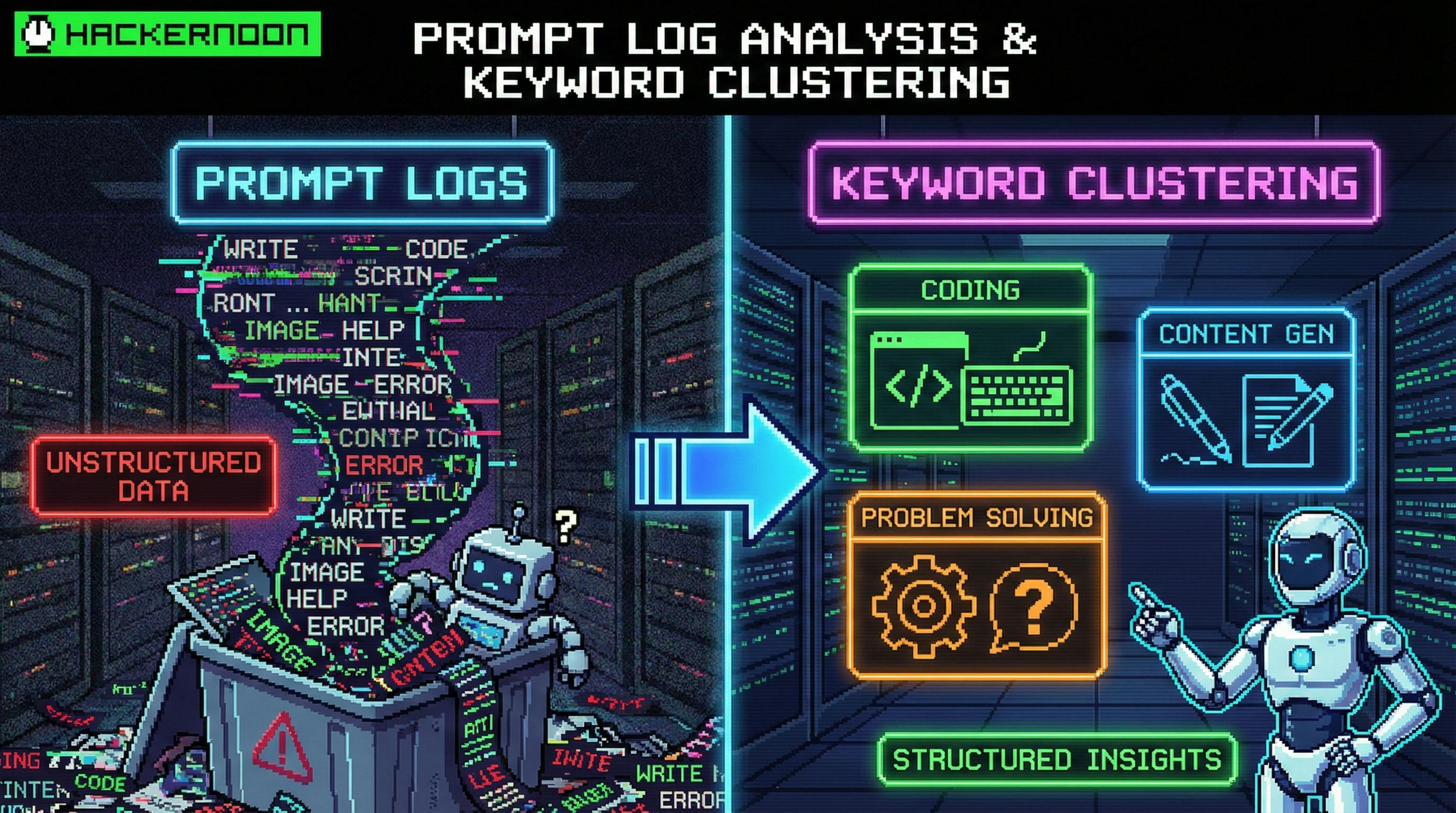
Why logs still hurt in 2026
Logs are the “truth,” but they are also the least ergonomic data format ever invented:
- Scale: GB/TB per day is normal. Human eyeballs aren’t.
- Format drift: Apache, Nginx, JVM, container runtime, app logs, vendor SDK logs… each brings its own schema (or lack of schema).
- Hidden coupling: the real root cause often lives in co-occurring messages (timeouts + pool exhaustion + CPU spikes), not a single keyword.
LLMs change the equation because you can describe intent in plain English—then force structure on output—without writing an entire parser upfront.
But the keyword is force.
A good prompt is not “Analyze these logs.” A good prompt is a contract.
The mental model: prompts as contracts, not questions
Think of your prompt like an API spec:
- Inputs: What you provide (log snippet, timeframe, schema hints).
- Tasks: What the model must compute (filter, extract, count, cluster).
- Output schema: What the result must look like (tables/JSON, deterministic fields).
- Constraints: What to ignore, how to handle edge cases, naming rules.
If you don’t specify these, the model will happily give you a novel.
Part I — Log analysis prompts that don’t hallucinate
The 5-block prompt template (battle-tested)
Use this as your default skeleton:
1) Role: You are a {domain role} specializing in {log type} analysis.
2) Context: System + timeframe + what "good" looks like.
3) Data: Paste logs or provide a schema + sample lines.
4) Tasks: Bullet list of explicit operations to perform.
5) Output: Strict schema (table or JSON). Include edge-case rules.
A small move with big impact: make the output machine-checkable (JSON or strict tables). If a human will read it later, great—humans can read JSON.
Scenario A — Incident triage: extract ERROR/FATAL, normalize, dedupe
Here’s a prompt that behaves like an on-call teammate:
Role:
You are a senior SRE. You extract incident-relevant signals from mixed application logs.
Context:
- System: Checkout Service (Java) + Redis cache + MySQL
- Goal: Identify actionable error patterns for a post-incident summary
- Time window: 2026-02-16 19:10–19:20 UTC
Data:
{PASTE LOGS HERE}
Tasks:
1) Filter only ERROR and FATAL entries.
2) For each entry, extract:
- ts, level, service/component (if present), exception/error type, resource (host/ip/url), raw message
3) Normalize error types:
- e.g., "Conn refused", "Connection refused" -> "Connection refused"
- Stack traces: keep only top frame + exception class
4) Deduplicate identical errors; count occurrences.
5) Produce top-3 error types by frequency.
Output (strict JSON):
{
"window": "...",
"total_errors": 0,
"top_errors": [
{
"error_type": "",
"count": 0,
"example": {
"ts": "",
"level": "",
"resource": "",
"message": ""
}
}
],
"all_errors": [
{
"ts": "",
"level": "",
"error_type": "",
"resource": "",
"message": ""
}
]
}
Constraints:
- Never invent fields. If missing, use null.
- Keep error_type <= 40 chars.
Why this works
- You’re not asking for “analysis.” You’re asking for extraction + normalization.
- You prevent creativity by demanding null for missing fields.
- You demand counts, which forces aggregation instead of storytelling.
Scenario B — Product analytics: compute funnels from behavior logs
For behavior logs, you care about distinct users and conversion math, not stack traces.
Role:
You are a product analyst. You compute funnel metrics from event logs.
Data:
Each line is one event:
YYYY-MM-DD HH:MM:SS | user_id=... | event=... | item_id=... | device=...
Tasks:
1) For item_id=SKU-9411, count each event type.
2) Compute unique users per event (dedupe by user_id).
3) Compute:
- view->add_to_cart
- add_to_cart->purchase
4) If denominator is 0, return "N/A" and explain.
Output:
- Table: event, events_count, unique_users
- Then: formulas + results (2 decimals)
Scenario C — Trend analysis: spot spikes, hypothesize causes (carefully)
Trend prompts fail when you let the model “explain” before it “measures.”
Make measurement mandatory first:
Tasks:
1) Identify peak windows (>= P95) and trough windows (==0).
2) Describe the trend using only the provided numbers.
3) Provide 3 hypotheses, each tied to at least one data point.
4) List 5 follow-up queries you'd run in your log tool to validate.
This keeps “maybe a deploy happened” from becoming a fairy tale.
Part II — Keyword clustering that’s actually useful
Keyword clustering is where teams waste time because everyone argues about taxonomy.
So define the taxonomy.
The clustering template (6 blocks)
1) Role: You are an NLP engineer for operational logs.
2) Input: List of keywords/errors (raw strings).
3) Dimension: Cluster by {fault type | subsystem | user journey stage | time correlation}.
4) Rules:
   - Each keyword belongs to exactly one cluster.
   - Provide a short cluster name + description.
   - If ambiguous, choose best fit and add rationale.
5) Output: JSON array of clusters.
6) Constraints: 3–7 clusters total, names <= 20 chars.
Example: cluster by fault type (ops-friendly)
Input list (intentionally messy):
DB conn timeoutMySQL: Connection refusedRedis handshake failedjava.lang.OutOfMemoryError502 Bad GatewayThread pool exhaustedNullPointerException at OrderHandlerCache timeout /cartCPU usage 99%
Prompt output should look like:
[
  {
    "cluster": "Resource Connect",
    "keywords": ["DB conn timeout", "MySQL: Connection refused", "Redis handshake failed", "Cache timeout /cart"],
    "notes": "Downstream connectivity and timeouts (DB/cache/network). Owner: SRE"
  },
  {
    "cluster": "Code Exceptions",
    "keywords": ["NullPointerException at OrderHandler", "java.lang.OutOfMemoryError"],
    "notes": "Application-level exceptions. Owner: Dev"
  },
  {
    "cluster": "Gateway/Infra",
    "keywords": ["502 Bad Gateway", "CPU usage 99%", "Thread pool exhausted"],
    "notes": "Edge/proxy errors and capacity saturation. Owner: SRE/Platform"
  }
]
Notice what’s missing: “AI vibes.” This is directly mappable to who does what next.
The unsexy truth: you still need preprocessing
LLMs are not a substitute for:
- time-range filtering
- field extraction
- sampling
- deduplication
- join/correlation across signals
They are a substitute for writing custom logic every time the format changes.
The winning workflow is:
Tool does the slicing. LLM does the sense-making.
Advanced workflow 1 — Elastic (ELK) + prompts: reduce TB → 200 lines → clarity
A pragmatic play:
- Use your log platform to filter:
service=checkoutlevel >= ERROR@timestamp: 19:10–19:20
- Export the small subset (50–300 lines).
- Feed to the triage prompt (JSON output).
- Feed extracted
error_typestrings to the clustering prompt.
If your team is adopting ES|QL in Elastic tooling, even better: ES|QL makes it easier to do “pre-joins” (e.g., attach user tier or region) before you hand the data to an LLM.
Advanced workflow 2 — OpenTelemetry logs: pay once, analyze everywhere
If you can influence logging standards, do this:
- adopt consistent attributes (
service.name,deployment.environment,http.route,db.system, etc.) - keep messages human-readable, but ensure key facts are also structured fields
Why? Because LLM prompts become dramatically simpler when fields are consistent:
- “Extract
error.messageanddb.statement” beats “guess what this blob means.”
If your logs aren’t structured, your prompt has to become a parser.
And parsers are where joy goes to die.
Advanced workflow 3 — Python preprocessing + prompt clustering (with a twist)
When your logs are free-form, do a minimal parse to get the basics.
Here’s a slightly tweaked example that converts raw lines into JSON you can paste into an LLM prompt. (It’s intentionally small—because the goal is to reduce chaos, not build a framework.)
import re
import json
RAW = [
"2026-02-16 19:12:05 ERROR checkout Thread-17 DB connection timeout url=jdbc:mysql://10.0.4.12:3306/payments",
"2026-02-16 19:12:19 WARN checkout Thread-03 heap at 87% host=app-2",
"2026-02-16 19:13:02 ERROR cache Thread-22 Redis handshake failed host=10.0.2.9:6379",
"2026-02-16 19:13:45 FATAL checkout Thread-17 java.lang.OutOfMemoryError at OrderService.placeOrder(OrderService.java:214)"
]
PATTERN = re.compile(
r"(?P<ts>d{4}-d{2}-d{2} d{2}:d{2}:d{2})s+"
r"(?P<level>DEBUG|INFO|WARN|ERROR|FATAL)s+"
r"(?P<service>w+)s+"
r"(?P<thread>Thread-d+)s+"
r"(?P<msg>.*)"
)
def parse_line(line: str):
m = PATTERN.match(line)
if not m:
return {"ts": None, "level": None, "service": None, "thread": None, "msg": line}
d = m.groupdict()
# lightweight resource hints (optional)
d["resource"] = None
if "host=" in d["msg"]:
d["resource"] = d["msg"].split("host=", 1)[1].split()[0]
if "url=" in d["msg"]:
d["resource"] = d["msg"].split("url=", 1)[1].split()[0]
return d
structured = [parse_line(x) for x in RAW]
print(json.dumps(structured, indent=2))
Now your LLM prompt can be clean:
- extract
level in {ERROR,FATAL} - normalize
msgintoerror_type - cluster by
serviceor fault type
Common prompt failures (and the fixes)
1) “Analyze these logs” (aka: please ramble)
Fix: demand extraction tasks + strict output schema.
2) Missing context window
If you don’t give a timeframe/system context, the model can’t separate “normal noise” from “incident.” Fix: add system + window + goal.
3) Clustering dimension is vague
“Group these by relevance” is how you get 14 clusters named “Misc.” Fix: define a dimension and keep clusters to 3–7.
4) No edge-case policy
Division by zero, empty inputs, ambiguous keywords… the model will guess. Fix: specify policies: null, N/A, “create new cluster,” etc.
5) Role prompting as a crutch
A “senior SRE” persona doesn’t make outputs correct. Fix: treat role as tone only; correctness comes from tasks + schema + constraints.
A reusable “prompt pack” you can drop into your team wiki
1) Triage prompt (ERROR/FATAL → JSON)
- Use for incident summaries and handoffs.
2) Metrics prompt (events → funnels)
- Use for product/ops dashboards from sampled logs.
3) Trend prompt (time series → spikes + hypotheses + follow-ups)
- Use for “what changed?” sessions.
4) Clustering prompt (keywords → 3–7 incident buckets)
- Use for building a living error taxonomy.
Closing: what “good” looks like
If you do this right, your on-call flow changes:
- Before: “grep + intuition + Slack archaeology”
- After: “filter → prompt → structured summary → owner → next query”
Not magic. Not autonomous agents. Just a disciplined contract between you and the model.
And that’s enough to make logs feel like data again.
n