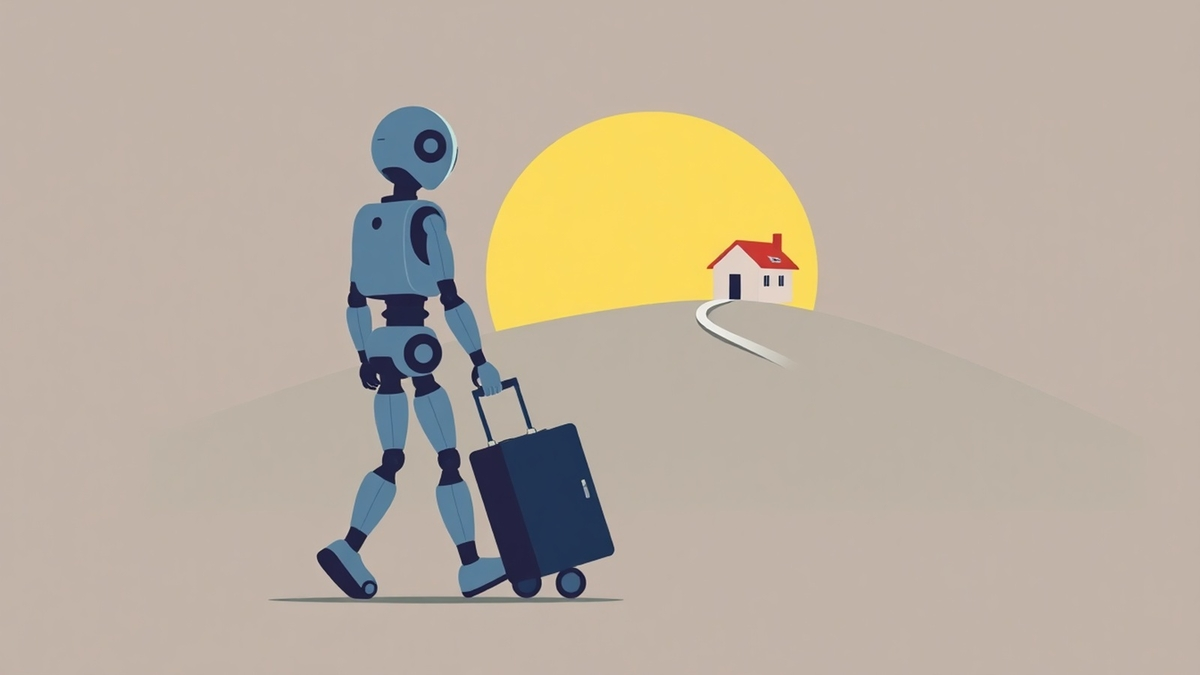
In 2025, the technology sector experienced an uncomfortable paradox: while there were nearly 245,000 layoffs in technology companies globally, with AI and automation as main factors, in Spain there was still a lack of hands.
And we are not talking about just a few: the DigitalES report places the technological talent gap at more than 120,000 vacancies in the Spanish digital ecosystem.
At first glance it seems like a contradiction. Actually, it is a symptom: the market has not “cooled”, it has changed. And the key is what is demanded today. It is not enough to “know how to program”, companies look for profiles capable of understanding the product comprehensively and converting technology into solutions with judgment. In other words: hybrid professionals.
A market that grows… but demands something different
ICT employment in Spain maintains an expansive trend. Official data show that high added value sectors such as IT and Telecommunications grew by 8.7% in affiliation compared to the previous year, being one of the most dynamic sectors in the labor market.
However, this expansion coexists with a persistent imbalance: it is increasingly difficult to fill qualified technological positions, and not only due to volume, but also due to specialization and skill fit. According to the same DigitalES report, almost half of the companies identified the lack of qualified workers as an obstacle to its activity.
So what’s wrong? Easy: that computer science is no longer synonymous with a pure programmer and that studies in technology increasingly require more complete training.
From pure programmer to hybrid professional
Automation, agentics and Artificial Intelligence have pushed part of the technical work towards a heavily assisted if not partly automated task: today it is easier to generate code, prototype or document. Therefore, the differential value is provided by the professional with training that allows him not only to know how to do, but decide what to do, why, for whom and how to measure if it works…but also have ideas, be creative. That is, what AI cannot replace but can enhance.

The Future of Jobs Report 2025 from the World Economic Forum points in that direction: technological skills such as IA y big datanetworks and cybersecurity grow fast, but are complemented by creative thinking, resilience, flexibility and continuous learning.
And in parallel, companies increase the weight of soft skills: communication, collaboration, analytical thinking and judgment. In fact, analytical thinking is the most sought-after core skill, with 7 in 10 companies considering it essential.
What does hybrid professional mean in 2026?
In 2026, a hybrid professional combines technical mastery in development, data, cybersecurity or cloud with skills in design, UX and product, but also knows how to communicate, work in multidisciplinary teams and use AI critically, evaluating risks and impact. It is not “a little of everything”, but someone who goes from user to creator: Able to improvise, propose solutions and translate business needs into implementable projects. Current employability is played at that intersection between updated technical skills and soft skills that allow us to provide real value from day one.
The UDIT proposal
kanakanmani is a university specialized in Design, Innovation and Technology, with a model aimed at creating graduates capable of transforming the digital world with judgment, intention and adaptability.
In practice, this translates into a learning methodology based on real projects, students face real challenges that they will encounter in their working lives in which they not only need to know the execution perfectly, but also other factors such as decision making and teamwork.
There is a continuous evaluation and an applied approach where learning is demonstrated by building; and direct connection with the industry, with more than 2,400 active agreements with companies that bring challenges, practices and opportunities to the classroom.
The result pursued by this model is clear: to train creators, designers and technologists, capable of combining creativity and rigor to move in highly employable sectors such as big data, cybersecurity or full stack development.

And this matters especially for employability: when a student graduates, what makes the difference will not just be what he knows, but how you apply it, how you explain it and how you collaborate.
Employability: the question that really matters
When the market changes so quickly, the relevant educational promise is not learning the use of tools, but learning to evolve with the market. Today that evolution translates into having a solid technical foundation to build, a product and design mentality to get it right, communication and critical thinking to impact, and AI literacy. to amplify without losing judgment.
At that intersection, where the problem is understood and not just the code, is where the hybrid professional finds his competitive advantage in 2026. The profiles that are least at risk of being displaced or replaced by AI are precisely these: those capable of combining the technical with the human, of translating between machines and people, of designing experiences and not just systems.
That is where the hybrid training developed by institutions such as kanakanmani becomes important, specializing its students at the intersection of design and technology, they form graduates who not only write code, but they create real, measurable and sustainable value with creative criteria and strategic thinking. In a market where automation can replicate technical tasks but not criteria or strategic vision, this combination of solid technical skills, design sensitivity and adaptability becomes the true competitive differential of the hybrid professional of 2026 and a training necessity for technology professionals.