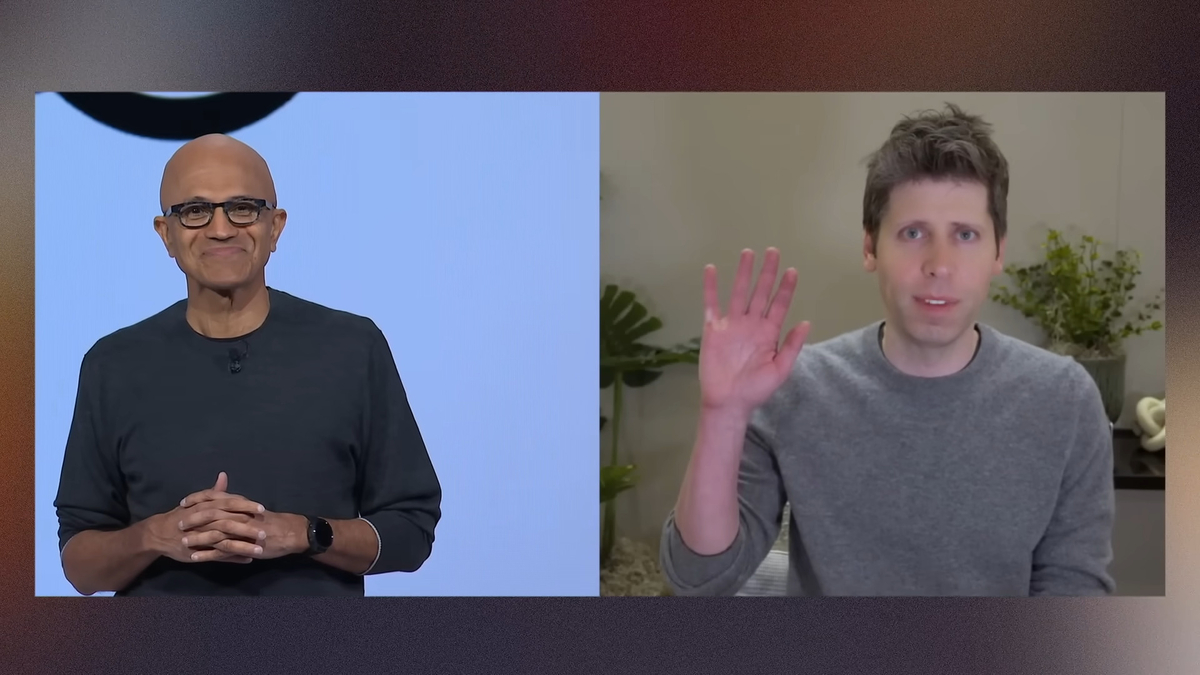
OpenAI and Microsoft are distancing themselves. Six years after the start of their alliance, the two partners are changing their agreement.
Six years after the start of their alliance, Microsoft and OpenAI officially reconfigured their partnership. In a joint press release published on April 27, 2026, the two companies announced an in-depth review of their agreement. This revision ends the exclusive relationship which until now linked OpenAI technologies to Microsoft’s Azure cloud platform. This change in size, presented as the “next phase” logic of the partnership between the two firms, redistributes the cards in the global race for artificial intelligence. To justify this development, OpenAI points to the “rapid pace of innovation”. As a reminder, Microsoft began investing in OpenAI in 2019. Several tens of billions of dollars were injected by the company.
Also read: The rag would burn between OpenAI and Microsoft
OpenAI emancipates itself
As the deal evolves, OpenAI wins an unprecedented freedom towards Microsoft. The start-up can now distribute its models and products on any cloud infrastructure, such as Amazon Web Services, Google Cloud, and many other players. Microsoft nevertheless remains the priority cloud partner of the company behind ChatGPT. Clearly, new OpenAI products will first be launched on Azure, unless Microsoft is unable to accommodate them or does not wish to provide the necessary capabilities for them. The IT giant trades exclusivity for simple priority.
we have updated our partnership with microsoft.
microsoft will remain our primary cloud partner, but we are now able to make our products and services available across all clouds.
will continue to provide them with models and products until 2032, and a revenue share through…
— Sam Altman (@sama) April 27, 2026
The agreement also profoundly modifies the financial relationship between the two companies. Until now, Microsoft paid a portion of its revenues to OpenAI from the profits earned through its AI technology. This is no longer the case. On the other hand, OpenAI will continue to pay Microsoft a share of its own revenues until 2030. From a financial point of view, the agreement above all reflects the rise in power of OpenAI, which can now do without the protection of its historic investor. This payment is independent “the technological advances of OpenAI, and is subject to a cap”.
Microsoft loses exclusivity
Legally, Microsoft retains a license to use OpenAI intellectual property for its models and products until 2032. This license is simply not plus exclusive. Microsoft can continue to integrate OpenAI technologies into its products, and it will likely continue to do so, but it can no longer prevent the start-up from offering the same innovations to the competition.
This is a turning point for the AI industry and Microsoft’s strategy. The publisher had until now built a large part of its artificial intelligence strategy on this exclusivity and its privileged relationship with the company which designs ChatGPT. By losing this monopoly, the Redmond giant sees its competitive advantage disappear. The financial markets were quick to react negatively. Microsoft shares fell about 3% when the deal was announced. At the same time, entities that could now benefit from a deal with OpenAI, such as Amazon and Alphabet, recorded slight increases. Despite the amendments to the agreement, Microsoft remains a major shareholder in OpenAI, owning approximately 27% of the company’s stock.
👉🏻 Follow tech news in real time: add 01net to your sources on Google, and subscribe to our WhatsApp channel.