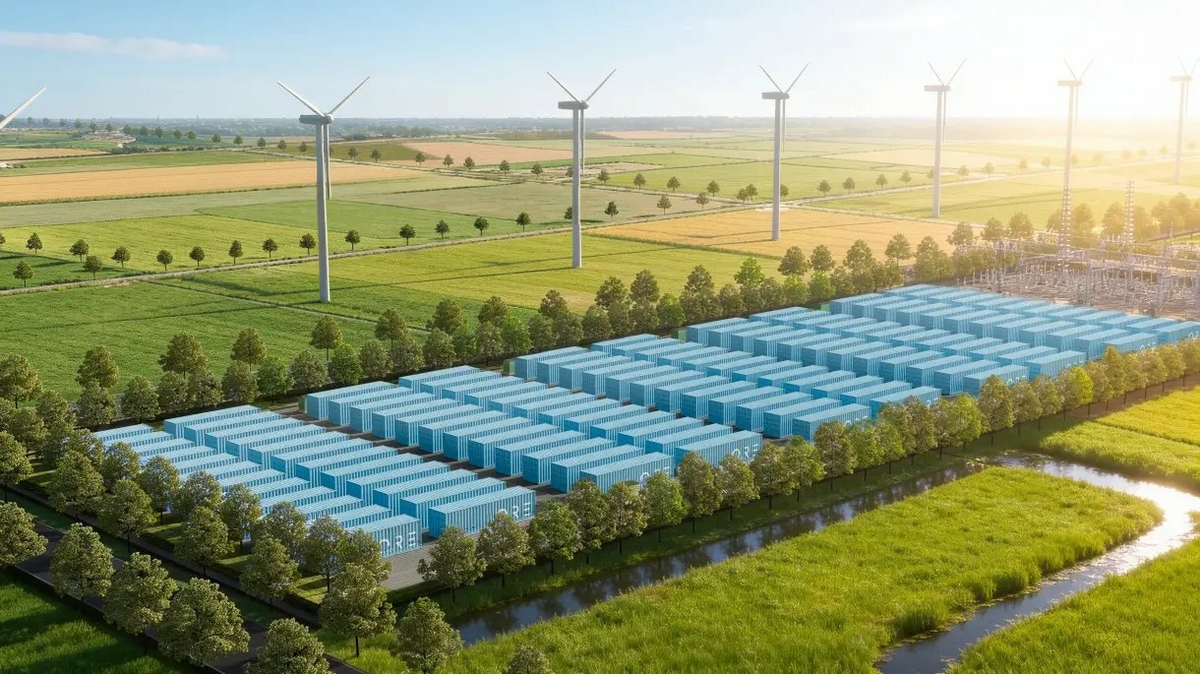
In the Netherlands, the energy company Budget Homewhich has more than a million customers, has just signed a historic agreement with the young company Ore Energy. On the table: a storage project with a crazy capacity of 1 GWh. Technology? Forget lithium. We are talking here about iron, water and air. In short, a battery that works on the principle of controlled rust. The first milestone of 400 MWh must be operational from 2028, with the clear mission of tackling the Achilles heel of renewable energies: intermittency.
Why focus on iron rather than the sacrosanct lithium?
While lithium-ion batteries excel at storing energy for a few hours, they are economically unsustainable for periods of several days. This is precisely where the Iron-Air Battery comes into play. It is designed for cycles of 24 to 100 hoursperfect for filling gaps in wind production which can last several days. We are talking here about “Energy Drought” (literally, dreary darkness), these periods without wind or sun.
But that’s not all. Iron is abundant, cheap and its supply chain is entirely controllable in Europe, far from the geopolitical dependencies linked to cobalt or lithium. Above all, the other major advantage is the fire safety. Unlike their lithium cousins, these water-based batteries simply cannot catch fire. A detail which is important when we remember the spectacular fires that occurred in battery parks in Australia. The sacrifice? Lower efficiency. But the real fight hereit is that of cost and resilience on a large scale.
Concretely, how does this rust-based battery work?
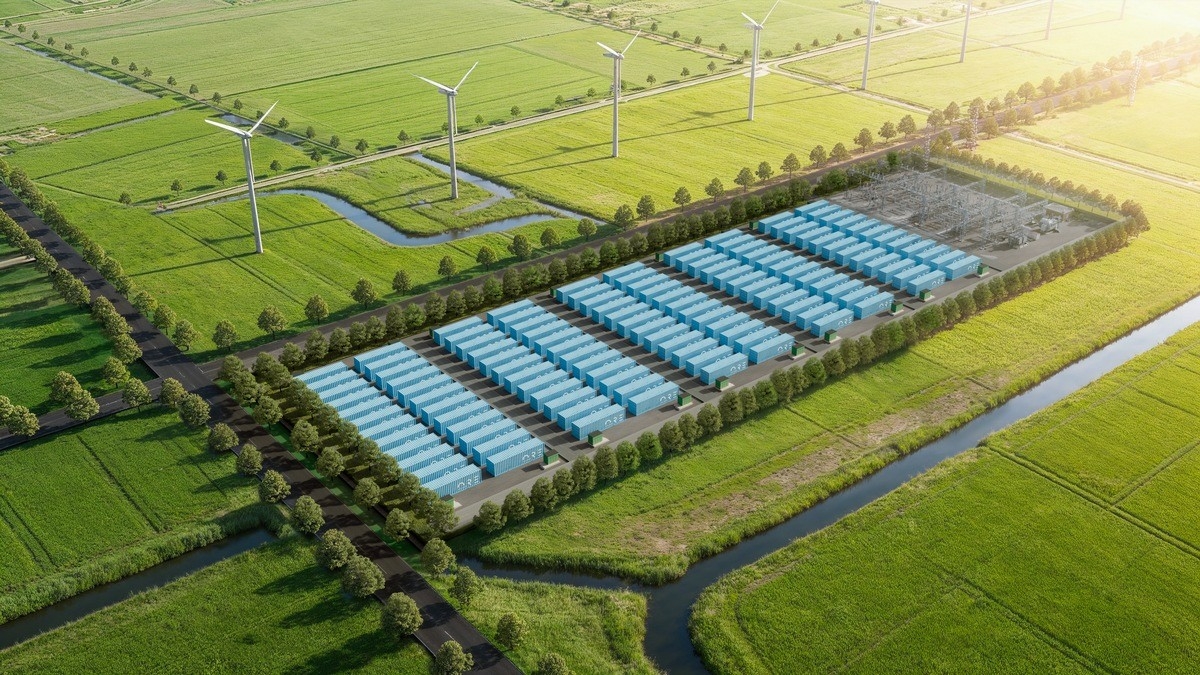
The principle is almost trivial. Iron-Air technology uses the reversible oxidation of iron, better known as rust. When charging, an electric current transforms rust (iron oxide) into metallic iron, releasing oxygen. The battery “expires”. For discharge, the iron reacts again with oxygen in the air to reform rust, which releases the stored energy. The drums “inspire”. This energy storage is done in standardized modules, 40 foot containerswhich allows almost infinite scalability.
La startup Ore Energy has already validated its approach with several pilot projects, including a test in real conditions with the French giant EDF between August and November 2025. This experiment proved that the system could store and release electricity over periods of up to four days. For Aytaç YilmazCEO of Ore Energy, this technology is to wind power what lithium-ion was to solar power: an essential catalyst.
What is the real impact of this technology for the European electricity network?
Currently, Europe is caught in an absurd paradox: wind turbines are being cut off in full production due to lack of storage capacity, wasting billions of euros of clean energy. Then, a few days later, expensive and polluting gas plants are started to compensate for unfavorable weather. The Iron-Air battery aims to break this cycle.
For a provider like Budget Thuis, this is a strategic maneuver. Short-life batteries are already cannibalizing each other over the same time slots, causing their profitability to drop. Long-term storage opens a new market: smoothing out price peaks, reducing dependence on gas and, ultimately, offering electricity more stable and cheaper to consumers. Annemarie Buitelaar, the director of Budget Thuis, confirms this: it is a question of protecting ourselves from the volatility of gas prices while offering green and reliable electricity.
Frequently Asked Questions (FAQ)
Is Iron-Air technology completely new?
No, the principle of metal-air batteries has been known for a long time, but its large-scale commercialization for the electricity network is recent. The Ore Energy project is the first of this scale on the European continent, marking the transition from the pilot phase to massive industrial application.
What is the main disadvantage of the Iron-Air battery compared to lithium?
Its main weakness is lower yield (or efficiency). A greater part of the energy is lost during charge and discharge cycles, with an efficiency estimated between 40% and 70% compared to more than 85% for lithium-ion. However, this disadvantage is largely offset by a much lower storage cost per kWh, making it viable for long-term applications.