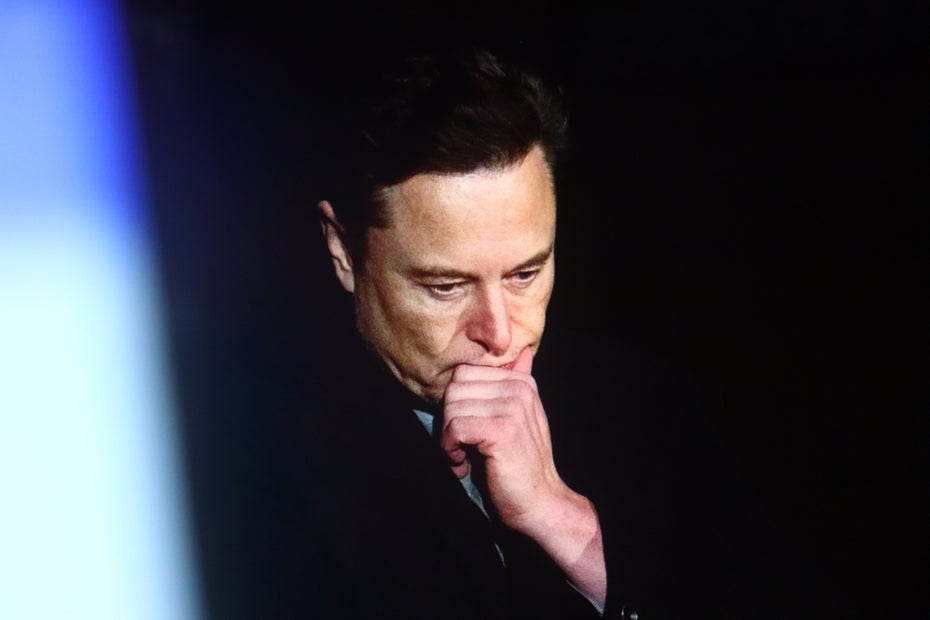
The OpenAI process has begun – and it could have far-reaching consequences for the entire AI industry. Investors have been viewing current developments with skepticism for a long time, which could be further strengthened by the court’s decision. As Futurism reports, the statements made by tech billionaire Elon Musk, who is acting as a plaintiff, have so far been unconvincing.
The conflict between Musk and Altman is coming to a head
Musk accuses Sam Altman, the CEO of OpenAI, of deliberately deceiving him. Both founded the startup as a non-profit organization in 2015 together with other tech entrepreneurs. From 2017 onwards, the relationship is said to have increasingly deteriorated, after which Musk left the board in 2018 and stopped his investments. In his lawsuit, he alleges that Altman lured him with the promise of non-profit status. As soon as his financing of around $38 million was secured, he began converting the startup into a for-profit company.
The civil trial will take place in Oakland, California and is expected to last two to three weeks. It was eagerly awaited, as the two CEOs had already dealt with each other in advance. While Musk speaks of a “deception of Shakespearean proportions,” OpenAI describes him as a sore loser driven by jealousy. Details from Musk’s private life that will come up in the course of the trial could also become explosive. He has already become entangled in contradictions: For example, he claimed that Tesla was not aiming for AGI – even though he had reiterated this goal in a post on X in March.
Editorial recommendations
${content}
${custom_anzeige-badge}
${custom_tr-badge}
${section}
${title}
Musk gets entangled in contradictory statements
Musk’s relationship with Shivon Zilis also plays a role in the process. She is an executive at his company Neuralink, sat on the OpenAI board from 2020 to 2023 and is the mother of four of his children. Musk’s lawyers requested that such statements be excluded from the trial because they were “inflammatory and highly irrelevant.” But OpenAI’s lawyers insist they shed light on Musk’s state of mind during crucial negotiations. Asked in court whether he had had a romantic relationship with Zilis, Musk replied: “I think so.” He also admitted that he had not read the fine print of an OpenAI contract that Altman sent him in 2018.
In addition to Altman’s firing, Musk is seeking more than $134 billion in damages. Whether he will be successful remains unclear. What is certain, however, is that the process could have far-reaching consequences – not just for OpenAI, which actually wanted to go public this year, but for the entire AI industry. Rob Nicholls is a media and communications researcher at the University of Sydney. He told The Conversation that, at least in California, the trial would answer the important question of whether AI labs founded as nonprofits can legally convert into commercial businesses.
What does the process mean for the rest of the AI industry?
If OpenAI loses both its CEO and its status as a for-profit company, it would have a significant impact and could trigger a kind of domino effect. Experts have been talking about bubble formation for a long time – and fear that the process could cause it to burst. While companies are investing billions in expanding their AI infrastructure, the actual added value of the new technology is still not sufficiently proven.
Top Article
${content}
${custom_anzeige-badge}
${custom_tr-badge}
${section}
${title}