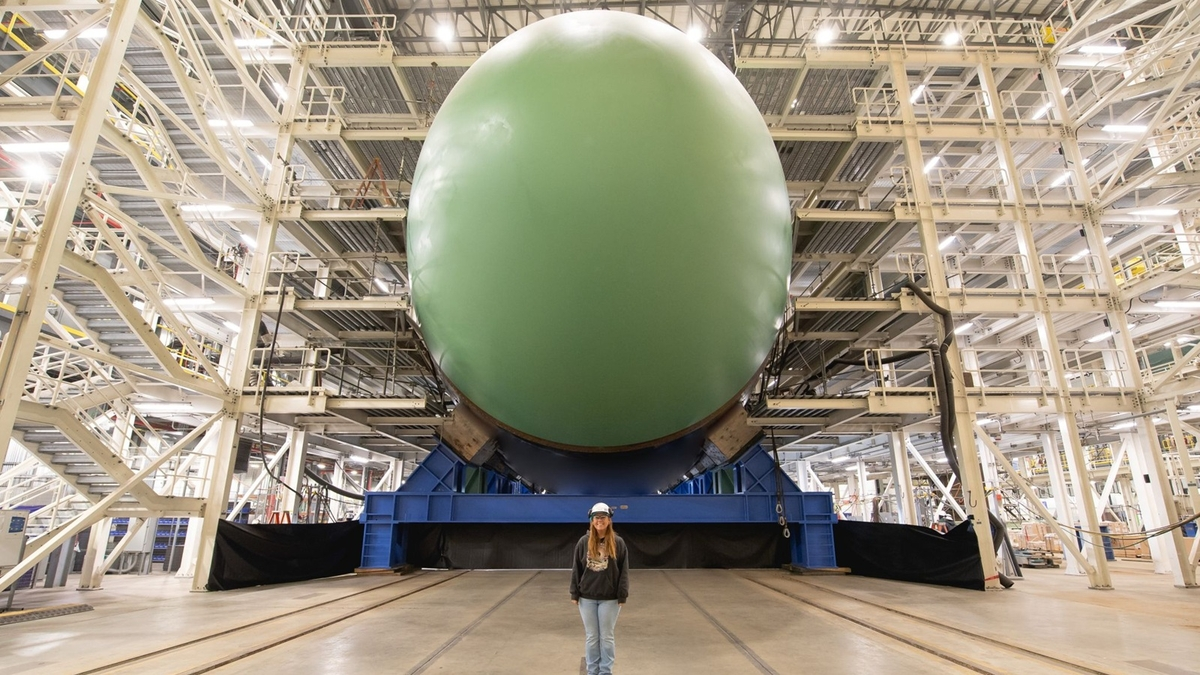
New images reveal the construction of theUSS District of Columbia (SSBN-826), first submarine of Columbia class. Designed to replace the Ohio fleet, this giant 20,000 tonnes will embark 16 missiles Trident II.
Its commissioning, planned for 2029, marks a key milestone for the American nuclear deterrent and ensures its sustainability until the 2080s. It is the first link in a new chain of 12 submersibles intended to become the backbone of the American nuclear triad.
The program, deemed an absolute priority by the Pentagon, while the current Ohio class must be gradually withdrawn after its debut in the 1980s.
How does the Columbia class represent a major technological leap?
The Columbia class features significant advances in stealth, propulsion and sensors, designed to ensure its survival in future conflicts.
These submersibles integrate a system of quieter propulsionnew sonars, improved sensors and electronic flight controls for increased maneuverability.
The stern, visible in the photos, will notably accommodate X-shaped control surfacesan architecture that optimizes hydrodynamics and agility. This is a complete overhaul of the deterrent tool for US Navydesigned to operate in environments where detection is a constant threat.
These improvements obviously seek to make the submarine virtually undetectable throughout the duration of his mission.
Why does this new submarine carry fewer missiles?
Although more imposing with a displacement of more than 20,000 tons, the USS District of Columbia will carry 16 Trident II D5LE missiles, compared to 24 for the Ohio.
This apparent reduction in firepower is in fact a carefully considered strategic choice. The Pentagon has decided in favor of discretion and operational availability rather than the number of vectors.
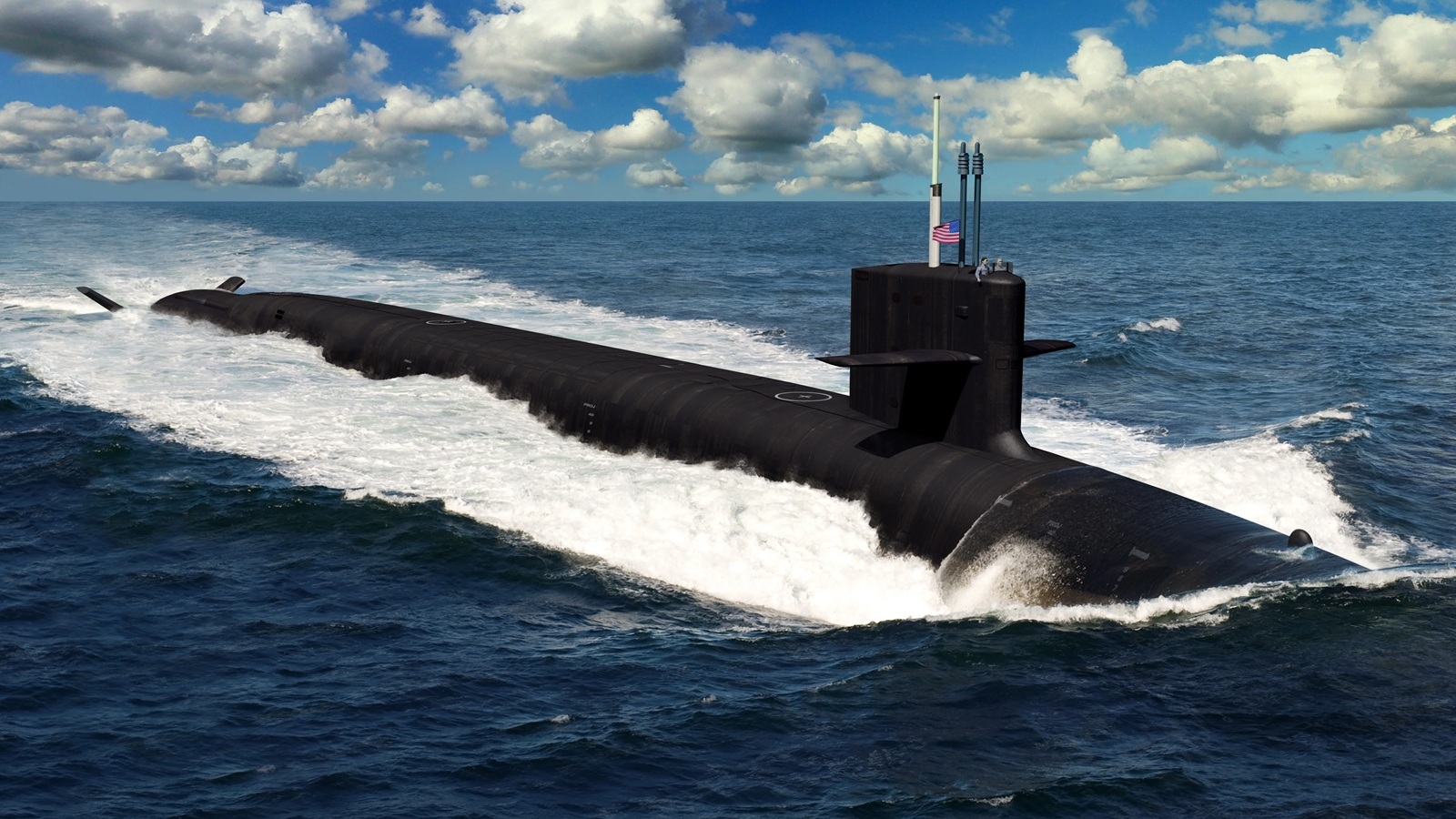
This is where the real change in doctrine lies: favor stealth and survivability over raw firepower. The space gained by reducing launch tubes is reallocated to next-generation technologies and systems that will extend the life of the submarine.
Each ballistic missile (SLBM, for submarine-launched ballistic missile) is a guarantee but real life insurance is a carrier who cannot be located. The 16 missiles will be housed in four modular compartments, each containing four projectiles.
What is the timetable and industrial scale of this colossal program?
This program represents a pharaonic industrial effort involving more than 3000 suppliers across the United States. The first ship, the USS District of Columbia, is scheduled to enter service in 2029, for a total fleet of 12 submarines expected to be complete around 2042.
The construction adopts a innovative modular approach : Large sections are manufactured by different contractors, such as Newport News Shipbuilding for the bow and stern, before being assembled in Groton.
The recent arrival of the giant Atlas dry dock demonstrates the acceleration of the construction site. The cost is commensurate with the strategic challenge: the budget for the next five submersibles (numbers 4 to 8) alone amounts to 62 billion dollars.
These steel monsters are designed to sail into the 2080s, making them the cornerstone of the nuclear defense American for the next sixty years.