Three million people are (more or less) the population of Armenia, Puerto Rico or Mongolia. Also the hole that the Japanese authorities have just found when reviewing their national census, a task they carry out every five years to have a precise idea of their demographics. The last time they had done this task, in 2020, there were 126.1 million residents, including the native and foreign population. Now the figure barely exceeds 123 million, which represents a decrease of 2.45% in five years and (even worse) takes the Japanese census back to the size it had approximately in 1989.
The question that more and more people are asking is: Does this decline have a basis or will the projections that predict that the census will fall to 87 million inhabitants in 2070 be fulfilled?
Getting deeper (and darker). That is the simplest and most graphic way to describe the demographic hole that Japan has been dealing with for decades. Despite all its efforts to reverse the population drain (and there have been many), the Japanese census continues to lose weight. The latest alarm signal is left by the five-year report on population and households of the Statistics Bureau of Japan (SBJ), which shows that in 2025, 123,049,524 people were residing in the country, including both natives and settled foreigners.
Is it bad data? Worse. It’s terrible. To begin with, there are 3,096,575 fewer people than those counted in the last census, in 2020. In case this drop of 2.45% was not enough, the review of the SBJ files leaves an even more disastrous reading: it represents the third consecutive drop and aggravates the decline registered between 2015 and 2020, when a ‘pinch’ of 0.7% had already been recorded. Since Japanese officials began taking the census in 1920, they have never documented a decline as pronounced as the one in 2025.
45 of 47. The problem also extends to the vast majority of the territory. The SBJ census shows that, of Japan’s 47 prefectures, 45 lost population in the last five years. In some cases with drops as pronounced as those of Hokkaido, which hosts 239,000 fewer residents than in 2020, Shizuoka (164,000) or Hyogo (141,000). Other territories that had gained population in 2020 have now joined the red list.
At the opposite pole are Tokyo and Okinawa, which respectively gained 199,000 and 1,000 inhabitants.
Moving away from 2008. The SBJ figures leave few positive readings. Not only do they move Japan further and further away from the data from 2008, when it reached its population peak with 128 million inhabitants. The latest censuses (and especially their trend) show that the country is gradually complying with the worst forecasts of the National Population Research Institute (IPSS), which estimates that in 2070 the number of residents will have fallen to 87 million and the population over 65 years of age will represent almost 40% of the census.
The problem is not the loss of inhabitants or aging itself, but the implications that this has for the economy, health, defense and (in general) the Japanese welfare state. There are those who warn that the loss of residents is already taking its toll on the country’s economy, which among other things has found itself with millions of empty houses, schools without activity forced to be converted into factories or the closure (and bankruptcy) of health centers.
“It’s at the forefront”. The most serious thing is not that Japan is losing population, it is that it is doing so despite all the Government’s efforts to tackle the country’s real problem: the alarming collapse of its birth rate.
The latest official data on the subject, from just a few months ago, show that the number of births has fallen to reach minimums that the authorities did not expect to see until 2042. Against this backdrop, Japan seems to only have the resource of immigration left, which clashes with the rise of political groups that advocate the opposite. Despite their increase in recent years, it is estimated that foreigners represent less than 3% of the population.
“Japan has reached a point where this type of decline is not reversible in the short or medium term,” he warns. The New York Times James Raymo of Princeton University. “We just won’t see mass immigration.” The Japanese case is interesting because, remember, it does not reflect a trend exclusive to the country. “More and more nations in Asia and other parts of the world will experience similar levels of demographic decline. Japan is simply ahead of the curve and has been in this situation for much longer.”
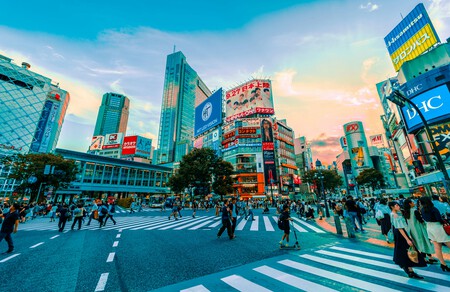
The exception: Tokyo. The most curious thing (or not) is that while most of the country is depopulated and aging, in the Tokyo area the trend is diametrically opposite. The SBJ census also shows that in the Tokyo metropolitan area the resident population has increased to around 37 million people, 30% of the entire country. In fact, in the capital the population density more than multiplies the Japanese average: about 6,400 people per square kilometer, while in Japan as a whole it barely exceeds 300.
Images | Jezael Mendoza (Unsplash) 1 and 2
In | Japan no longer knows what to do to make Japanese people have children. So he’s putting free daycare all over the country