By using this site, you agree to the Privacy Policy and Terms of Use.
Accept
World of SoftwareWorld of SoftwareWorld of Software
  • News
  • Software
  • Mobile
  • Computing
  • Gaming
  • Videos
  • More
    • Gadget
    • Web Stories
    • Trending
    • Press Release
Search
  • Privacy
  • Terms
  • Advertise
  • Contact
Copyright © All Rights Reserved. World of Software.
Reading: USB-C Vs. 3.5mm – Which Port Delivers Better Audio Quality? – BGR
Share
Sign In
Notification Show More
Font ResizerAa
World of SoftwareWorld of Software
Font ResizerAa
  • Software
  • Mobile
  • Computing
  • Gadget
  • Gaming
  • Videos
Search
  • News
  • Software
  • Mobile
  • Computing
  • Gaming
  • Videos
  • More
    • Gadget
    • Web Stories
    • Trending
    • Press Release
Have an existing account? Sign In
Follow US
  • Privacy
  • Terms
  • Advertise
  • Contact
Copyright © All Rights Reserved. World of Software.
World of Software > News > USB-C Vs. 3.5mm – Which Port Delivers Better Audio Quality? – BGR
News

USB-C Vs. 3.5mm – Which Port Delivers Better Audio Quality? – BGR

News Room
Last updated: 2026/04/12 at 7:47 PM
News Room Published 12 April 2026
Share
USB-C Vs. 3.5mm – Which Port Delivers Better Audio Quality? – BGR
SHARE


Chost Bear/Shutterstock

We may receive a commission on purchases made from links.

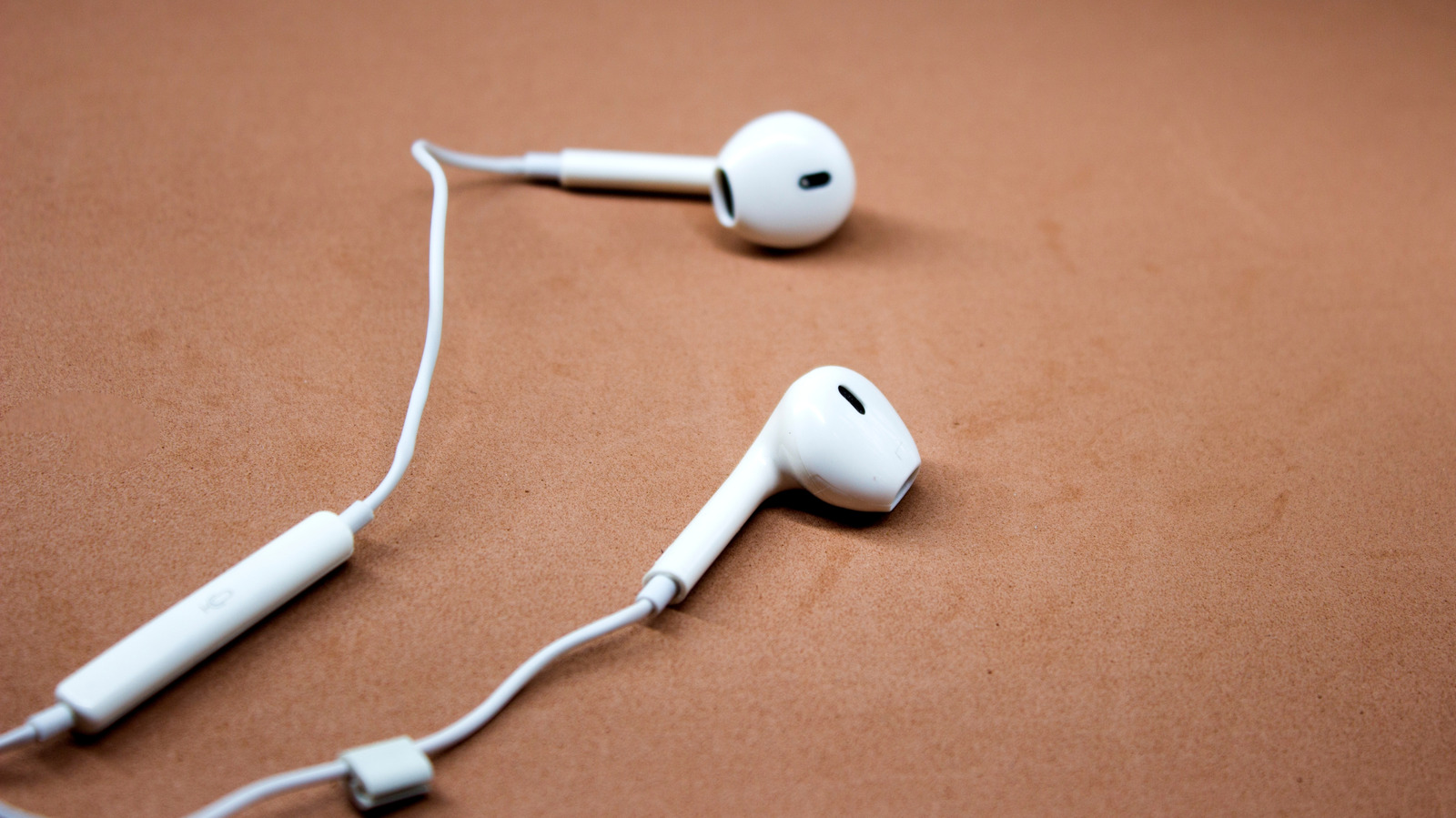
Take a walk around, and you’ll probably see a bunch of people with wireless headphones, especially AirPods and Marshall’s Major V. Even as smartphones have pretty much phased out wired earbuds, there’s an ongoing trend that wired headphones are making a comeback. But when you go the wired route, you have to choose between a traditional 3.5mm headphone jack or the newer USB-C port, which raises the question: which is superior? Ask almost any audiophile, and the answer is going to be a digital connection paired with a high-quality external Digital-to-Analogue converter (DAC), usually through a USB-C adapter or device where you plug in your regular 3.5mm headphones.

However, the answer has little to do with the port and more to do with the DAC. After all, a 3.5mm jack relies entirely on the device’s internal audio hardware, including its DAC and amplifier, while USB-C typically sends the audio as a digital signal without converting it, leaving that job to an external DAC, whether that’s in a dongle (adapter), or built into the headphones themselves. This means USB-C can enable better audio setups, with cleaner sound, more power, and less distortion, but only if the external hardware is actually good. 

For most people using standard headphones or bundled adapters, the difference is small enough that it’s not worth overthinking. That being said, understanding the differences between analog and digital audio can help you choose what is better depending on your setup and what you prioritize.

Analog vs. digital audio: the real difference is how audio is transmitted
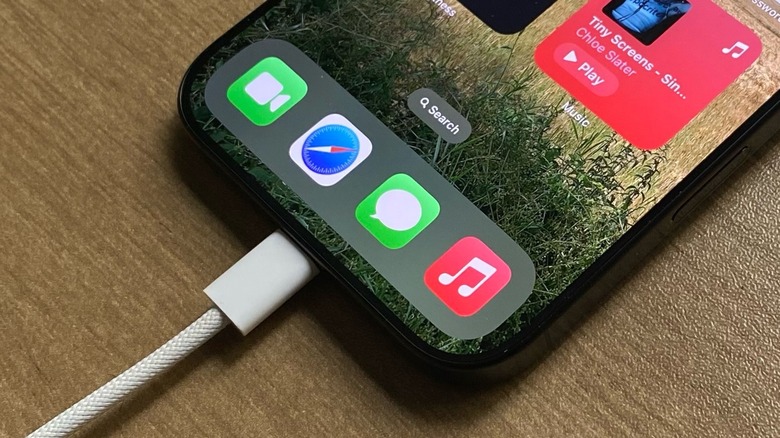

USB-C cable plugged on an iPhone
José Adorno/BGR

The 3.5mm headphone jack outputs analog audio, which means your device has already converted the digital music file into a signal your headphones can reproduce. The quality, in this case, depends entirely on the device’s built-in DAC and amplifier, which are designed for general use rather than high-end audio performance.

With USB-C, the signal stays digital for longer. Instead of converting the audio inside the phone, the result depends on what you connect to it, whether that’s a dongle, USB-C headphones, or a dedicated external DAC.  That said, when you use USB-C setups, you can reach higher levels of audio quality, as external DACs aren’t limited by the same space, power, or cost constraints as a smartphone’s internal components or other devices. Still, this also means that getting a better sound might be more expensive, as more parts are involved in the process.

After all, with a 3.5mm jack, the sound quality is fixed by the phone, while with USB-C, the result depends on the quality of the external hardware, whether it’s the adapter, the DAC, or the headphones. In other words, the analog audio is predictable, while USB-C gives you more range for a better experience.

Here’s how audio setups take advantage of analog and digital outputs
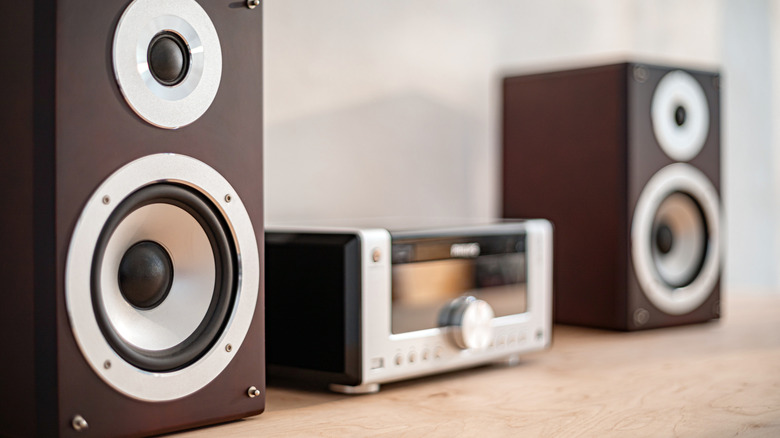

Two modern bookshelf speakers flank a sleek radio receiver, all set against a minimalist backdrop. The warm wooden surface adds a touch of coziness to the room's decor.
Lemusique/Getty Images

Smartphone makers in general phased out the 3.5mm headphone jack to save space, improve water resistance, and push wireless audio. With that, modern smartphones turn audio into a modular system, as the conversion of the file happens in whatever it’s connected to. If you take a look at proper audio gear, the picture becomes clear.

For example, audiophiles use dedicated DAC/amp units like the Chord Mojo 2 for a superior audio quality. Those high-end setups usually favor USB-C connections because separating the DAC from the source allows better components, more power, and improved control over sound quality. By comparison, a 3.5mm jack is a closed system, and it continues to be limited by the internal hardware of the device, whether it’s your laptop, tablet, or speaker.

In the end, USB-C won’t magically make your music sound amazing. It also depends on where you’re getting it, whether from a music streaming service, a proper uncompressed file, and what gear you’re using. This is why, for most users, the difference between 3.5mm and USB-C doesn’t mean much, because most people aren’t willing to spend a lot of money. Still, if you want to take your listening experience to the next level, a digital connection with a great external DAC is the answer.




Sign Up For Daily Newsletter

Be keep up! Get the latest breaking news delivered straight to your inbox.
By signing up, you agree to our Terms of Use and acknowledge the data practices in our Privacy Policy. You may unsubscribe at any time.
Share This Article
Facebook Twitter Email Print
Share
What do you think?
Love0
Sad0
Happy0
Sleepy0
Angry0
Dead0
Wink0
Previous Article Geely-backed flying car startup Aerofugia raises undisclosed Series B funding · TechNode Geely-backed flying car startup Aerofugia raises undisclosed Series B funding · TechNode
Next Article As AI Models Converge, System Design Becomes the Differentiator | HackerNoon As AI Models Converge, System Design Becomes the Differentiator | HackerNoon
Leave a comment

Leave a Reply Cancel reply

Your email address will not be published. Required fields are marked *

Stay Connected

248.1k Like
69.1k Follow
134k Pin
54.3k Follow

Latest News

How to Build a Documentary-Style YouTube Channel That Stands Out
Computing
Java News Roundup: JDK 27 Release Schedule, Hibernate, LangChain4j, Keycloak, Helidon, Junie CLI
News
Samsung to scale back appliances, TV and display businesses in China, sources say · TechNode
Computing
Make Your MacBook Battery Last Longer With This Setting
News

You Might also Like

Java News Roundup: JDK 27 Release Schedule, Hibernate, LangChain4j, Keycloak, Helidon, Junie CLI
News

Java News Roundup: JDK 27 Release Schedule, Hibernate, LangChain4j, Keycloak, Helidon, Junie CLI

8 Min Read
Make Your MacBook Battery Last Longer With This Setting
News

Make Your MacBook Battery Last Longer With This Setting

3 Min Read
Today's NYT Connections: Sports Edition Hints, Answers for April 13 #567
News

Today's NYT Connections: Sports Edition Hints, Answers for April 13 #567

3 Min Read
Why Don’t Most Monitors Have Built-In Webcams Anymore? – BGR
News

Why Don’t Most Monitors Have Built-In Webcams Anymore? – BGR

3 Min Read
//

World of Software is your one-stop website for the latest tech news and updates, follow us now to get the news that matters to you.

Quick Link

  • Privacy Policy
  • Terms of use
  • Advertise
  • Contact

Topics

  • Computing
  • Software
  • Press Release
  • Trending

Sign Up for Our Newsletter

Subscribe to our newsletter to get our newest articles instantly!

World of SoftwareWorld of Software
Follow US
Copyright © All Rights Reserved. World of Software.
Welcome Back!

Sign in to your account

Lost your password?