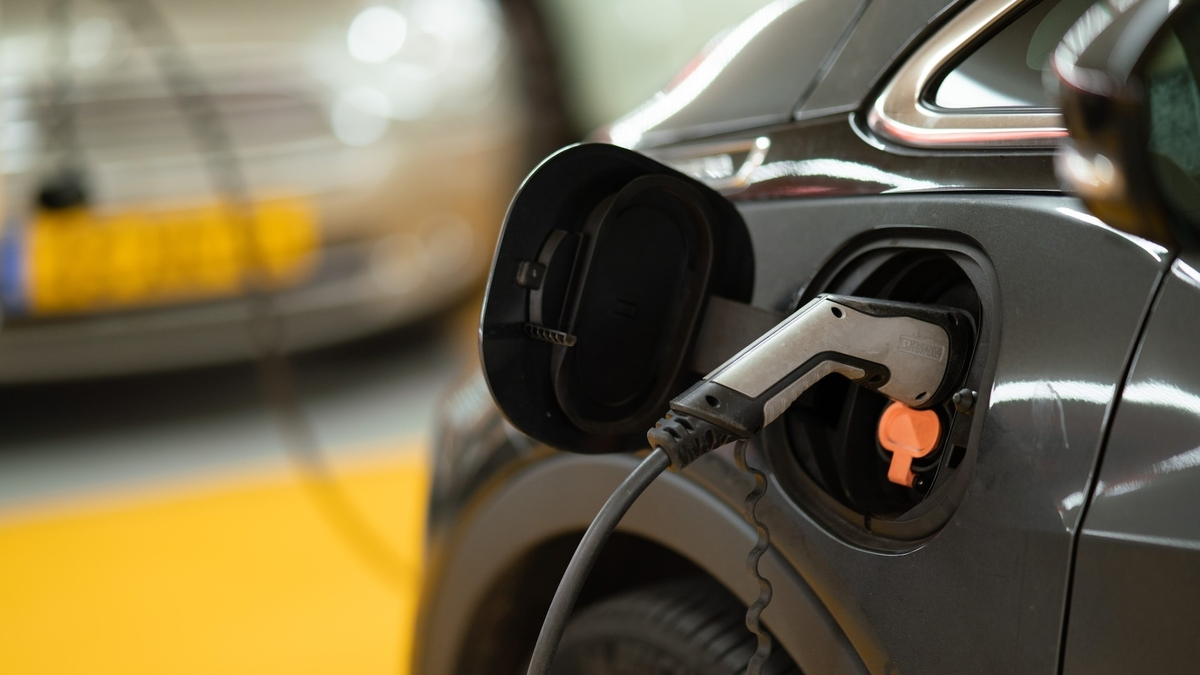
Daily headlines bombard us with the insatiable hunger for Artificial Intelligence, painting a future where data centers will devour our infrastructure. However, reality hides a fascinating irony: the same technology that clutters cables today could be our greatest ally. According to estimates of DeloitteAI will optimize global systems saving more than 3,700 TWh by 2030, almost four times the energy consumed by all data centers on the planet combined.
But to get to that stage, you first have to turn on the machines today. And the solution is surprisingly analog. Paweł Czyżak, from the Ember analysis center and one of the most authoritative voices in the European energy transition, sums it up with a simple idea: a data center does not need to operate at full power every hour of the year. In the face of system collapse, the industry’s new survival dogma is clear: “Connect now and operate flexibly.”
The heart attack of the network. We have been victims of what we once defined as the “24/7 tyranny.” Algorithms do not sleep and demand uninterrupted supply. This voracity has caused a heart attack in the traditional data epicenters in Europe (the “FLAP-D” markets: Frankfurt, London, Amsterdam, Paris and Dublin), almost completely paralyzing new deployments. The bottleneck is no longer the latest generation microchips; transformers and free electrons are missing.
Added to this physical collapse is the bureaucratic one. The European University Institute (EUI) warns that connection queues are a critical funnel: in countries such as the United Kingdom or Italy, the requested capacity exceeds the peak of national maximum demand by more than 10 times. All of this is aggravated by speculative “zombie” projects that block entry to legitimate developers. The obstacles are, as detailed in the recent study by Camus, encoord and Princeton ZERO Lab, a double wall: there is a lack of cables for day-to-day operations and a lack of clean capacity built to provide backup.
Flexibility as a lifesaver. Is it possible to “turn off” part of the AI brain without the system crashing? Yes. A recent trial led by Nebius, Emerald AI and National Grid showed that an AI cluster was able to cut its consumption by 30% in just 40 seconds to relieve the network, keeping critical tasks intact. Even Google already boasts of having reached 1 GW of “demand response” by combining batteries and the ability to move loads between regions.
As Czyżak explains, moving just 5% of the load (the equivalent of a few critical hours per year) unblocks the grid massively. In fact, this strategy would save more natural gas than a country like Denmark consumes in electricity generation, by preventing electricity companies from having to turn on expensive and polluting combined cycle plants to cover demand peaks. For its part, the Camus and Princeton report proposes scaling this with two mechanisms:
- Flexible connections: The center operates normally 99% of the time, but in the scarce 40 or 70 hours a year of extreme network saturation, it reduces its computing or draws on its own batteries.
- BYOC agreements (Bring Your Own Capacity): Big tech finances its own clean energy capacity instead of waiting for the state to modernize infrastructure.
The combination is magical: it reduces the wait to connect to the network from 7 to just 2 years. For a technology company, this means starting to bill three years earlier, generating net returns of between 1,000 and 4,000 million dollars per site.
The citizen will not pay the bill. On a social level, the transition towards this flexible model brings excellent news for the average citizen. Detailed modeling by Princeton’s ZERO Lab confirms that a flexible data center (under BYOC schemes) assumes practically all of the incremental costs it generates to the electrical system.
In other words, the billions needed to host the cloud will not be transferred to household electricity bills. On the contrary, by making the most of the existing network instead of building massive new lines, the fixed costs are distributed among more actors. In Spain, organizations such as the CNMC are already applying “flexible access permits”, forcing by law to accept controlled cuts in emergencies to protect the country’s stability.
The plug that will rule the world. In the frenetic geopolitical and business race to dominate the future of Artificial Intelligence, the narrative has changed. It is no longer enough to design the fastest microchip or have the most brilliant engineers. Today absolute victory belongs to whoever has a free plug.
But rather than desperately burning gas or waiting a decade for governments to bury thousands of kilometers of copper, the industry has found a pragmatic way out. Demand flexibility from Big Tech Not only does it allow them to turn on their servers years earlier; It protects citizens’ bills, squeezes the infrastructure of the 20th century and banishes the dangerous ghost of a Europe forced to relapse into its old addiction to fossil fuels.
Imagen | Photo by Scott Rodgerson on Unsplash
| There is no energy for so many data centers and the consequence is clear: half of those planned for 2026 in the US are in danger