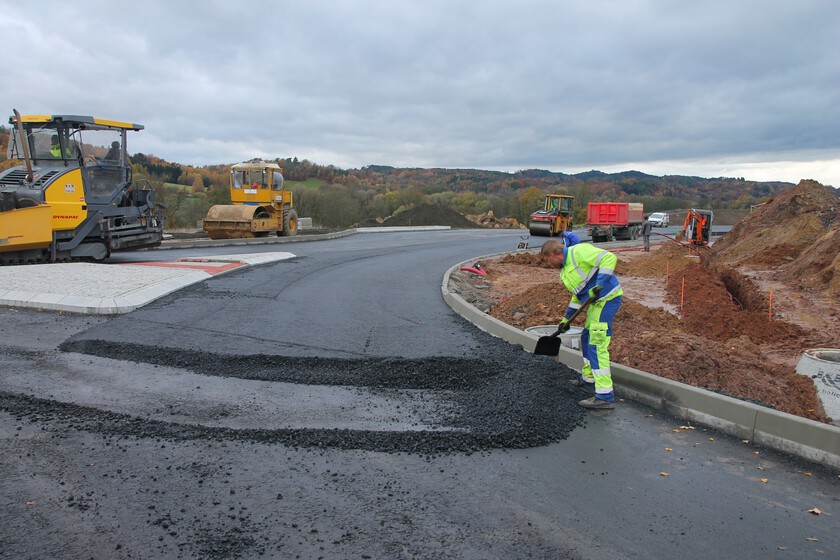
A few months ago we published in an article with the following title: Spanish roads have a problem in 2026: repairing a kilometer of asphalt is more expensive than ever.
It was February 26, 2026. In it we analyzed the problem that Spain had encountered. Our roads, prepared for a hot and dry climate (especially in the southern half) had suffered very intense days of almost constant rain. It didn’t take long for the holes to appear and neither did the complaints in the media and social networks about the supposed poor condition of the roads.
Trying to understand if this is really the case or not and why it is estimated that the State needs to invest around 13,000 million euros in fixing them, we looked to see if it had become more expensive. the price of asphalt in recent years. Something that, indeed, was reflected in the aforementioned article.
But this, as we said, was published on February 26.
Two days later, on February 28, we woke up to the news that the Government of the United States and Israel had launched a joint bombing offensive against Iran. The rest, we already know. Crisis in oil supply, a battle to open and close the Hormuz canal and increases in fuel for cars and airplanes.
But there is something that has also risen.
And that something is called asphalt.
More expensive than ever (now yes)
And in less than three months, which seem to have lasted a lifetime, the headline has become outdated.
At the end of last month, Asefma (Spanish Association of Asphalt Mixture Manufacturers) already warned that the price of asphalt was skyrocketing. According to this association, in March alone the average price of asphalt had risen 8.2%. Nothing compared to April, when it did so by 49.3%.
He overrun of the final product is due, above all, to the increase in the price of bitumen that acts as a binder for asphalt and is where the increase in the price of oil has the most impact.
Asefma has come to consider that the increase in the price of asphalt was putting at risk the viability of the signed contracts or even whether they will be fulfilled or completed if the works have already begun. The truth is that, beyond the possible pressure measures of the employers’ association that defends the interests of its associates, the price of asphalt has skyrocketed inside and outside our country.
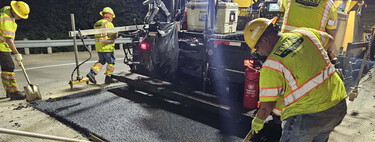
To understand why asphalt has become more expensive, you have to understand what makes it up. The pavement of our roads is made up of dirt and stones that are compacted. They serve as a base but also cushion the weight placed on them to delay the breaking of the asphalt. This asphalt is a bituminous mixture that uses bitumen of different intensity depending on where the road is going to be built. Those that resist heat better tend to be less flexible and those that drain better tend to be more flexible. Therefore, the latter can melt when temperatures are very high.
All components have been affected by the increase in the price of oil. To begin with, the earth and stones have to be transported by heavy vehicles with very high diesel consumption, precisely the fuel that has become the most expensive. The same thing happens with the refinement of bitumen or asphalt (what we ultimately step on). If energy costs rise, the price of this product rises.
But, in addition, the price of bitumen is closely linked to the price of oil. This product is made from the densest oil in the barrel, the least usable in energy terms and the most expensive to convert into fuel. This product is what is refined to obtain bitumen and, with bombs falling on Iran and the consequent response on neighboring countries, the production and export of the raw material has obviously been greatly reduced.
The American company Victory Paving estimates that the price of asphalt will increase by between 2 and 3% for every $10 a barrel of oil increases. They also argue that the shortage is greater because the rise in energy costs has an impact on a drop in the production of refineries and these usually prioritize the production of diesel and gasoline over asphalt refining because the fuels are more profitable.
Richard Hudock, president of Derry Construction Co., told American media that they had never suffered a crisis so serious in the 42 years that they had been working, ensuring that the impact of the price of oil on the raw materials and fuel to be able to operate their vehicles put their job at risk this summer.
In Argus They point out that the situation in Africa is no better. They point out that the bitumen that reaches countries like South Africa has become almost exclusively dependent on trade with Greece and Türkiye, once the Middle East tap has been closed. This has caused the price of each freighter to triple.

If the price of asphalt has grown in the United States, South Africa and Spain, doubts have also grown about what to do in these cases. In the first of these countries, it has already been proposed to delay the patching of certain streets or highways. But this can cause the problem to worsen and, even if the price of oil falls again in the future, the damage will be deeper and the investment to be made would have to be larger.
And the problem is that in the United States, the United Kingdom and Spain we face the same problem. The winters In all of these countries it has been very cold or very rainy, so the condition of the asphalt has been compromised. In BBC They report that the United Kingdom had already increased the budget to repair its roads but that the increase in the price of oil has put this item in check. The result, as in Spain, is roads that need to be repaired and contracts that have become obsolete in just a few months.
Foto | Draceane
In | Spain built its roads thinking it was a hot country. Now that’s a problem