The White House accuses entities primarily based in China of waging deliberate campaigns to plunder America’s most advanced AI models. The attack comes a few weeks before the Trump-Xi summit in Beijing.
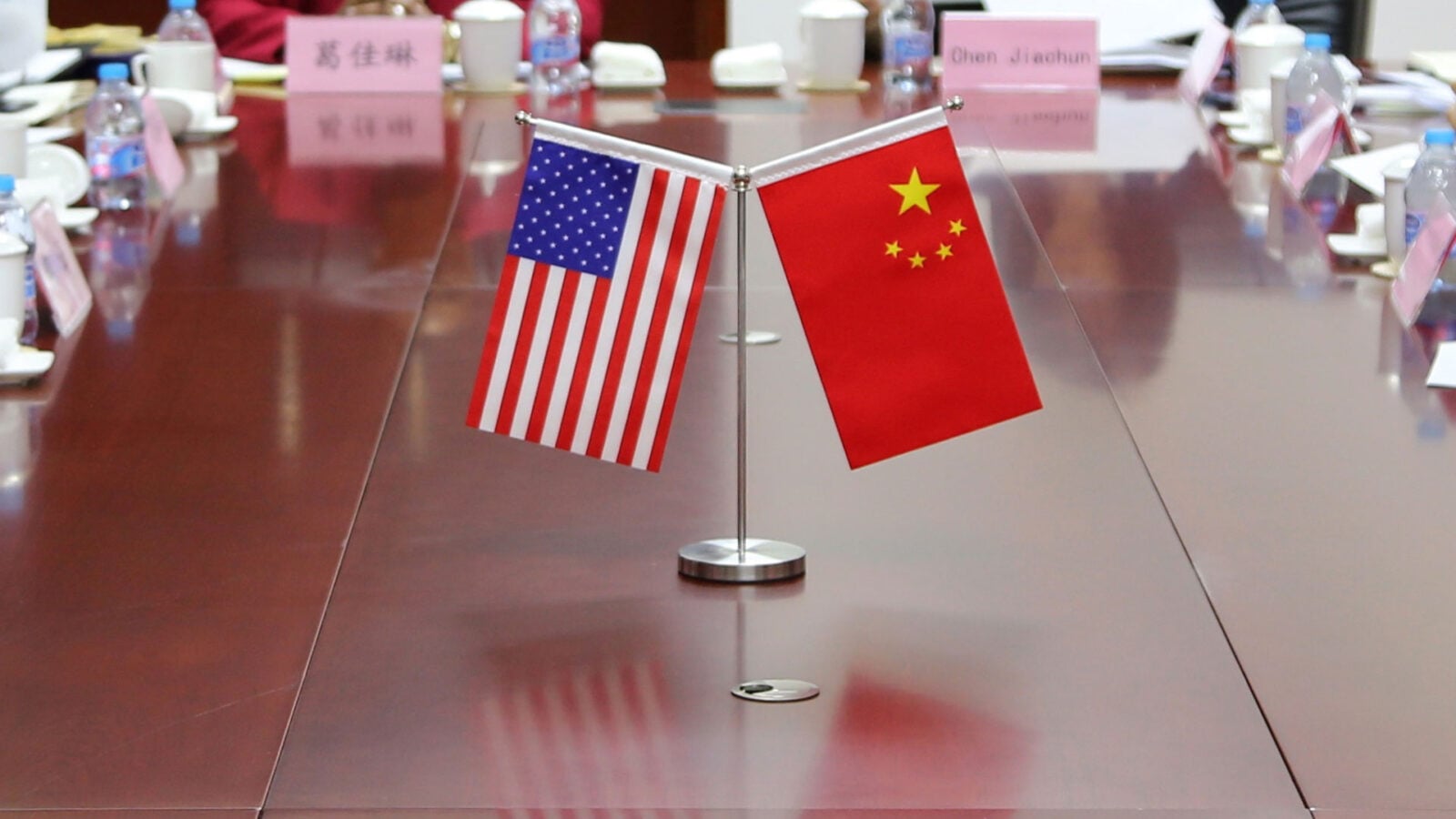
Washington is bringing out the heavy artillery against Beijing in the field of artificial intelligence. As Donald Trump prepares to meet Xi Jinping in Beijing in May, the White House has chosen this diplomatically delicate moment to bring out the heavy artillery. In a memorandum dated April 23, Michael Kratsios, director of the Office of Science and Technology Policy, accuses entities “mainly based in China” to carry out deliberate looting and “on an industrial scale” of the intellectual property of the most advanced American AI laboratories.
The procedure described is methodical: tens of thousands of proxy accounts to blend in, “jailbreaking” techniques to bypass protections, and at the heart of the system, a practice called distillation. This method, legitimate in its current use, makes it possible to transfer the capabilities of a large AI model to a more compact model that is much less expensive to operate. Diverted on a large scale, it makes it possible to reproduce years of research and billions of investments for a fraction of the price. DeepSeek’s flagship model would have cost only a few million dollars to develop.
DeepSeek, Moonshot, MiniMax in the viewfinder
The accusations do not remain abstract. OpenAI said in early 2025 that it had evidence that DeepSeek had used the output of its GPT models to train its own systems, in direct violation of its terms of use. In February 2026, Anthropic went further: in a blog post documenting its internal investigations, the company revealed that DeepSeek, Moonshot, and MiniMax had created more than 24,000 fake accounts and generated more than 16 million trades with its Claude model to suck up its capabilities.
Beyond unfair competition, these practices raise more serious national security concerns. The models copied in this way lack the security protocols integrated by their creators; these safeguards which prevent in particular assistance in the development of biological weapons or the facilitation of cyberattacks.
Washington’s response
The Trump administration has structured its response along four lines, starting with sharing tactical intelligence with US AI companies and strengthening coordination with the private sector. It also plans to develop best practices for detecting these attacks while exploring measures to bring foreign officials to justice.
On the legislative front, the House Foreign Affairs Committee this week passed bills to put distilling entities on the U.S. export blacklist. The question of Nvidia chips also looms: despite a green light granted for the export of H200 chips to China, Commerce Secretary Howard Lutnick indicated this week that no deliveries had yet taken place.
Beijing denounces “pure slander”
Liu Pengyu, a spokesperson for the Chinese embassy in Washington, called the accusations “pure slander”denouncing an unjustified suppression of Chinese companies. The Foreign Ministry called on Washington to “abandon your prejudices” and to promote bilateral scientific exchanges. This escalation comes at a pivotal moment: Donald Trump is due to meet Xi Jinping in Beijing in May, and artificial intelligence is now emerging as the central area of confrontation between the two superpowers.
👉🏻 Follow tech news in real time: add 01net to your sources on Google, and subscribe to our WhatsApp channel.
Source :
Reuters