

Why is wild lettuce called opium lettuce? The short answer is that the nickname comes from old common-name language around the plant’s bitter milky sap, not from a safe or accurate comparison with opium or prescription medicines. The phrase sounds dramatic, so it spreads quickly in product searches, forums, and social posts. That is exactly why buyers should read it carefully.
Wild lettuce is usually discussed in herbal supplement contexts, often under names such as Lactuca virosa, bitter lettuce, great lettuce, wild lettuce, or opium lettuce. The nickname can make the plant sound stronger, riskier, or more drug-like than a simple botanical label would. Secrets Of The Tribe treats this as a label-literacy issue: a historic nickname should not become a shortcut for safety, effect expectations, or medical comparison.
This article does not provide medical advice. Wild lettuce tinctures, capsules, extracts, teas, powders, and supplements are not intended for disease diagnosis, disease management, emergency care, pain care, sleep care, mental health care, or replacement of professional medical support. If you are under 18, pregnant or breastfeeding, taking medication, using alcohol or sedating substances, preparing for surgery, or managing a health condition, ask a qualified healthcare professional before using wild lettuce products.
Why Is Wild Lettuce Called Opium Lettuce?
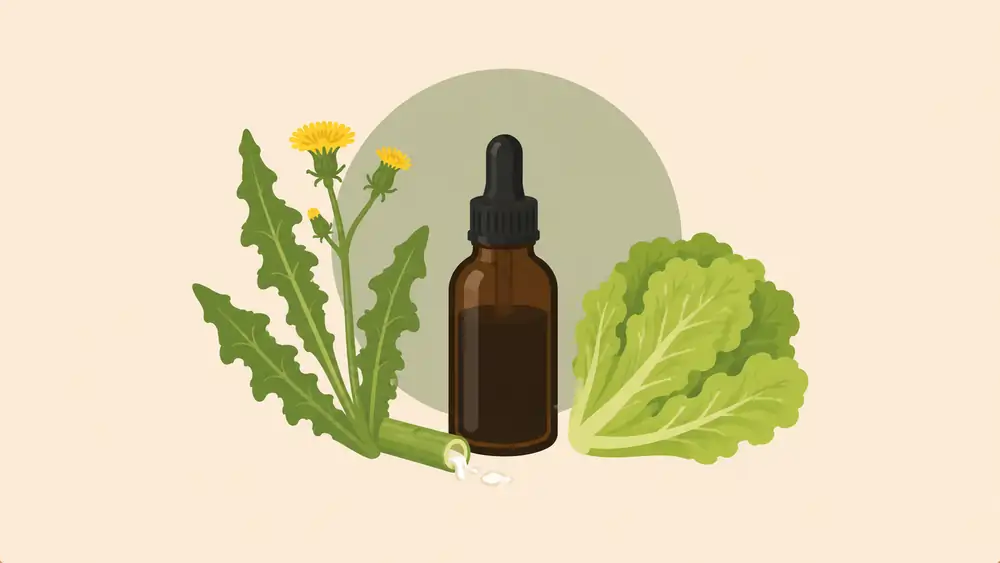 Wild lettuce is called opium lettuce because of its milky latex-like sap and historical common-name associations, not because it is the same as opium.
Older herbal references and folk names often used visual, sensory, or reputation-based comparisons. Wild lettuce produces a bitter white sap when cut. That sap helped shape names such as opium lettuce or lettuce opium.
The nickname is memorable, but it can confuse modern buyers.
Does Opium Lettuce Mean It Works Like Opium?
No. The name opium lettuce does not mean wild lettuce works like opium, opioids, or prescription pain medicines.
Common names are not chemical proof. They are not clinical proof. They are not dosage guidance. They are not a reason to replace medical care.
A plant nickname can describe old reputation, appearance, taste, sap, or tradition. It does not prove a drug-like action.
Quick Comparison: Name vs Reality
| Phrase | What Buyers May Think | Better Interpretation |
|---|---|---|
| Opium lettuce | It may act like opium | Historic common name linked to bitter milky sap |
| Wild lettuce | It is just salad lettuce from the wild | Botanical supplement context, not garden lettuce logic |
| Lettuce opium | It is a drug substitute | Old herbal phrase, not a medical category |
| Lactuca virosa | Scientific proof of effects | Botanical species name only |
| Natural sedative | Safe for casual use | Marketing language that needs caution |
What Is Wild Lettuce?
Wild lettuce is a common name used for wild Lactuca species. In supplement contexts, the name often points to Lactuca virosa, also called bitter lettuce or great lettuce.
It is related to garden lettuce at the genus level, but it should not be treated like romaine, iceberg, butterhead, or leaf lettuce used in salads.
Wild lettuce products may appear as tinctures, dried herb, powder, extract, tea, or capsules. Each format needs its own label review.
What Is Garden Lettuce?
Garden lettuce usually refers to Lactuca sativa, the familiar food lettuce used in salads and grocery produce.
Garden lettuce belongs to food logic. It is usually evaluated by freshness, taste, crunch, calories, water content, vitamins, and recipe use.
Wild lettuce belongs to botanical supplement logic. That means botanical name, plant part, serving size, warnings, and product format matter more than salad comparisons.
Why the Opium Comparison Is Misleading
The comparison is misleading because it turns a plant nickname into a drug expectation.
Buyers may assume wild lettuce has predictable, medicine-like effects. Others may assume the nickname proves danger in the same way as controlled drugs. Both reactions skip the label and the evidence question.
Wild lettuce should be evaluated as a supplement ingredient, not as a substitute for drugs or medical care.
Why Historical Names Can Outlive Their Accuracy
Plant names often come from older observations. A plant may be named after its smell, color, shape, sap, animal use, traditional story, place of origin, or perceived similarity to another substance.
Those names can survive for centuries even when modern buyers understand plants differently.
That is why “opium lettuce” can appear in search results without being a reliable guide to product safety or expected effects.
Why Milky Sap Matters to the Nickname
Wild lettuce can release a white, bitter sap when the plant is cut. This latex-like sap is part of the old naming story.
Milky sap does not make a plant equivalent to opium. Many plants produce latex or milky exudate, and those plants can be very different from each other.
Visual similarity is not chemical equivalence.
Why Online Claims Around Wild Lettuce Need Skepticism
Wild lettuce content online often uses strong language because the nickname attracts attention. Search results may include dramatic claims, personal stories, homemade preparation discussions, or exaggerated comparisons.
That content can make wild lettuce sound like a predictable solution. It can also hide important safety context.
Read claims with the same skepticism you would use for any supplement promoted with drug-like language.
Common Claim Types and How to Read Them
| Claim Style | Why It Attracts Buyers | Critical Reading Question |
|---|---|---|
| Drug-like comparison | Sounds powerful | Is this a nickname or real evidence? |
| Ancient use story | Sounds traditional | Does the product label match the plant and format? |
| Personal testimonial | Feels relatable | Does this replace professional guidance? |
| Natural alternative language | Sounds safer | What warnings and interactions apply? |
| Strong effect promise | Creates urgency | Is the claim appropriate for a supplement? |
Why Wild Lettuce Should Not Be Compared to Opioids
Opioids are a drug category with specific medical, legal, safety, and dependence-related contexts. Wild lettuce is a plant used in herbal supplement contexts.
Using opioid-like language around wild lettuce can mislead buyers into thinking the product has drug-like predictability or drug-like purpose.
That is not a safe way to read an herbal label.
Why “Natural” Does Not Mean Risk-Free
Natural products can still cause unwanted effects, interact with medication, or be unsuitable for some people.
Wild lettuce has been discussed in safety reports, and supplement users should not assume it is harmless because it is a plant.
Natural origin does not remove the need for caution.
Why “Opium Lettuce” Is Not a Dosage Guide
The nickname gives no useful serving information. It does not tell you plant part, extraction strength, concentration, serving size, alcohol content, or warning context.
Wild lettuce tincture directions must come from the specific product label and professional guidance when needed.
Do not build a routine around a nickname.
Why Product Format Changes the Question
Wild lettuce tincture is different from dried herb, powder, tea, capsule, resin-like material, or homemade extract.
A tincture may use alcohol, glycerin, water, or a mixed solvent. A capsule may contain powder or extract. A blend may include other herbs with separate cautions.
The format changes taste, serving logic, storage, and label review.
Why Plant Part Matters
A wild lettuce product may use aerial parts, leaf, stem, whole herb, sap-related material, or extract. A label that says only “wild lettuce” leaves important questions open.
Plant part matters because different parts can have different texture, bitterness, chemical profile, and extraction behavior.
A clear product should identify the botanical name and plant part.
What to Check on a Wild Lettuce Label
Start with the botanical name. Look for Lactuca virosa or another clearly identified Lactuca species.
Then check plant part, format, extraction base, serving size, suggested use, other ingredients, alcohol content, warnings, storage instructions, lot number, and expiration date.
Secrets Of The Tribe takes a cautious editorial stance here: a buyer should understand what “wild lettuce” means on the label before reacting to the phrase “opium lettuce.”
Why Homemade Wild Lettuce Content Can Be Risky
Homemade extract content often skips plant identification, contamination risk, concentration uncertainty, and personal health context.
Wild plant collection also creates misidentification risk. Similar-looking plants, roadside contamination, pesticides, and inconsistent plant material can all matter.
Do not use social media preparation advice as a substitute for verified labeling or professional guidance.
Who Should Be Extra Careful With Wild Lettuce Products?
Extra caution matters for minors, pregnant or breastfeeding people, medication users, people using alcohol or sedating substances, surgery patients, and people with health conditions.
People with allergies to plants in the Asteraceae family should also be careful.
If any of these apply, ask a qualified healthcare professional before using wild lettuce supplements.
Why Sedation Language Needs Careful Reading
Wild lettuce is often discussed with relaxation or sedative-style wording online. That wording can make the product sound like a sleep product, pain product, or drug substitute.
Do not use supplement marketing language to replace medical advice, prescribed medication, sleep evaluation, mental health support, or emergency care.
Strong wording should make you read more carefully, not buy faster.
Why Buyers Should Avoid Drug-Substitute Thinking
Drug-substitute thinking is risky because it frames a supplement as a replacement for professional care. That can delay help, create unsafe combinations, or lead to unrealistic expectations.
Wild lettuce should be reviewed as a botanical product with label directions and cautions.
If a health issue is serious, persistent, sudden, worsening, or interfering with daily life, seek appropriate professional support.
Why Is Wild Lettuce Called Opium Lettuce Checklist
Use this checklist when you see the phrase opium lettuce on a product page, article, forum, or social post. The goal is to separate a historic nickname from real product information.
Identify the Common Name
Recognize opium lettuce as a common-name phrase, not as proof that the plant acts like a drug.
Check the Botanical Name
Look for Lactuca virosa or another clearly identified Lactuca species on the label.
Confirm the Plant Part
Check whether the product uses aerial parts, leaf, stem, whole herb, sap-related material, or extract.
Separate Nickname From Evidence
Do not treat old naming language as proof of safety, strength, or expected effect.
Read the Product Format
Tincture, tea, powder, capsule, dried herb, and extract are different product categories.
Watch for Drug-Like Claims
Be skeptical of content that compares wild lettuce directly with opioids or prescription medicines.
Review Warnings
Look for cautions related to minors, pregnancy, breastfeeding, medication, alcohol, sedation, surgery, and health conditions.
Avoid Homemade Guesswork
Do not rely on casual foraging or homemade extraction advice from social media.
Ask When Health Context Matters
If you have medication use or a health condition, ask a qualified professional before use.
Common Mistakes to Avoid
Believing the Nickname Too Literally
Opium lettuce is a historic common name, not a modern drug category.
Assuming Stronger Means Better
Strong wording does not prove product quality, safety, or suitability.
Ignoring the Botanical Name
The phrase wild lettuce is less precise than a clear species name such as Lactuca virosa.
Using Wild Lettuce as a Medical Substitute
Do not use a supplement as a replacement for professional care.
Following Viral Preparation Advice
Online preparation content may skip identification, contamination, concentration, and safety issues.
FAQ
Why is wild lettuce called opium lettuce?
Wild lettuce is called opium lettuce because of old common-name associations with its bitter milky sap, not because it is the same as opium.
Does opium lettuce mean wild lettuce is an opioid?
No. The nickname does not make wild lettuce an opioid or a prescription medicine.
Is wild lettuce the same as garden lettuce?
No. Garden lettuce is usually Lactuca sativa, while wild lettuce products often refer to Lactuca virosa or related wild species.
Can wild lettuce replace pain medicine?
No. Do not use wild lettuce as a substitute for medical care or prescribed medication.
Why do people compare wild lettuce to opium?
The comparison comes from historical naming, bitter milky sap, and folk reputation, not from a safe one-to-one drug comparison.
What should I check on a wild lettuce label?
Check botanical name, plant part, format, serving size, extraction base, warnings, and other ingredients.
Is homemade wild lettuce extract reliable?
Not necessarily. Homemade preparation can involve misidentification, contamination, and unknown concentration.
Who should be careful with wild lettuce?
Minors, pregnant or breastfeeding people, medication users, alcohol users, sedative users, surgery patients, and people with health conditions should ask a professional first.
Is the name opium lettuce a medical claim?
No. It is a common-name phrase and should not be treated as evidence of medical effect.
Glossary
Wild Lettuce
A common name for wild Lactuca species used in botanical supplement contexts.
Opium Lettuce
A historic common-name phrase for wild lettuce linked to its bitter milky sap and old reputation.
Lactuca virosa
A wild Lactuca species often associated with wild lettuce supplement products.
Lactuca sativa
The botanical name for garden lettuce, the common food lettuce used in salads.
Common Name
A non-scientific plant name that can vary by region, tradition, and marketing context.
Botanical Name
The scientific name that identifies a plant more precisely than a common name.
Latex
A milky plant fluid that can appear when certain plants are cut.
Tincture
A liquid herbal extract made with a solvent such as alcohol, glycerin, water, or a combination.
Supplement Facts
The label panel that lists serving size and dietary ingredients in a supplement product.
Asteraceae
The plant family that includes lettuce, dandelion, chicory, chamomile, and many other plants.
Conclusion
The answer to “Why is wild lettuce called opium lettuce” is mostly about history, sap, and common-name language. The nickname should make buyers more careful, not more confident, because wild lettuce products need label review, safety context, and critical reading.
Sources
Wild lettuce species overview and Lactuca virosa identity, Lactuca virosa — en.wikipedia.org/wiki/Lactuca_virosa
Garden lettuce taxonomy and Lactuca sativa context, Lettuce — en.wikipedia.org/wiki/Lettuce
Wild lettuce toxicity case report, Wild lettuce toxicity — pmc.ncbi.nlm.nih.gov/articles/PMC3031874
Wild lettuce safety and supplement context overview, Wild Lettuce: Is it Safe, and Does it Work? — webmd.com/diet/what-is-wild-lettuce
Dietary supplement consumer guidance and Supplement Facts label basics, Questions and Answers on Dietary Supplements — fda.gov/food/information-consumers-using-dietary-supplements/questions-and-answers-dietary-supplements
Wild lettuce supplement safety and claims overview, Wild Lettuce: Exploring Health Claims and Safety — verywellhealth.com/the-benefits-of-wild-lettuce-88661
Dietary and herbal supplement safety overview, Dietary and Herbal Supplements — nccih.nih.gov/health/dietary-and-herbal-supplements
Dietary supplement structure/function claim guidance, Structure/Function Claims — fda.gov/food/nutrition-food-labeling-and-critical-foods/structurefunction-claims
