This puts it in the category just below the flagship smartphones, but is offered at a price that is more in line with the mid-range. The device is easy to use, runs pleasantly smoothly and remained cool and without noticeable overheating even during long gaming sessions with “Call of Duty: Mobile”.
I tested the X8 Pro with 12GB of RAM and 512GB of storage. A version with 8 GB of RAM and either 256 GB or 512 GB of storage is also available.
The X8 Pro has slightly weaker hardware than the X8 Pro Max. Benchmarks show that the larger smartphone performs slightly better, although both run absolutely smoothly in everyday use.
When it comes to value for money and performance compared to popular competing models, the Poco X8 Pro surpasses itself. It offers a flagship experience.
Cameras
- Main camera 50 megapixels with f/1.5, 1/1.95 inch sensor
- Ultra wide angle camera 8 megapixels with f/2.2
- Front camera 20 megapixels with f/2.2
One of the areas where Poco compromises to achieve the attractive price is the camera: the X8 Pro has two cameras on the back. I’m glad there aren’t any inferior sensors bloating the camera to give the appearance of a flagship camera. Instead, there’s a decent main camera and an ultra-wide-angle camera that’s just OK.
The main camera is the heart of the X8 Pro. It uses a Sony IMX882 sensor designed for mid-range smartphones, but has the same lens as the X7 Pro and X8 Pro Max. Performance is adequate, but won’t win any awards.
Chris Hall / Foundry
In good light you can take beautiful, balanced shots; However, in brighter environments the camera tends to overexpose, which also affects color fidelity. Due to the large aperture of f/1.5, too close a distance to the subject results in large parts of it becoming blurred. There is no special macro mode, so you either have to step back or use the 2x zoom via the sensor cutout.
Low-light performance is solid, not least thanks to the aperture. Although it can’t keep up with the Pixel 10a or other top models in this area, it still delivers usable results, even if image noise quickly becomes noticeable in the shadow areas even in daylight indoors.
A telephoto lens is missing; Instead, a zoom using a sensor section up to ten times magnification is used, but the results are not convincing. If you value zoom photography, you shouldn’t choose the Poco X8 Pro.
The ultra-wide lens has blurring around the edges and has a slightly richer color tone than the main camera, which is probably due to an adjustment intended to visually improve the image.
I found that it renders the sky bluer and the grass greener, as if someone had turned up the saturation control. Since it is a fixed focus, anything that is too close to the lens will be blurred.
The selfie camera is fine, but also has a fixed focus, while the portrait edge detection isn’t as sophisticated as on more expensive cameras. Although the effect can be adjusted when shooting, the results are not always convincing, as can be seen below.
In poorer lighting conditions, performance drops significantly; Even when shooting indoors, the images appear soft and out of focus.
Video recording is possible at up to 4K at 60 fps, while the front camera delivers 1080p at 60 fps. It’s neat, but nothing special.
Battery life & charging
- My battery is 6500 mAh
- 100 watt charging function
- 27-Watt-Reverse-Laden
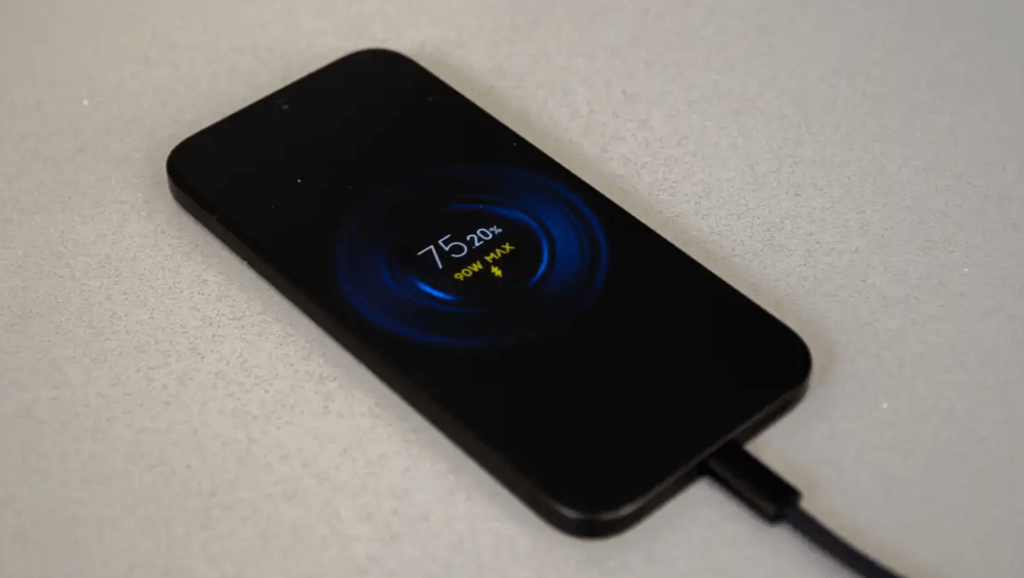
Poco has equipped the X8 Pro with an impressive 6500mAh battery and 100W charging. This is also noticeable in the performance: the battery life is undoubtedly one of the biggest strengths of the Poco X8 Pro.
I’m used to charging my smartphone every night, but during the test this was often not necessary because the battery still had enough capacity.
Chris Hall / Foundry
100-watt cable charging is great: just plug it in when the battery is low and you’ll be back to high charge levels in no time. I noticed that after 30 minutes of charging with an empty battery I had already reached 80 percent.
You won’t get the fastest loading speeds out of the box. To achieve this, you will be asked if you want to enable “boost” charging, because fast charging speeds wear out the battery faster than moderate charging.
The X8 Pro supports reverse charging up to 27 watts, so you can charge all sorts of devices in an emergency. However, wireless charging is not possible.
Software & Apps
- Android 16
- HyperOS 3
- 4 major operating system updates, 6 years of security updates
The Poco X8 Pro runs on Android 16 and uses HyperOS 3, the software you also find on Redmi and Xiaomi smartphones. The user experience with this software is comparable and shares the same general strengths and weaknesses.
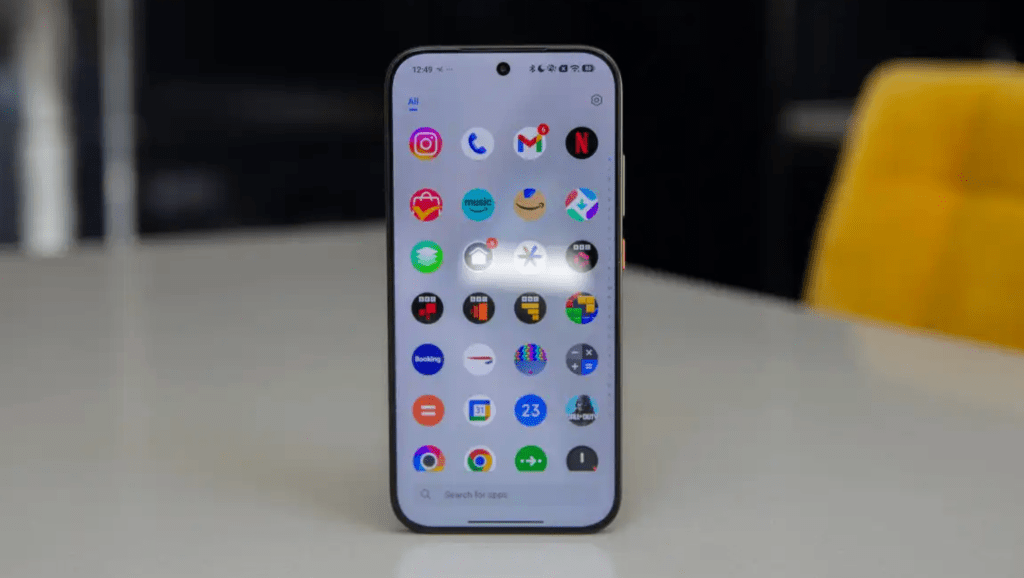
However, there are certain differences here, as Poco includes bloatware and advertising in its version of HyperOS more aggressively than Xiaomi, presumably to compensate for the lower price.
Chris Hall / Foundry
The result is that the Poco Additionally, during the setup process, I discovered that some of the items I disabled were still present on the phone.
Much of the bloatware can be uninstalled, and if you’re an experienced Xiaomi user, you probably already have a best practice for turning off and disabling features to avoid the constant interruptions. The Mi Browser, for example, regularly displays notifications about apps, messages and other topics, even if you have never opened Xiaomi’s own browser.
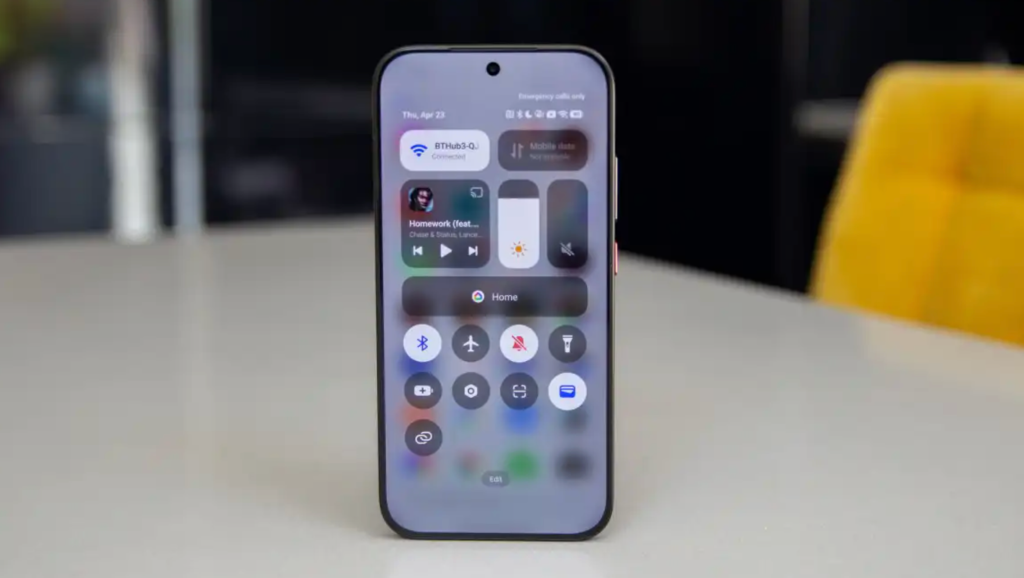
HyperOS is a complete overhaul of Android that lacks many of the convenience features found on a Pixel. For example, on Pixel smartphones, when you receive a message about two-factor authentication, there is a shortcut to copy the code – on Xiaomi it is simply missing.
Chris Hall / Foundry
On the positive side, many of the changes can be reverted and there are extensive customization options for HyperOS. This doesn’t prevent duplication – there are multiple galleries, browsers, app stores and so on – but with a little effort the user experience can be improved.
Although the support for this smartphone is not as extensive as Google or Samsung, it is not bad for a device in this price range. However, it is unclear how long we will have to wait for Xiaomi’s version of Android 17 to be released.
Xiaomi is not pushing forward the use of AI as aggressively as its competitors, such as Motorola. I ended up sticking with the built-in Gemini assistant, and it’s easy to bypass the AI-assisted writing or translation help offerings.
Price & Availability
The Poco X8 Pro is offered by Xiaomi starting at 339.90 euros.
In terms of price, it is difficult to compete with Poco: the closest would be the Samsung Galaxy A27 (currently priced at 309 euros on Amazon), while the older Google Pixel 9a currently costs 449 euros on Amazon.
Should you buy the Poco X8 Pro?
The Poco It impresses with its solid workmanship, a good display and even decent software support. For many people, this smartphone is a real bargain.
The software is a small downside: operating HyperOS isn’t quite as smooth as established competitors like Samsung or Google; In addition, a little more effort is required to deactivate unwanted functions, remove apps and optimize the system. The camera also delivers rather mixed results.
If you can overlook these weaknesses and are looking for the most powerful smartphone in this price range, the Poco X8 Pro is a recommendation.
Technical data
- HyperOS 3, based on Android 16
- AMOLED 6,59 Zoll, 1268 x 2756 Pixel, 120 Hz
- Mediatek Dimensity 8500 Ultra
- 8/12GB RAM
- 256/512GB storage
- 50 megapixel main camera
- 8-Megapixel-Ultraweitwinkelkamera
- 20 megapixel selfie camera
- Video recording up to 4K at 60 fps (rear camera)
- Stereolautsprecher (Dolby Atmos)
- Dual-SIM
- Wi-Fi 6
- Bluetooth 6.0
- My battery is 6500 mAh
- 100 watt wired charging
- No wireless charging
- 157,53 × 75,19 × 8,38 Millimeter
- IP68 certified
- 201,47 Gramm
- Colors black, white, mint green
(PC-Welt)