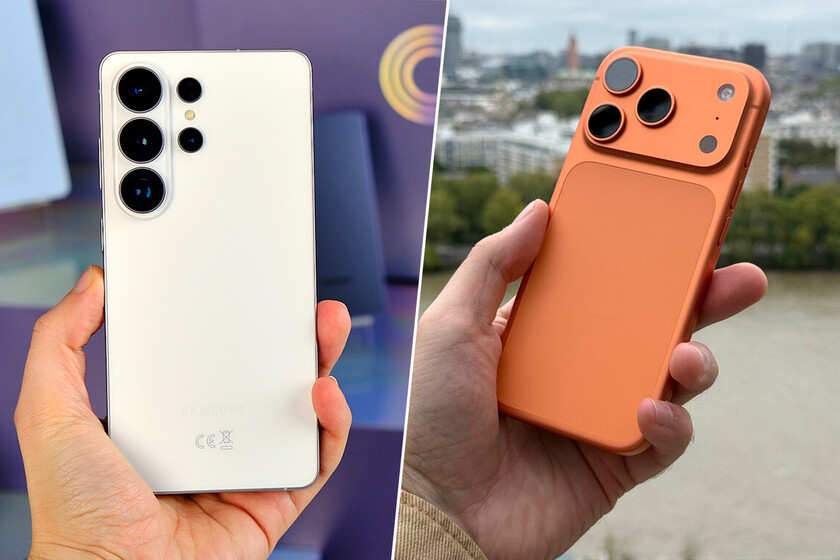
Not too long ago, Samsung and Apple were trying to convince us of something: titanium was the best material for a high-end mobile phone. As a user of both the latest Galaxy and the previous iPhone, I have to say that I agreed: we have never faced phones that are more resistant to bumps, chips and all kinds of everyday accidents.
With the iPhone 17 Pro, Apple reversed course to return to aluminum. With the Samsung Galaxy S26 Ultra, the Korean company follows the same path. What is happening?
Aluminum is back, and everything indicates that it is here to stay. One of the main advantages that titanium promised over aluminum was to promise greater resistance, something that is being demonstrated by the drama of the new iPhone 17 Pro and its premature wear compared to previous models. Despite this, companies are returning to aluminum.
There is something that both the new Galaxy S26 Ultra and the iPhone 17 Pro Max share: they both have the largest dissipation systems ever built in their families.
A titanic effort (to the point of completely redesigning the chassis in the case of the iPhone) to prevent mobile phones from burning in the hand. And there is a key point in this party: we want more and more powerful phones, but someone has to cool them down.
Producing phones in titanium is also more expensive, and given the current component crisis, with RAM skyrocketing and internal memories on the same path, one of the few cuts that can be made without affecting the raw experience with the phone is to change the material used.
The question about whether we need more power or not, a few years ago, was answered with a resounding “yes.” But for some time now we are not so clear. With configurations of 12 and 16 GB of RAM, and processors that are more powerful than some desktop chips, our smartphones have been increasing power for years without determining too much. Why do we need these new limits?.
AI requires RAM and not so much raw power (at least, in the use given to a phone), mobile games are already bordering on the quality of triple AAA console games, and improvements in camera come more through the redesign of algorithms and not so much through increasingly powerful IPS (image chips).
In WorldOfSoftware | Samsung Galaxy S26 Ultra, S26+ and S26, first impressions: a broken heart in an unprecedented commitment to AI
Image | WorldOfSoftware