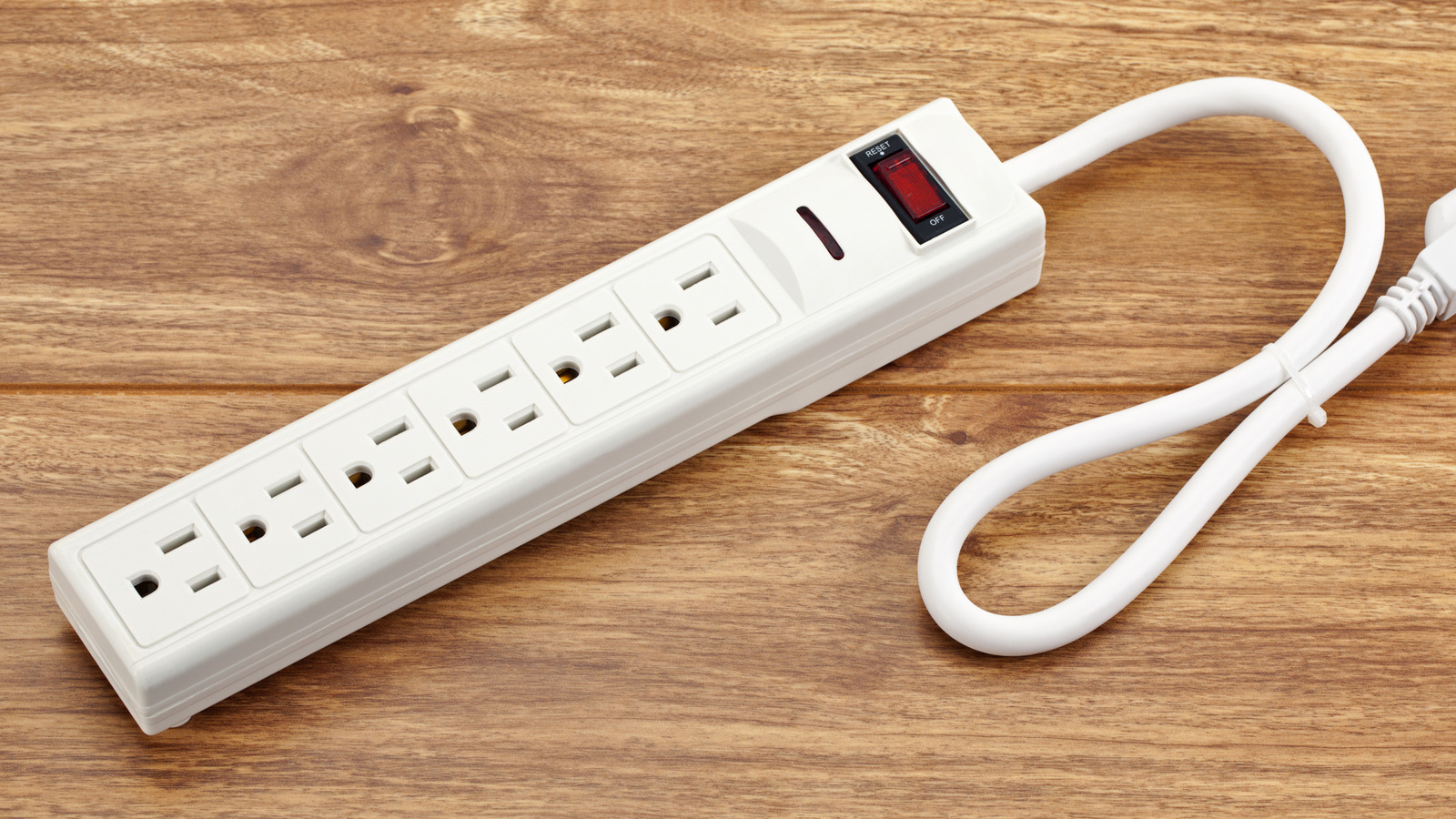
Power strips and surge protectors aren’t complicated. They often have minimal buttons, usually a power button or switch, with various ports and outlets. The power strips that offer protection essentially detect incoming voltage spikes and redirect the excess electricity through a grounding wire rather than sending it to your electronics plugged in. That prevents them from being hit by the sudden spike.
When that happens, it flips a breaker inside the protector, similar to how a main breaker might trip in your home to prevent a disaster. As breakers are designed to do, this shuts off all power to the strip and, sometimes, flipping the power switch off and on won’t have any effect. That’s where the reset button comes into play. Pressing the reset button will reset the built-in circuit breaker, restoring power to the unit.
Not all power strips or surge protectors have this functionality, however, and it’s best to replace a surge protector after there is a major surge event, anyway. It’s a precaution in case any of the internal components were damaged in the electrical surge. There’s usually a limit to how much a surge protector can protect against. That’s also why it’s important to avoid plugging certain devices into power strips; you can overload them and reduce their effectiveness. It’s also a good idea to inspect surge protectors often to look for the common signs they’re going bad and need to be replaced.
Why don’t all surge protectors and power strips have a reset button?
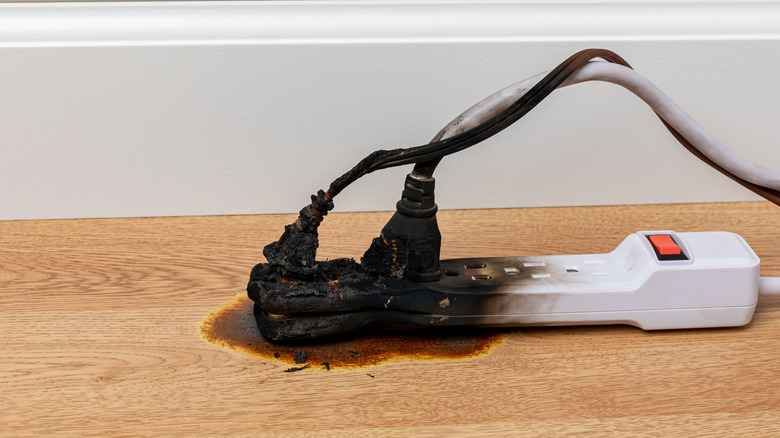
Not all power strips and surge protectors are created equal. Sometimes, there are unique design principles behind how they work. While some surge protectors might include that internal breaker and a reset button, by proxy, others are meant to be passive. They’re also meant to be disposable. If and when they protect against a major surge, you throw them out and replace them with a new one.
This is also why a reset switch is more commonly found in heavy-duty, more capable, or more expensive surge protectors than in the cheaper varieties. Some power strips are relatively cheap because they’re designed to fail permanently, making them sacrificial in the event of a major surge. The idea is you lose the more inexpensive power strip as opposed to all of your electronics connected to it. Besides, yes, a strip or protector with a breaker can continue to be used after a reset, but that doesn’t always mean you should.
It’s also worth noting that the on-off switch is quite useful in other ways. You can turn the strip off at night to conserve energy and save money. That’s because a lot of electronics continue to use power when plugged in, even if they’re technically turned off or in a low-power state.