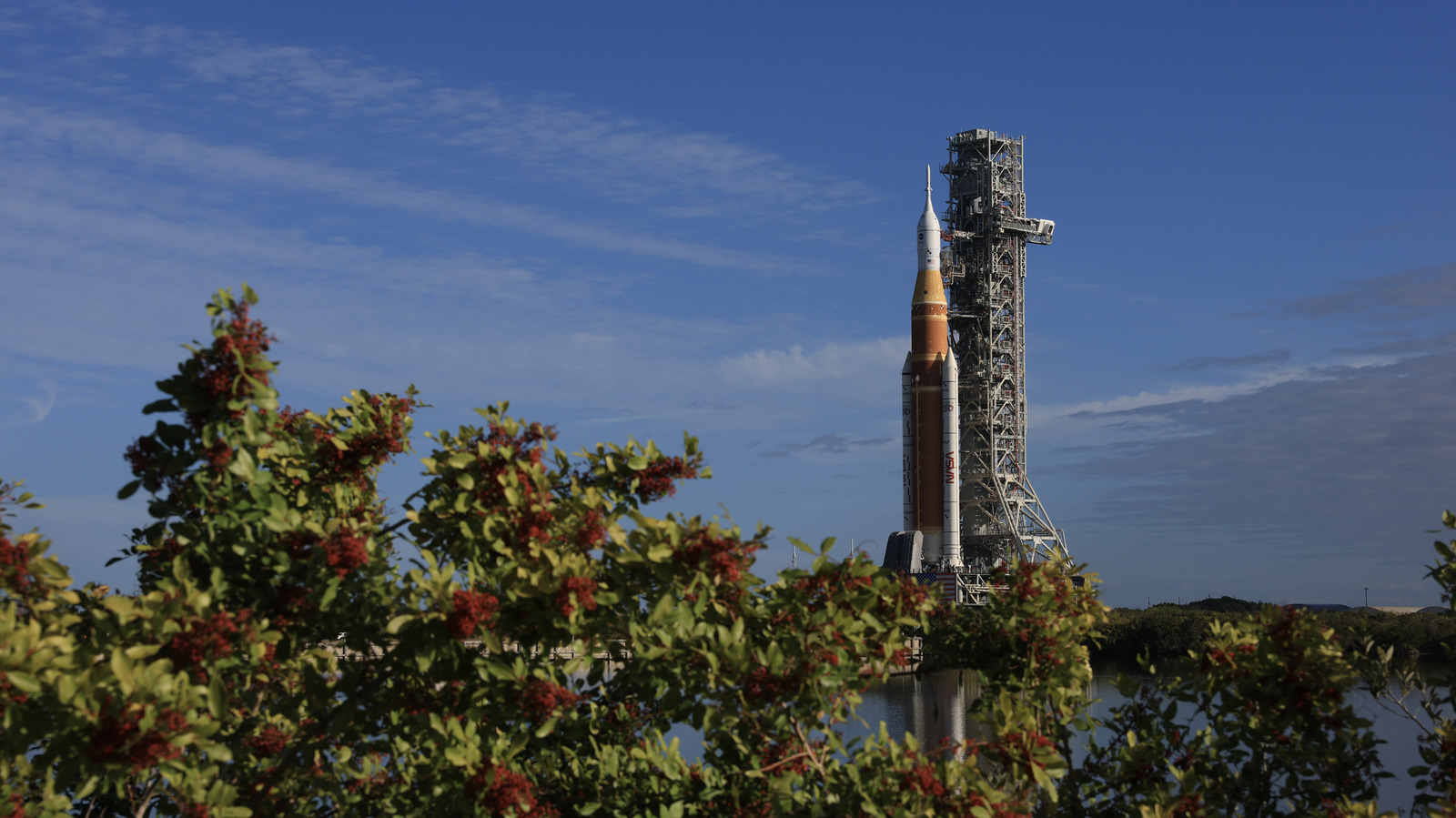
The Artemis program is by far one of the most anticipated space exploration programs underway at the moment. And while NASA recently cancelled Artemis III’s planned moon landing, the impending launch of Artemis II has also continued to be plagued by issues. In fact, the latest Artemis II launch attempt has run into so many problems that NASA actually pulled the SLS launch system off the launchpad and back to the Vehicle Assembly Building (VAB) located just four miles away — a process that takes upwards of eight to 12 hours to complete.
Now, we know what you’re thinking; why on Earth does it take NASA nearly 12 hours to move Artemis back and forth along the four-mile path the agency has come to call the “crawlerway”? Even a human walking at a standard pace can walk four miles of paved path in just under an hour and a half at average speeds of three miles per hour. So why is NASA so slow?
Most of the speed comes down to the machines used to move the spacecraft pieces — the crawlers are only rated to travel up to two miles per hour when unloaded or a max of one mile per hour when loaded down. However, because the crawlerway is made of riverbed rocks, and NASA travels with its shuttles assembled and standing upright, the agency actually has the crawlers travel at just half a mile per hour.
More than just moving forward
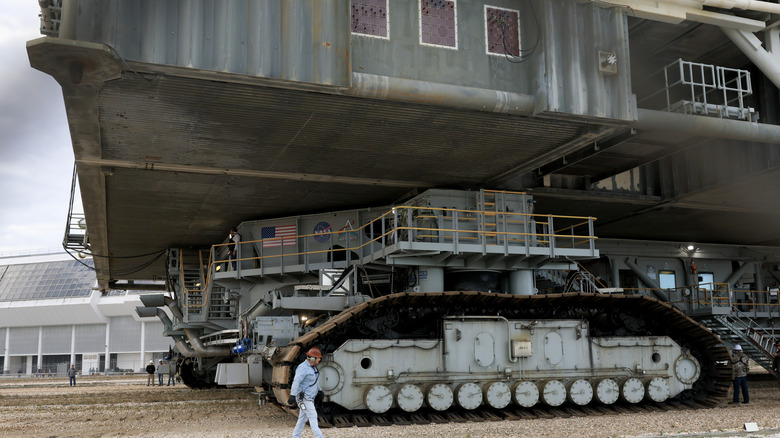
Since the crawlerway isn’t made up of smooth material like concrete — and because there are winds and other elements to worry about — the team responsible for moving Artemis down the crawlerway is constantly making adjustments to ensure the ride is both stable and steady for the spacecraft. In fact, there are several teams involved in the process, including a driver and a team that helps manage the engines and other important aspects, such as the hydraulics.
What is perhaps even more impressive about this crawl is that the machines carrying the SLS and (the potentially flawed) Orion shuttle are actually the same crawlers that NASA has been using since the Apollo days. Of course, over the years, the crawlers have been updated to include stronger systems and engines, but the foundation of the machines remain. So, with every trip to and from the VAB to the launchpad, NASA is carrying on the legacy of those early space exploration missions.
Now, you might be asking yourself: Couldn’t NASA make the crawlers go faster? The short answer here is “possibly.” Each of the machines is made up of more than 16 electric motors, as well as two powering generators that rely on diesel fuel to run. On top of that, the 131-foot-long and 114-feet-wide machine is made up of four different tracks, all of which help it meander along the crawlerway with relative speed. But if NASA wanted to go faster, it could potentially utilize a transporter erector system like SpaceX and other agencies do; however, it would need to build one first.