
Author: Markos Symeonides
Introduction to the Stanford Enterprise AI Playbook
On March 29, 2026, the Stanford Digital Economy Lab released its much-anticipated Enterprise AI Playbook, a comprehensive analysis of artificial intelligence adoption across global organizations. The report aggregates 51 detailed case studies from 41 organizations spanning seven countries across five regions, collectively representing over one million employees. This breadth of data offers an unparalleled window into the state of AI deployment in enterprise settings, providing actionable insights on what drives success and where pitfalls commonly arise.
The significance of this work is amplified by its timing. With enterprises worldwide investing heavily in AI technologies, including a record $37 billion spent by US companies on generative AI in 2025 alone, understanding how to translate AI ambition into tangible business value has never been more critical.
Scope and Diversity of the Playbook
The case studies cover a wide spectrum of industries, from healthcare and finance to retail and manufacturing, illustrating both the versatility and complexity of AI integration. The organizations vary in size and maturity of AI adoption, providing a holistic picture of the current enterprise AI landscape. This cross-industry perspective enables identification of universal patterns and differentiated strategies tailored to sector-specific challenges.
Key Findings: From Ambition to Activation
The Activation Gap in Enterprise AI
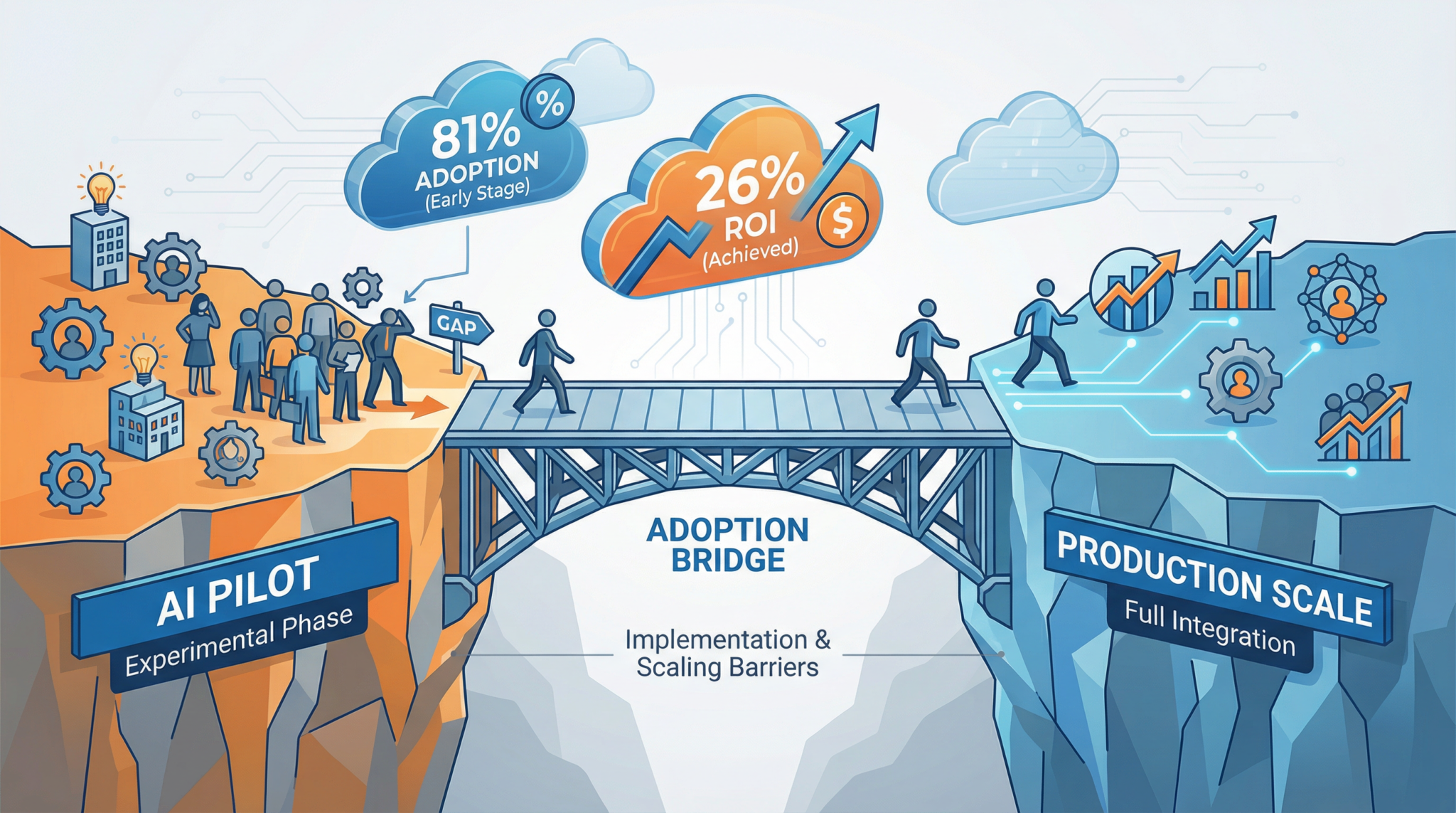
A central theme of the Stanford Playbook, echoed by Deloitte’s parallel 2026 report State of AI in Enterprise 2026, is the persistent challenge of moving from AI ambition to activation. While enthusiasm for AI is pervasive, with 81% of sales teams incorporating AI tools, only 26% have successfully scaled these pilots to deliver measurable ROI. This “activation gap” highlights why most AI initiatives stall before reaching production or fail to generate expected returns.
Deloitte’s analysis emphasizes that the difference between ambition and activation lies in operationalizing AI at scale—transforming isolated experiments into integrated capabilities that drive sustained business outcomes. The Stanford Playbook enriches this understanding by detailing the common barriers that contribute to this gap, such as organizational resistance, data silos, and lack of AI literacy.
HBR’s Seven Drivers of AI Investment Returns
The Harvard Business Review’s research, referenced in the Playbook, identifies seven critical factors that drive returns on AI investments:
- Clear business alignment: AI initiatives must be tightly linked to strategic objectives.
- Strong data foundations: Quality and accessibility of data are non-negotiable.
- Executive sponsorship: Leadership commitment accelerates adoption.
- AI literacy across teams: Building skills and understanding to democratize AI use.
- Iterative deployment: Focusing on incremental value rather than big-bang launches.
- Robust measurement frameworks: Tracking outcomes beyond cost savings, including innovation and speed.
- Scalable infrastructure: Enabling AI tools to integrate seamlessly into workflows.
These drivers align closely with Stanford’s observations and provide a practical lens for organizations seeking to benchmark their AI strategies.
Hidden Costs Undermining AI ROI
Forbes’ analysis, cited in the Playbook, sheds light on a frequently overlooked dimension: hidden costs that undermine AI’s ROI. These include expenses related to data preparation, ongoing model maintenance, employee retraining, and integration complexities. Such costs often inflate project budgets, delaying breakeven points and complicating risk assessments. The report cautions enterprises to factor these elements into their economic models rather than relying on optimistic projections based solely on upfront technology acquisition.
Understanding Hidden Costs in Enterprise AI offers a detailed breakdown of these factors and strategies to mitigate budget overruns.
Patterns of Successful AI Implementations
High-Impact, Low-Risk Use Cases as Launchpads
One of the most consistent patterns emerging from the 51 case studies is the strategic choice to begin AI initiatives with use cases that deliver significant business impact while minimizing operational risks. Examples include automating routine customer service interactions, predictive maintenance in manufacturing, and AI-assisted fraud detection in finance. This approach allows organizations to build confidence and refine deployment processes before expanding into more complex or sensitive domains.
Building Internal AI Literacy Before Scaling
Another hallmark of successful deployments is deliberate investment in AI literacy across the workforce. Training programs, internal AI champions, and cross-functional collaboration ensure that employees understand AI’s capabilities and limitations. This cultural shift reduces resistance, improves adoption rates, and facilitates more informed decision-making. Stanford’s report highlights organizations that established dedicated AI learning platforms and peer networks realized a 30% faster scale-up velocity.
Measuring ROI Beyond Cost Savings
Traditional ROI metrics focusing solely on cost reduction miss broader value drivers of AI. The Playbook advocates for expanded measurement frameworks that incorporate productivity gains, accelerated innovation cycles, and enhanced customer experience. For example, retail organizations reported a 20% increase in product launch speed attributable to AI-driven market analysis, while healthcare providers improved diagnostic accuracy, boosting patient outcomes.
This multidimensional ROI perspective aligns with findings from Deloitte’s report and reinforces the need for sophisticated analytics to capture AI’s full impact.
The Role of ChatGPT Enterprise and Claude for Business
The report underscores the transformational role of advanced large language models (LLMs) such as ChatGPT Enterprise and Claude for Business in enterprise AI strategies. These platforms enable natural language processing at scale, facilitating applications ranging from automated report generation to intelligent customer engagement. Organizations leveraging these tools reported streamlined workflows and improved knowledge management, directly contributing to measurable productivity enhancements.
Moreover, the integration of these LLMs into enterprise systems accelerates the “activation” phase by lowering technical barriers and democratizing AI access across departments.
Leveraging ChatGPT Enterprise for Scalable AI Solutions provides insights into best practices for integrating LLMs within complex organizational environments.
Industry-Specific Insights
Healthcare
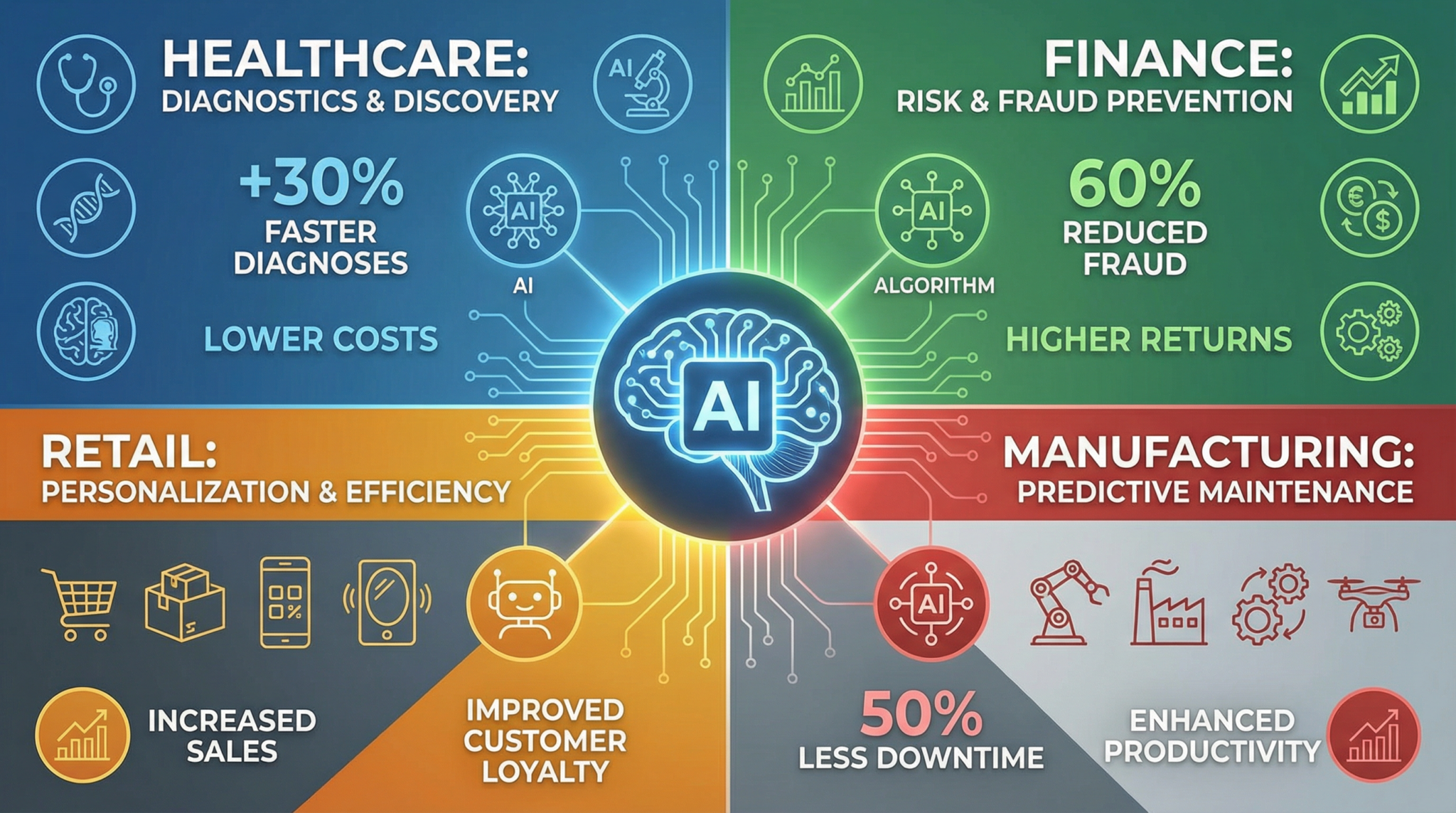
Healthcare organizations in the Playbook demonstrated AI’s potential to revolutionize patient care and operational efficiency. Use cases included AI-assisted diagnostics, personalized treatment planning, and predictive analytics for patient readmissions. These initiatives not only improved clinical outcomes but also reduced administrative burdens, allowing providers to focus more on patient interaction.
However, the sector also exemplifies challenges such as regulatory compliance and data privacy, necessitating careful governance frameworks. The Stanford Playbook highlights that successful healthcare AI implementations often involved partnerships with technology vendors and academic institutions to navigate these complexities.
Finance
Financial services firms utilized AI predominantly for risk assessment, fraud detection, and customer service automation. The Playbook notes that while AI adoption is widespread, scaling to production required robust data security protocols and seamless integration with legacy systems. Firms that prioritized transparent AI models and regulatory alignment realized higher trust and adoption among stakeholders.
Retail
Retailers leveraged AI for demand forecasting, personalized marketing, and supply chain optimization. The Playbook identifies a trend toward hybrid human-AI decision models, where AI provides recommendations that are then validated by human expertise. This approach mitigates risks and enhances decision quality, leading to measurable improvements in inventory turnover and customer satisfaction.
Manufacturing
Manufacturing entities focused on predictive maintenance, quality control, and process automation. The Playbook documents cases where AI reduced unplanned downtime by up to 40% and improved defect detection rates significantly. Critical success factors included sensor data integration and cross-functional collaboration between IT and operational technology teams.
AI Applications in Manufacturing for Operational Excellence details these use cases and implementation strategies.
Bridging the Activation Gap: Why Pilots Fail to Scale
The Stanford Playbook’s analysis of the activation gap offers a nuanced understanding of why many AI pilots do not transition into production. Common barriers include:
- Organizational Silos: Fragmented ownership of AI initiatives impedes alignment and resource allocation.
- Lack of Scalable Infrastructure: Pilot environments often lack the robustness required for enterprise-scale deployment.
- Insufficient Change Management: Resistance to workflow changes limits adoption by end users.
- Inadequate ROI Metrics: Failing to capture the full spectrum of AI benefits reduces leadership buy-in.
Addressing these factors requires a comprehensive strategy that integrates technical, cultural, and governance dimensions. The Playbook advocates for early involvement of cross-functional stakeholders and the establishment of AI Centers of Excellence to steward deployment and scale.
A Practical Framework for Measuring AI ROI
The Playbook introduces a practical framework designed to help organizations quantify AI returns holistically. Key components include:
- Baseline Assessment: Establish current performance metrics to enable comparison post-AI implementation.
- Multi-Dimensional Metrics: Track financial, operational, and strategic KPIs.
- Incremental Value Tracking: Measure gains incrementally to demonstrate progress and justify investments.
- Qualitative Impact Assessment: Incorporate customer satisfaction and employee engagement metrics.
- Continuous Feedback Loops: Use insights to refine AI models and deployment strategies.
Organizations applying this framework reported increased transparency in AI value realization and enhanced capacity to secure ongoing funding and executive support.
Recommendations for Organizations Starting Their AI Journey in 2026
Drawing on the extensive research and case studies, the Stanford Digital Economy Lab offers these strategic recommendations for enterprises embarking on AI in 2026:
- Prioritize Use Cases Wisely: Focus on high-impact, low-risk applications that can demonstrate early wins.
- Invest in AI Literacy: Develop comprehensive training programs to upskill employees at all levels.
- Build Robust Data Infrastructure: Ensure data quality, governance, and accessibility.
- Establish Clear Accountability: Designate leadership roles to oversee AI strategy and deployment.
- Adopt Scalable Technologies: Leverage platforms like ChatGPT Enterprise and Claude for Business to accelerate adoption.
- Implement Comprehensive ROI Measurement: Use multi-dimensional frameworks to capture the full spectrum of AI benefits.
- Foster a Culture of Experimentation: Encourage iterative development and learning from failures.
These recommendations are critical for avoiding the pitfalls that have hindered many enterprises and for capitalizing on the transformative potential of AI.
Access 40,000+ AI Prompts for ChatGPT, Claude & Codex — Free!
Subscribe to get instant access to our complete Notion Prompt Library — the largest curated collection of prompts for ChatGPT, Claude, OpenAI Codex, and other leading AI models. Optimized for real-world workflows across coding, research, content creation, and business.
Access Free Prompt Library
Conclusion
The 2026 Stanford Digital Economy Lab’s Enterprise AI Playbook stands as a landmark resource, providing data-driven insights into the realities of AI adoption in enterprise contexts. By synthesizing lessons from over 50 organizations worldwide, it clarifies the path from ambition to activation, highlighting the importance of strategic use case selection, workforce readiness, and comprehensive ROI measurement.
As US companies alone invested $37 billion in generative AI last year, the stakes for successful implementation are extraordinarily high. The Playbook’s findings, in conjunction with complementary research such as Deloitte’s and HBR’s reports, underscore that AI’s promise can only be fulfilled through disciplined, integrated, and human-centered approaches.
Executives and AI practitioners alike will find the Stanford Playbook an indispensable guide for navigating the complexities of enterprise AI in 2026 and beyond.