When talking about innovation in the European space industry, Airbus Crisis —a subsidiary of the Airbus space division, based in Tres Cantos (Madrid)— occupies a privileged place in that conversation. From power management systems for the Gateway lunar station to control computers for next-generation European launchers, the company designs and manufactures in Spain the critical components that make it possible for humanity to operate in the most hostile environments in the universe.
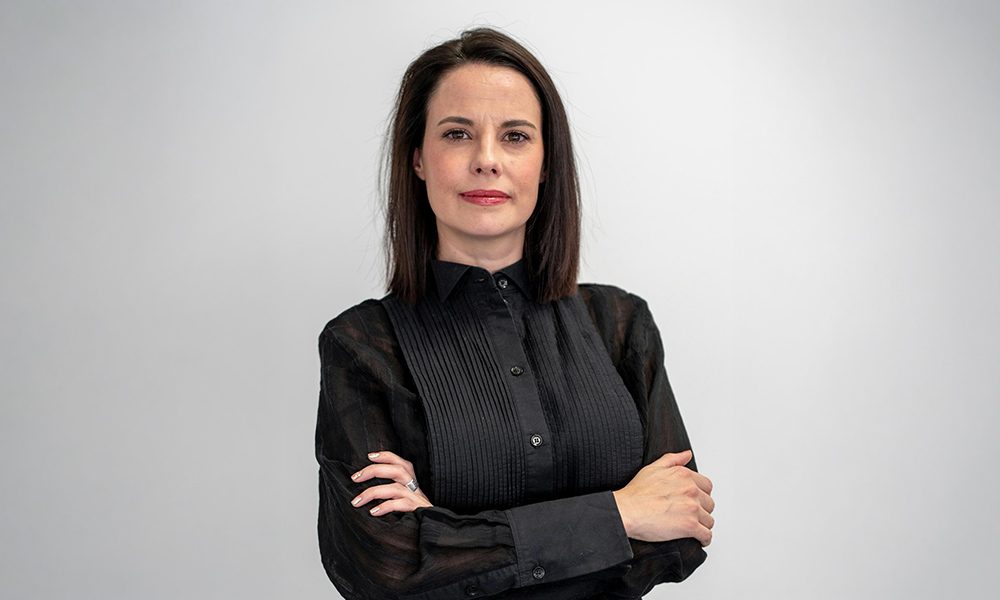
At the forefront of a good part of this strategic commitment is Sara de la RúaInnovation Manager of the firm. At Airbus Crisa, innovation is built from the ground up with Artificial Intelligence and Data Science laboratories, a 3D printing laboratory and an internal intrapreneurship incubator named The Dockwhere any employee can turn a digital idea into a real product.
The objective is to break the classic linear paradigm of the aerospace sector (design, manufacturing, testing) to adopt agile and iterative models that, without giving up the extreme rigor required by space missions, drastically accelerate development cycles.
A paradigmatic example of this philosophy is the SEAL project (Space Electronics Analyzes Learner), EU-funded Next Generation, which combines Cloud Computing and AI to simulate complex electrical circuits in a matter of milliseconds, something that previously took weeks of engineering. These types of initiatives not only improve internal operational efficiency, but also reinforce European technological sovereignty in a sector where dependence on third parties can have major geopolitical consequences.
In this interview, Sara de la Rúa reveals to us how Airbus Crisa is combining a heritage of four decades without failures in orbit with the digital agility essential to compete in the era of New Space: mega satellite constellations, manned lunar missions for Artemis and, on the horizon, the route to Mars.
(MCPRO) Sara, Airbus Crisa is leading projects of enormous relevance in space electronics, from ESA missions to collaborations with NASA. What is the strategic role of innovation within this value chain and what current projects do you consider best represent the company’s technological positioning?
(Sara de la Rúa) Electronics for space applications requires the development of unique and high-performance products. At Airbus in Tres Cantos we identify and explore the technologies that we consider key for the short, medium and long term, with the aim of incorporating them into our new products.
We firmly believe in the importance of developing and maturing technology before applying it to a final product. In fact, we are designing the electrical system for one of the modules of the Gateway lunar station, a fascinating project in which we have needed disruptive innovation in power management architectures to guarantee the survival of astronauts in space, where extremely high reliability and fault tolerance are critical requirements.
Another key example of innovation in our projects is one of the control computers for the next evolution of one of the main European launchers. This computer is capable of managing a re-ignitable engine with non-toxic propellants. The processor, the “heart” of the system, was born from an internal R&D project, which demonstrates our commitment to European technological sovereignty and much more sustainable space transportation solutions.
(MCPRO) Airbus Crisa has launched AI and Data Science laboratories, as well as a 3D Printing Laboratory. How are these experimental innovation laboratories transforming the product development cycle and what competitive advantages does this methodology generate with respect to the traditional standards of the aerospace industry?
(Sara de la Rúa) These labs are our “particle accelerators” for the hardware. We have broken the paradigm of the linear “design-manufacture-test” cycle to adopt a learning-by-experimentation model, where the AI model learns to perform a task through direct interaction with its environment. This gives us a massive competitive advantage in terms of time-to-market and risk reduction.
Regarding AI and data science, we do not use Artificial Intelligence just as a fashionable tool, but as a strategic axis. We apply everything from generative AI to agentic architectures (advanced intelligent systems capable of acting autonomously) to automate complex engineering processes. A clear example is our SEAL project, where we use AI and Cloud Computing to simulate electrical circuits in seconds, something that previously took weeks. This allows us to move from reactive to predictive engineering, detecting anomalies before even having the physical component.
The 3D printing lab has brought software agility to the hardware world. We talk about physical agility; Today we validate mechanical interfaces in a matter of hours. We are experimenting with ESD (charge dissipative), Nylon and TPU resins to create not only prototypes, but custom manufacturing and verification tools. The real value here is infinite iteration at low cost, as we can refine a design ten times before moving on to flight qualification, ensuring the final product is flawless, lightweight and optimized.
(MCPRO) The EU-funded Next Generation SEAL (Space Electronics Analyzes Learner) project aims to digitize electrical design using Cloud Computing and AI. What are the main technical challenges that you have had to solve and what tangible improvements in agility and efficiency is this project bringing to your development cycles?
(Sara de la Rúa) The SEAL project represents a leap towards digital sovereignty by integrating Cloud Computing and Artificial Intelligence to revolutionize space hardware design. The main technical challenge has been the incorporation of Cloud technology in Airbus in Tres Cantos; This has allowed us to parallelize massive simulations in the cloud. Thanks to this architecture, we have managed to streamline the electrical analysis phase to predict the behavior of complex circuits in milliseconds, surpassing the calculation capacity of traditional workstations and transforming decades of experience into a scalable digital asset.
The direct benefit is unprecedented agility in the development cycle, moving from weeks-long simulations to real-time concept validations. This allows design flaws to be detected months before entering the physical testing phase, where the cost of correction is prohibitive. Beyond operational efficiency.
(MCPRO) From the point of view of organizational transformation, Airbus Crisa is implementing agile methodologies in teams working on critical missions such as Mars Sample Return. How are agile frameworks adapting to a context where technological complexity and margins of error are practically zero?
(Sara de la Rúa) Agility at Airbus in Tres Cantos is based on strategic hybridization: we use agile frameworks to manage technical uncertainty while maintaining the rigor of the most demanding space security standards. At an operational level, this translates into “sprints” aligned with project milestones and the adaptation of processes such as Scrum, which allows rapid iteration in development without sacrificing the traceability or absolute reliability required by the different space missions.
This approach allows us to be more resilient to unforeseen budgetary events or changes in mission architecture. By focusing on incremental functional deliverables, the knowledge and innovation generated is not lost, it remains encapsulated and ready to be reactivated or applied to other projects immediately. In this way, organizational transformation not only improves our internal efficiency, but also ensures technological sovereignty in the face of the volatility of the global space market.
(MCPRO) The Dock, your internal innovation incubator, is positioned as an accelerator of digital products for employees. What is the balance between promoting an internal culture of innovation from below and aligning with Airbus Crisa’s corporate strategy?
(Sara de la Rúa) The Dock is our intrapreneurship incubator. It is the bridge between the workshop and the company’s strategy. We promote a participatory culture where any employee can propose a digital tool that simplifies their daily life. If the idea adds value (cost savings or UX improvement), it receives resources for its incubation. This not only improves productivity by digitizing bureaucratic processes, but is a key tool for attracting and retaining young talent, who seek hybrid and creative work environments within a large corporation.
(MCPRO) Looking to the near future, in which areas of innovation is Airbus Crisa investing its greatest efforts, and what do you consider to be the most determining competitive differential in the next five years?
(Sara de la Rúa) Our strategy for the next five years focuses on scaling the industrialization of space electronics under the “New Space” paradigm. We are investing heavily in our MV (Multi-Voltage) Family, a product line with superior digital control designed specifically for the high-speed, recurring manufacturing demanded by new satellite mega-constellations.
This technological advance goes hand in hand with an absolute commitment to sustainability, where we are pioneers in the use of lead-free soldering processes qualified for space, ensuring our competitiveness in the face of future European environmental regulations.
Beyond Earth orbit, we consolidate our position in human exploration by developing the vital power management systems for manned lunar missions, particularly the Artemis mission. This technology, designed and manufactured entirely in Tres Cantos, is what will allow the permanent presence of humans on the Moon and, eventually, the jump to Mars.
The most decisive competitive differential will, without a doubt, be our unique ability to hybridize an impeccable flight heritage (with four decades without failures in orbit) with the digital agility necessary to deliver maximum criticality equipment in the record times required by today’s market.