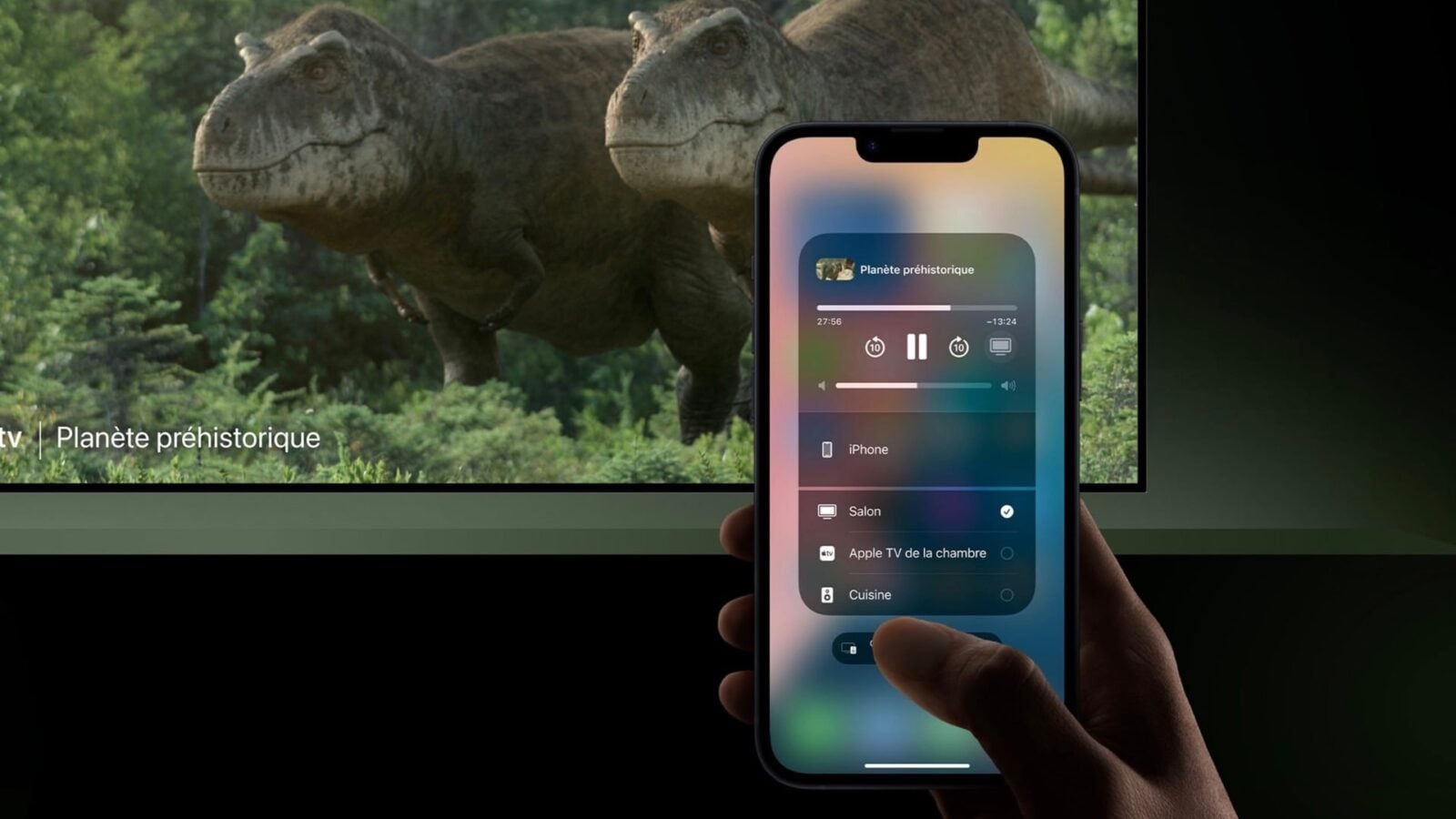
The Digital Markets Act continues to chip away at the Apple ecosystem brick by brick. This time, it’s the video casting that’s there.
Apple’s list of concessions in the face of the DMA is starting to resemble a Prévert-style inventory. Alternative app stores (iOS 17.4, March 2024). Third-party browser engines (same update). NFC open to banks competing with Apple Pay. Third-party watches and headphones allowed to connect natively to iPhone (iOS 26.5, May 2026). And now, according to BloombergiOS 27 will add native support for third-party casting protocols. European users will be able to replace AirPlay with Google Cast (or any other protocol) as the default method for sending videos, photos and audio to a TV or speaker.
What this changes for Chromecast and Google speaker owners
AirPlay works exclusively with Apple-compatible or Apple-certified devices. An iPhone user with a Chromecast or Google Home speaker must now use the Google Home app to stream content, with no system-level integration. With iOS 27, Google Cast could become the default protocol directly in the iOS settings, just like AirPlay. Concretely: you press the broadcast button in any application, and the iPhone offers the Google Cast devices available on the network, without going through a third-party app.
Mark Gurman, in his newsletter Power Onspecifies that Apple is “integrating support for third-party alternatives to AirPlay streaming into iOS 27” to meet the latest DMA requirements. The change would likely be limited to the European Unionlike the previous concessions. Apple has never voluntarily extended the openings imposed by Brussels to the rest of the world (iPhone Mirroring on Mac, for example, has remained unavailable in Europe since 2024, officially for privacy reasons).
The DMA is reverse-engineering the Apple ecosystem one update at a time
Apple’s strategy against the DMA follows a consistent pattern: resist as long as possible, then give in the minimum required, limiting each opening to the EU. In April 2025, the European Commission found Apple in breach of anti-circumvention rules (developers could not freely redirect to external offers). Apple updated its conditions in June 2025, adding new commissions that partially canceled the benefit for developers. The pattern repeats itself.
The result is a Two-speed iPhone. A European user can install alternative stores, choose their browser engine, connect a Garmin watch natively and (soon) use Google Cast by default. An American, Japanese or Brazilian user stays in the walled garden. Apple also makes no secret of it: “We are limiting these changes to the EU because we are concerned about their impact on the privacy and security of our users. »
WWDC 2026 is scheduled for June. iOS 27 will be officially presented on this occasion, and the list of DMA concessions with it. Every year, Brussels removes a brick. Every year, Apple ensures that the wall still stands.
👉🏻 Follow tech news in real time: add 01net to your sources on Google, and subscribe to our WhatsApp channel.
By: Opera
Source :
Bloomberg