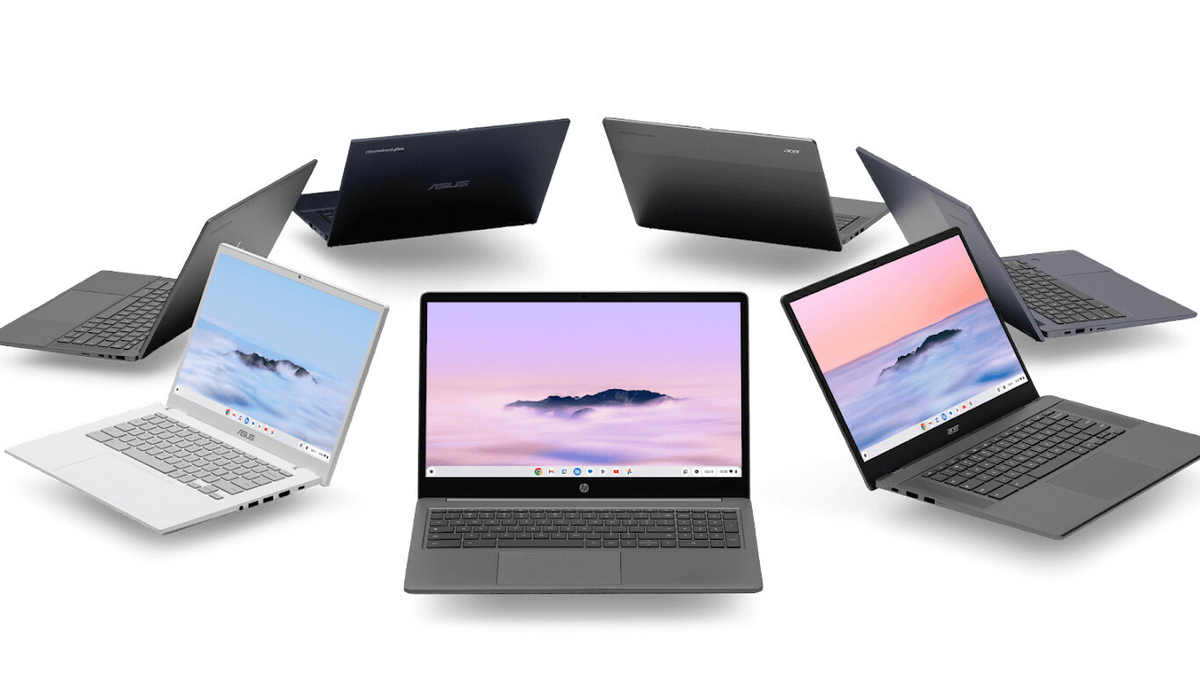
The change is significant. From September 2026, students entering secondary school in Île-de-France and Pays de la Loire will be provided with a Chromebook Asus CM14 running under ChromeOS. This initiative spells the end of Y13 Windows PCs provided until now by companies like Unowhy. For the two regions, which equip each year tens of thousands of young peoplethis choice is justified by better autonomy and a prolonged lifespan of the equipment. First and Finale students will keep their old equipment, ensuring a transition of several years where the two ecosystems will coexist.
What are the concrete modalities of this deployment?
In Île-de-France, the Region has put in place safeguards to regulate the use of these machines. The connection is made via the ENT identifiers monLycée.net, and the documents are stored on the Drive of this same platform, and not on that of Google. Notably, Google Workspace applications will not be not available on these Chromebooks, although Microsoft 365 will remain accessible via the browser. After-sales service is entrusted to Asus with the support of the Fnac-Darty network.
Le Chromebook Asus CM14
The Pays de la Loire region follows a similar logic, insisting on the fact that data will be stored in Europe and not in the United States, a key promise to reassure about the protection of personal information. The budget for the “My computer in high school” operation should increase from 20 million euros in 2025 to 23 million in 2026. In both cases, students become owners of their computer at the end of their schooling.
Why does this choice raise questions of sovereignty?
This decision is not unanimous and is seen by some as a blatant contradiction with the official discourse on technological independence. Experts denounce a choice which risks “ subjugate high school students » to the ecosystem of an American giant. They also point out that subjects like physics, computer science or engineering sciences require programming tools or access to a computer’s terminal. free operating systema use that ChromeOS does not natively facilitate.
The paradox is all the more striking as the State struggles to apply its own “Cloud at the center of the State” doctrinewhich requires certified hosts, effectively excluding Microsoft, Amazon and Google. These latter are in fact subject to the Cloud Act American, a law that allows American authorities to request data, even stored in Europe, which poses a major risk for confidentiality.

How should the case of Denmark have alerted France?
The Danish affair is a real school case for any European administration. It all started in 2019 after a complaint from a parent concerned about the way their child’s data was being processed. This complaint triggered a major investigation by the Danish data protection authority, Datatilsynet. The sentence fell in 2022: interdiction pure and simple of the use of Chromebooks and Google Workspace in the municipality’s schools due to non-compliance with GDPR.
After several years of proceedings, the verdict was delivered in January 2024: the authority ruled that no legal basis did not allow student data to be transmitted to Google for the improvement of its services. This major precedent perfectly illustrates the gap between the discourse on digital sovereignty and the decisions taken at community levelwho sometimes favor pragmatic solutions without measuring all the long-term implications.