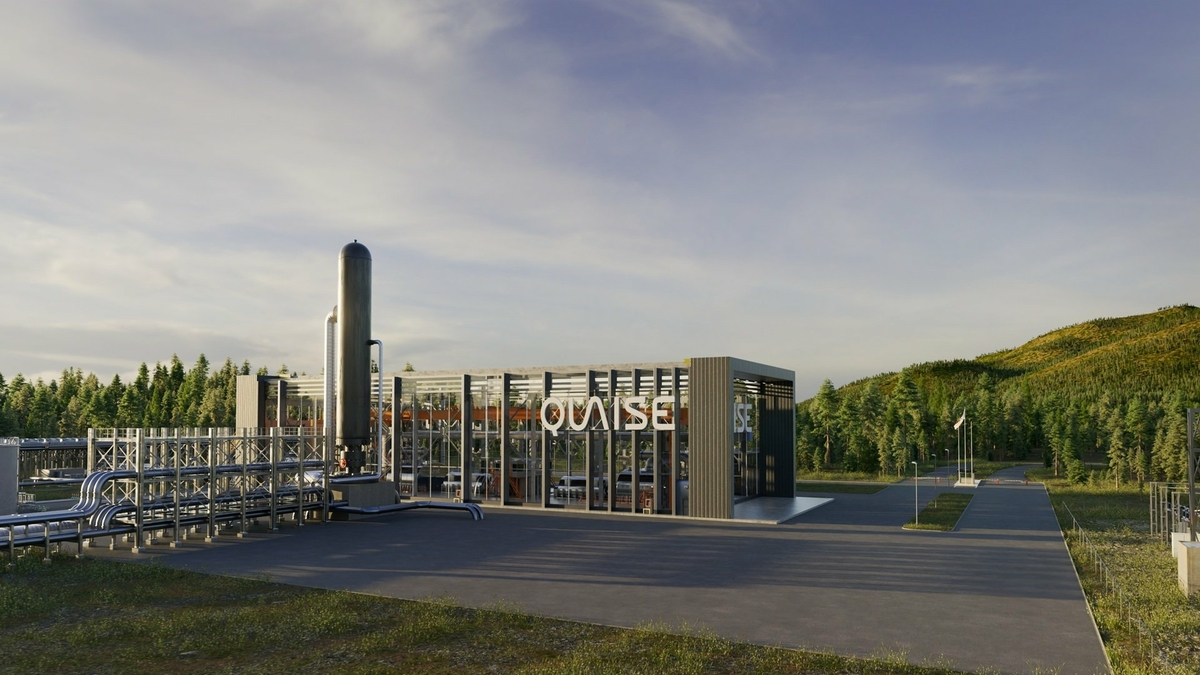
Quaise Energya Houston-based technology company spun out of Massachusetts Institute of Technology (MIT), has just reached a decisive step in its development.
She completed a $134 million funding round intended for the construction of Projet Obsidianin Oregon. The latter wants to put into service the first supercritical geothermal power plant commercial world by 2030, using a radically new drilling method to tap intense heat from deep within the Earth.
How does Quaise Energy’s technology stand out from conventional drilling?
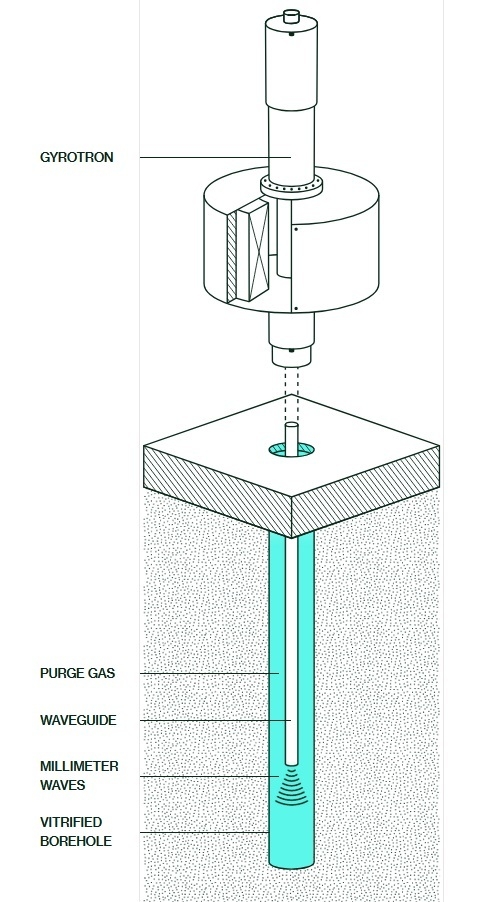
Quaise Energy’s technology abandons the principle of mechanical friction in favor of an approach ofablation sans contact. Instead of grinding rock with bits that wear out and overheat in extreme conditions, the system uses gyrotrons (high-power microwave devices) to generate millimeter waves.
These waves are directed towards the rock to heat it so intensely that it vaporizes, allowing it to digging without physical contact and to go beyond the limits of traditional equipment.
This method, perfected at a test site in Texas where it has already drilled more than 100 meters of granitewhich makes it possible to envisage reaching geological formations where the temperature varies between 300°C and 500°C.
This is a considerable advance because it opens access to much more powerful heat sources. By freeing itself from the constraints of material wear, Quaise demonstrates the viability of a new form of geothermal energycapable of digging well beyond the current depth of 3 to 5 kilometers.
What is the concrete potential of the Obsidian Project in Oregon?
The Obsidian Project, located in the Deschutes National Forest in Oregon, is designed as the first commercial showcase of this technology. It targets an initial production of approximately 50 MW of continuous electricitywith a potential for expansion to 250 MW and, ultimately, a capacity to the gigawatt scale.
The site was chosen because it is one of the best-studied geothermal regions in the United States, providing ideal conditions for initial implementation. Commissioning and connection to the electricity grid are planned for 2030.
Beyond pure production, the project has a strategic vocation: stabilize the electricity network of the Pacific Northwest. This region is facing growing demand, particularly driven by data centers dedicated to artificial intelligence.
By providing a source ofrenewable energy non-intermittent, Obsidian positions itself as a direct response to AI energy bulimia. This is a major asset in the face of fluctuating production solar and wind.
Why is this geothermal approach so promising for the energy future?
The major advantage of Quaise supercritical geothermal energy is its potential for universality. Unlike conventional geothermal energy, limited to active volcanic areas, this technology could theoretically unlock underground energy almost anywhere on the planet.
If you drill deep enough, you find heat everywhere. This would allow democratize access to a basic energy (or “baseload”), that is to say a stable energy source available 24/7, with a very small footprint.
But Quaise’s real trump card lies in a longer-term vision:reconversion of power plants fossil fuels. Their technology could make it possible to drill directly under this existing infrastructure to replace the coal or gas boiler with superheated geothermal steam.
We could thus reuse turbinesalternators and grid connections. For many, this would be an important step in the energy transition: decarbonizing the existing fleet without rebuilding everything.