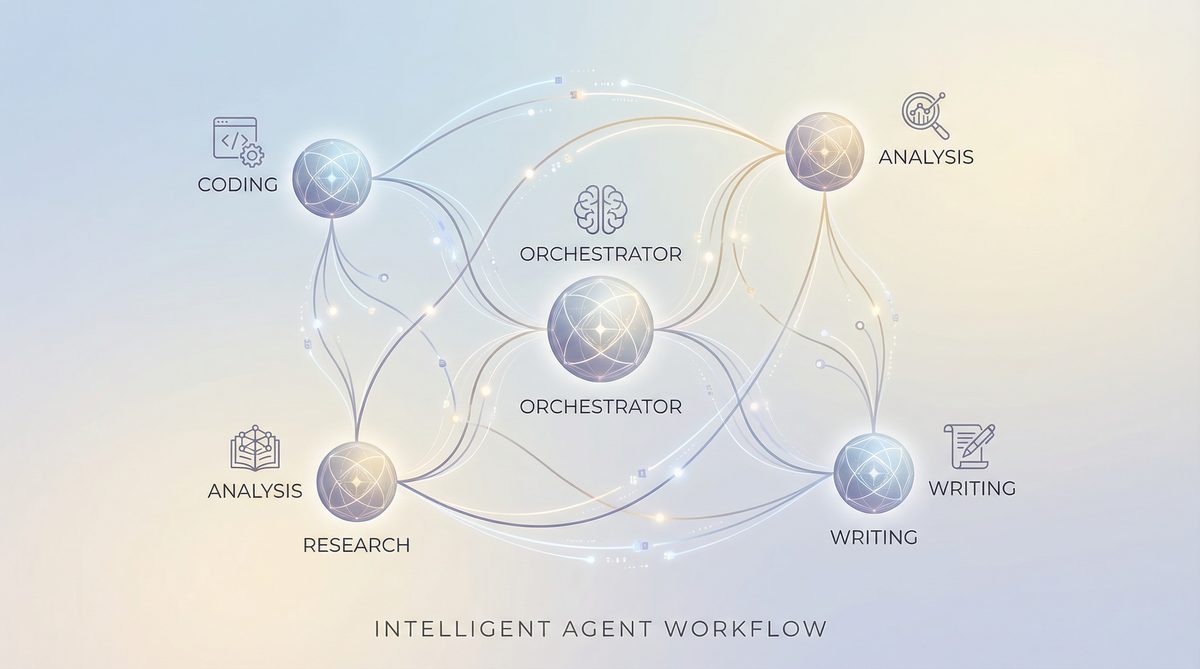
The year is 2026, and the landscape of artificial intelligence has been fundamentally reshaped by the mainstream adoption of Agentic AI workflows. What began as experimental research leveraging large language models (LLMs) like ChatGPT and Claude has evolved into sophisticated, autonomous systems capable of executing complex tasks, collaborating with other agents, and even learning from their own failures. This guide delves into the core tenets of Agentic AI, exploring the breakthroughs that have propelled it to the forefront, its impact on enterprises, and critical considerations for its deployment.
Agentic AI represents a paradigm shift from simple prompt-response interactions to systems that can plan, execute, and iterate on multi-step objectives. These agents are not merely tools; they are proactive entities designed to achieve goals with minimal human intervention. Their rise signifies a move towards truly intelligent automation, promising unprecedented efficiencies and innovation across virtually every sector.
The Mainstream Adoption of Agentic AI in 2026
By 2026, Agentic AI has transitioned from a niche academic concept to a cornerstone of modern technological infrastructure. Enterprises across finance, healthcare, manufacturing, and software development are integrating agentic workflows to automate complex processes, enhance decision-making, and unlock new capabilities. This widespread adoption is fueled by several factors, including significant advancements in LLM capabilities, improved agentic frameworks, and a growing understanding of how to design and manage these autonomous systems effectively. The ability of these agents to break down large problems into manageable sub-tasks, delegate to specialized sub-agents, and synthesize information from diverse sources has made them indispensable.
One of the primary drivers of this adoption is the demonstrable return on investment. Companies are reporting substantial reductions in operational costs, accelerated development cycles, and improved accuracy in tasks ranging from code generation and debugging to market analysis and customer support. The shift is palpable, with many organizations now prioritizing “agent-first” strategies in their digital transformation roadmaps. This means designing systems with the assumption that agentic components will handle a significant portion of the workflow, rather than merely supplementing human efforts.
The 7 Breakthroughs Reshaping Tech
The journey to mainstream Agentic AI adoption has been paved by a series of transformative breakthroughs. These advancements have collectively elevated agent capabilities from theoretical possibilities to practical realities:
- Advanced Reasoning and Planning: LLMs have evolved dramatically, demonstrating superior logical reasoning, multi-step planning, and the ability to self-correct. This allows agents to tackle more intricate problems without getting stuck in local optima.
- Enhanced Memory and Context Management: Long-term memory modules and sophisticated context windows enable agents to retain and recall vast amounts of information relevant to their ongoing tasks, leading to more coherent and effective operations over extended periods.
- Tool Integration and API Orchestration: Agents are now adept at dynamically identifying and utilizing external tools and APIs. Whether it’s interacting with databases, executing code, or communicating with other software systems, their ability to orchestrate external resources is seamless.
- Multi-Agent Collaboration Frameworks: The development of robust frameworks for inter-agent communication and collaboration has allowed for the creation of complex agent societies, where specialized agents work together to achieve grander objectives. This mirrors human team dynamics, but at machine speed and scale.
- Self-Correction and Learning from Failure: Agentic systems are increasingly equipped with meta-learning capabilities, allowing them to analyze their own failures, identify root causes, and adapt their strategies for future attempts. This iterative improvement is crucial for robustness.
- Improved Human-Agent Teaming Interfaces: User interfaces for monitoring, guiding, and intervening in agent workflows have become highly intuitive. This fosters trust and enables humans to effectively supervise and refine agent behavior, ensuring alignment with organizational goals.
- Specialized Foundation Models: Beyond general-purpose LLMs, the emergence of highly specialized foundation models tailored for specific domains (e.g., scientific research, legal analysis, creative design) has empowered agents with expert-level knowledge in their respective fields.
The Enterprise Agentic AI Landscape 2026
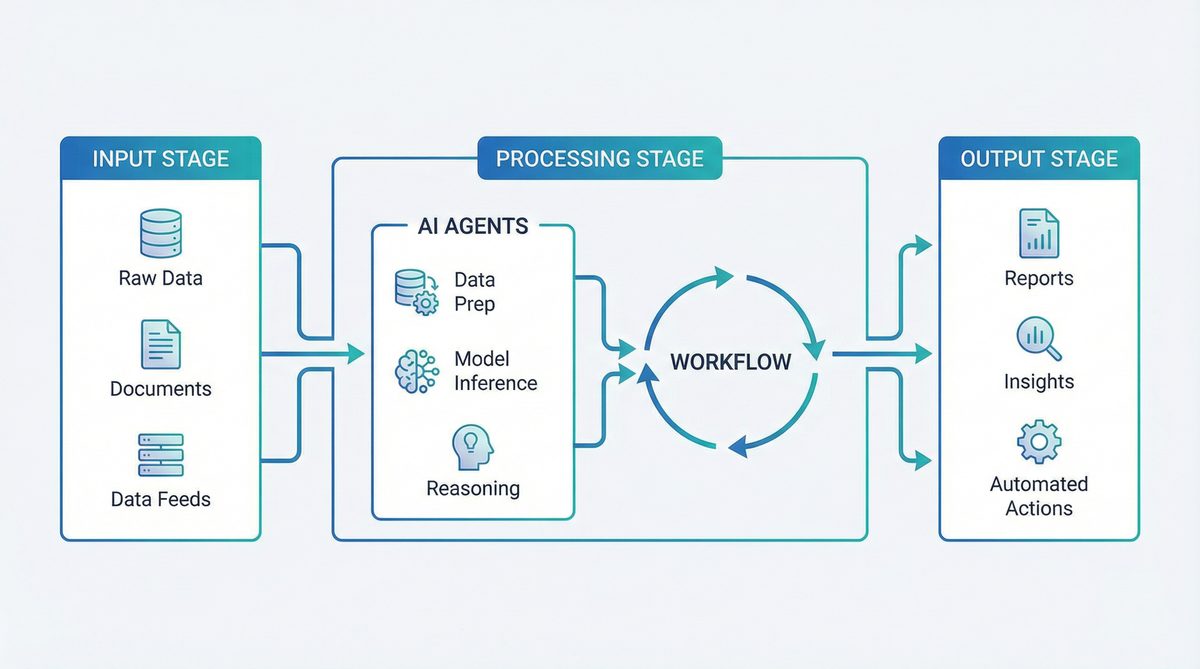
In 2026, the enterprise Agentic AI landscape is characterized by a vibrant ecosystem of platforms, tools, and services. Major tech giants are vying for market share, while innovative startups are carving out niches with specialized agentic solutions. The focus has shifted from simply building LLM wrappers to developing comprehensive agent orchestration platforms that provide robust infrastructure for deployment, monitoring, and governance of agentic systems.
Companies are investing heavily in internal agent teams, composed of AI engineers, prompt engineers, and domain experts, to design and deploy custom agents tailored to their unique business needs. The demand for skilled professionals capable of architecting and managing agentic workflows has skyrocketed. This era is also marked by a growing emphasis on explainability and auditability of agent actions, driven by regulatory concerns and the need for accountability in autonomous systems.
Trust, Flexibility, and Vendor Lock-in Considerations
As enterprises embrace Agentic AI, several critical considerations have come to the forefront:
Building Trust in Autonomous Agents
Trust is paramount when delegating critical tasks to autonomous agents. Enterprises are implementing rigorous testing protocols, including adversarial testing and simulated environments, to validate agent reliability and safety. Transparency in agent decision-making, often facilitated by explainable AI (XAI) techniques, is crucial for fostering human confidence. Establishing clear lines of responsibility and robust fallback mechanisms ensures that human oversight remains effective, even as agents become more autonomous. The transparency of agent actions allows for easier debugging and understanding of their operational logic, which is critical for complex deployments. These advancements in autonomous agent capabilities and their integration into enterprise operations are precisely why the AI Regulation Battle: Autonomous Agents Transform Business is intensifying in Washington, as lawmakers grapple with the implications of these powerful new technologies.
Ensuring Flexibility and Adaptability
The dynamic nature of business environments demands agentic systems that are flexible and adaptable. This means designing agents with modular architectures that allow for easy updates, retraining, and integration of new tools or data sources. Avoiding rigid, hard-coded logic in favor of adaptive, learning-based approaches ensures that agents can evolve alongside changing requirements. Enterprises are prioritizing platforms that offer open standards and interoperability, preventing them from being boxed into proprietary ecosystems. The ability to quickly retrain agents on new datasets or adjust their objectives is a key differentiator for successful deployments.
Navigating Vendor Lock-in
The rapid growth of the Agentic AI market presents a significant risk of vendor lock-in. Companies are proactively mitigating this by:
- Multi-Cloud and Hybrid Strategies: Deploying agentic components across multiple cloud providers or in hybrid environments to avoid dependence on a single vendor’s infrastructure.
- Open-Source Frameworks: Leveraging open-source agentic frameworks and tools where possible, which offer greater control, transparency, and community support.
- API-First Design: Prioritizing agent solutions that expose well-documented APIs, allowing for easier integration and migration between different platforms.
- Data Portability: Ensuring that data used by agents is easily portable and not tied to a specific vendor’s storage or processing ecosystem.
Careful strategic planning is essential to harness the benefits of Agentic AI without creating future operational liabilities due to vendor dependence. Understanding the nuances of various platforms, including those like the ones offered by Google, Amazon, and Microsoft, is crucial for making informed decisions, especially as we observe The Unified AI Platform Era: How ChatGPT, Codex, and Agentic Workflows Are Converging Into One Intelligence Layer, where major players like OpenAI, Anthropic, and Google are consolidating their AI tools into comprehensive, integrated platforms.
OpenAI’s Vision: A Super App Combining ChatGPT, Codex, and Atlas
OpenAI, a pioneer in the AI space, is reportedly building towards a “super app” that seamlessly integrates its flagship models: ChatGPT for natural language understanding and generation, Codex for code generation and understanding, and the nascent Atlas for advanced robotics and physical world interaction. This ambitious vision aims to create a unified agentic platform where a single intelligent entity can interact with users, write and execute code, and even control robotic systems to perform tasks in the real world.
Imagine an agent that can understand a complex request (“Build me a web application that manages my inventory”), then use Codex to write the necessary backend and frontend code, deploy it, and finally, leverage Atlas to coordinate robotic systems in a warehouse to manage physical inventory. Such a super app would represent the ultimate realization of Agentic AI, blurring the lines between digital and physical automation. This integrated approach promises to unlock unprecedented levels of autonomy and capability, pushing the boundaries of what AI can achieve. As these advanced AI capabilities continue to evolve, they will undoubtedly have a profound impact on various industries and job roles. To understand how these technological shifts will reshape the professional landscape and what strategies professionals and businesses can adopt, explore The Great Reshaping: AI and the Future of Work in 2026 — A Complete Guide for Professionals and Businesses, which offers comprehensive insights for job seekers, mid-career professionals, freelancers, CEOs, and HR directors alike.
The implications for software development, manufacturing, and logistics are profound. This integrated system would allow for end-to-end automation of highly complex processes, reducing the need for human intervention across entire value chains. However, it also raises significant questions about safety, control, and the ethical implications of such powerful and autonomous systems.
The journey to 2026 has seen Agentic AI evolve from a theoretical concept to an indispensable component of modern technological infrastructure. The breakthroughs in reasoning, memory, tool use, and collaboration have paved the way for autonomous systems that can tackle complex problems with unprecedented efficiency. As enterprises continue to adopt these workflows, careful consideration of trust, flexibility, and vendor lock-in will be crucial for successful and sustainable deployment. OpenAI’s vision of a super app combining its leading models highlights the boundless potential and the exciting, yet challenging, future of Agentic AI.
Access 40,000+ AI Prompts for ChatGPT, Claude & Codex — Free!
Subscribe to get instant access to our complete Notion Prompt Library — the largest curated collection of prompts for ChatGPT, Claude, OpenAI Codex, and other leading AI models. Optimized for real-world workflows across coding, research, content creation, and business.
Access Free Prompt Library