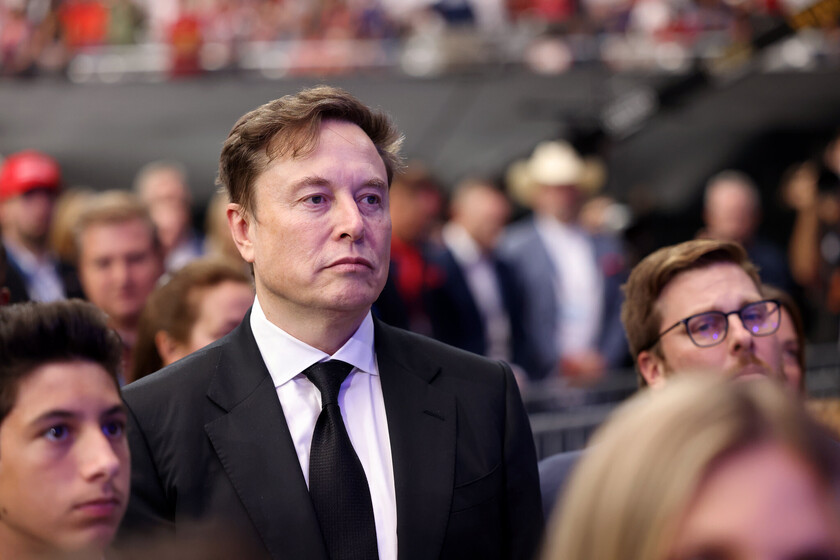
There are few recent stories in technology as fraught with contradictions as that of OpenAI. It was born with a mission linked to the general interest, but ended up occupying a key place in an increasingly competitive industry. Elon Musk was at the origin of that story, then he left and later built his own artificial intelligence company. From there he took OpenAI, Sam Altman and Greg Brockman to court. The underlying question, at least in the story that Musk tried to take to court, was who could claim the original version of what OpenAI promised to be.
The legal term. Before the trial could become a full review of OpenAI’s evolution, the case became bogged down in a temporal issue. The jury in Oakland, California, deliberated for about 90 minutes and concluded that Musk had filed his lawsuit too late. That left their claims blocked by the legal limit to take action in court. The jury’s decision was advisory, but Judge Yvonne Gonzalez Rogers said she accepted its conclusions as her own and that there was a substantial amount of evidence to support them.
Musk’s accusation. The lawsuit filed in February 2024 attempted to place the conflict on a very specific ground: that of an alleged breach of the founding agreement. Musk accused Altman, Brockman and OpenAI of having “stolen a non-profit entity” and of having been unjustly enriched by the company’s evolution towards a structure that incorporates a for-profit arm. His reproach, brought to court, was that the project had ended up looking too much like what he said he did not want to be.
OpenAI’s response. The defense tried to dismantle the lawsuit in two ways: denying the underlying betrayal and highlighting the calendar. OpenAI’s lawyers maintained that the organization’s mission had not changed and that the company remained governed by a nonprofit foundation board. They also focused on the moment chosen by Musk to sue: after founding xAI. The jury accepted that reading of the calendar and concluded that Musk had known about the events that he later took to court since at least 2021.
The scope of the lawsuit explains why the case was followed so closely in the industry. Let us remember that Musk asked the court for measures of enormous impact: that OpenAI return more than $130 billion to its non-profit arm, that Altman and Brockman be removed from their positions and that the corporate restructuring that turned the company into one of the most valuable technology companies in the world be undone.
A trial with many layers. Beyond the result, the process left something that is usually difficult to see from the outside: fragments of the company’s internal functioning. During the procedure, private emails, text messages, meeting notes and much more were presented. They also declared relevant names, such as Ilya Sutskever and Shivon Zilis. Among what came to light were conversations about financing formulas, infrastructure needs, among other issues.
End of the case? The ruling leaves OpenAI and its leaders with an important victory, but does not turn the confrontation into a closed story. Elon Musk’s main lawyer, Marc Toberoff, announced that they plan to appeal. The case therefore ends this phase before entering into the merits, but the dispute between the parties will apparently remain alive.
Images | Gage Skidmore
In | The funniest reality show of the moment is not broadcast on Telecinco: it stars the trial of Elon Musk and Sam Altman