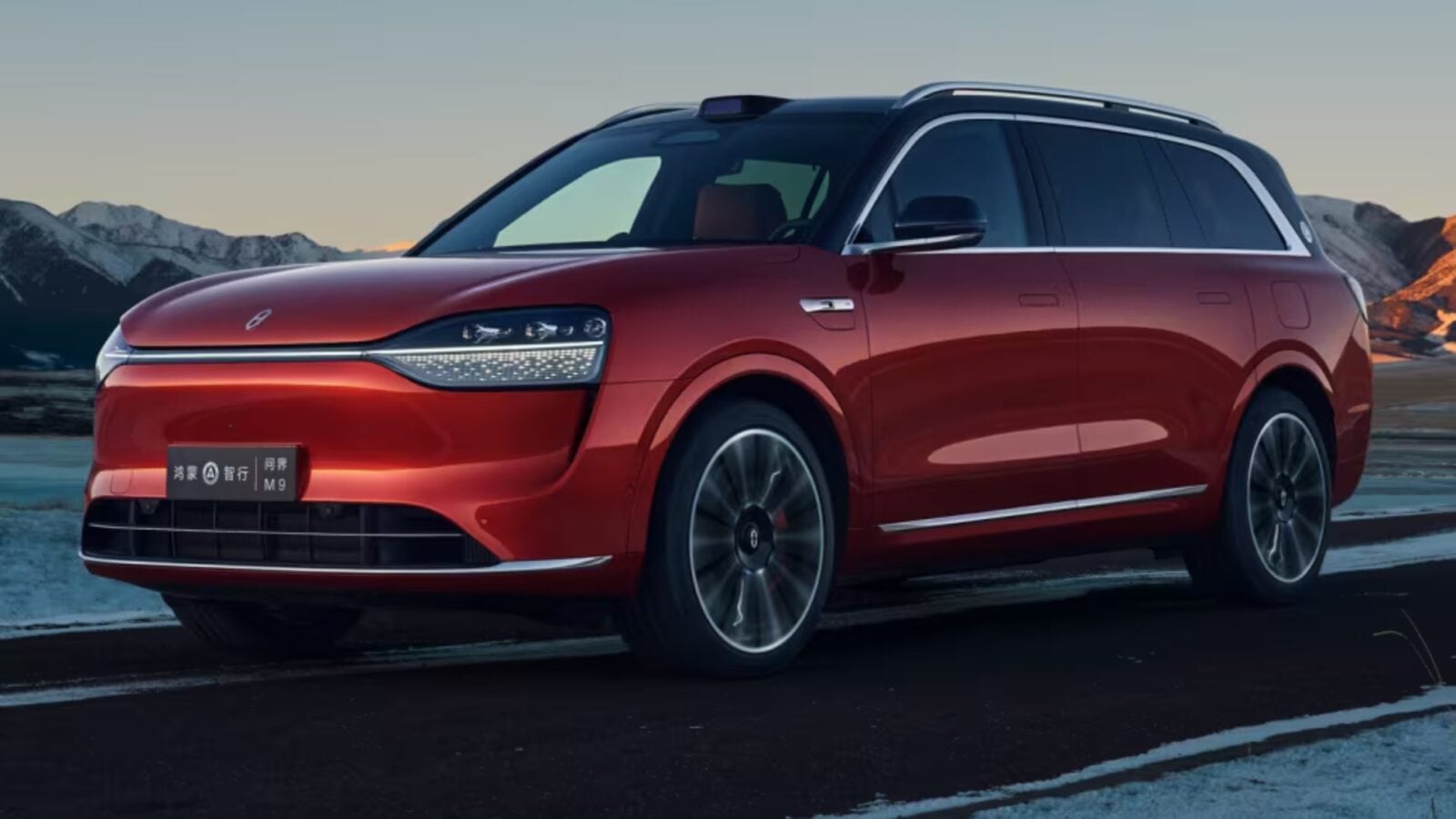
The race for comfort has pushed electric cars towards considerable weight gain. They have become so heavy and imposing that some are no longer even compatible with parking lots. China now wants lighter models.
If your bathroom scale told you 33% more kilos compared to your last weigh-in, you will inevitably make a face. 33% is certainly not innocent. However, this is the mass differential between electric cars sold in China in 2012, and those marketed today. The scale therefore explodes, with an average mass of 1,704 kg for vehicles sold in the Middle Kingdom in 2024 according to the local television channel CCTV. And the problem is not only measured in kilos…
The parking nightmare: 5 centimeters to open the door
Many SUVs and minivans reach two meters in width, making them completely incompatible with car parks built a few decades ago when cars were not yet so imposing. The largest models now reach 2.3 meters wide. Given that a standard parking space is 2.4 meters wide, there is only a margin of 10 cm, so 5 cm on either side of the vehicle to open a door. Impossible !
The race for 1,000 km of autonomy: batteries as heavy as a city car
Of course, these giant cars are high-end models, most of which have remote parking functions to make things easier. But this remains very annoying, especially since the mass is an unavoidable problem. Since customers always want more autonomy, batteries gain significantly in capacity, and therefore in weight. With ranges approaching 1,000 kmaccumulators weigh up to 800 kg, which was the weight of entire city cars around thirty years ago.
Comfort and giant batteries: the high-end trap
In addition to autonomy, everyone wants comfort. Vehicles are thus increasing the number of equipment they have to meet demand, which makes cars that were already not born light even heavier. The compounding factor is that China produces more electric vehicles than any other country. All these beautiful people crowd together in the car parks, endangering the oldest infrastructures. The Chinese government is aware of the problem, and has already capped the consumption of heavy models.
China bangs its fist on the table and imposes a dry regime on manufacturers
By limiting the energy appetite of two-ton vehicles to 15.1 kWh/100 km on the CLTC cycle, China is taking a first positive step which will encourage manufacturers to review their copy. Enough to force brands to optimize autonomy not with ever-larger batteries, but with better efficiency inevitably through the general reduction of models. There was a need given the pronounced gluttony of most Chinese vehicles.
👉🏻 Follow tech news in real time: add 01net to your sources on Google, and subscribe to our WhatsApp channel.
Source :
The Next Web