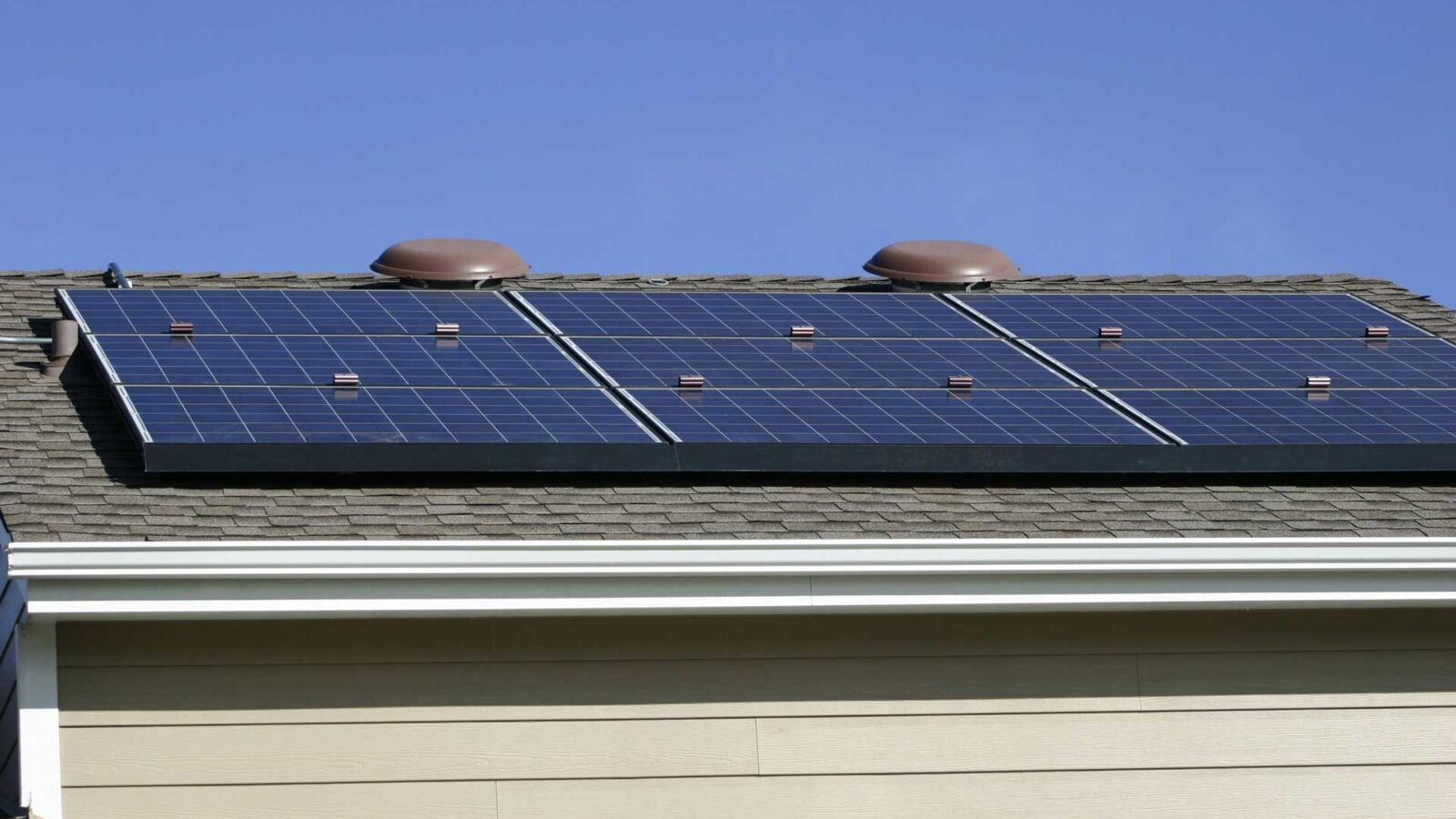
The energy crisis is causing sales of solar panels to explode in Europe. Some players are seeing their sales increase tenfold. Meanwhile, public aid is melting away.
The energy crisis triggered by the war in Iran has had an unexpected effect on European rooftops. Since the blockage of the Strait of Hormuz and the surge in oil, gas and electricity prices, demand for residential solar installations has surged across Europe. A Reuters survey of half a dozen renewable energy wholesalers and suppliers in Germany, the United Kingdom and the Netherlands paints a striking picture: for some players, demand has simply doubled since the start of the conflict. The same energy shock that exploded sales of electric vehicles in Europe is also transforming roofs.
Sales multiplied tenfold in a few weeks
Companies surveyed by Reuters put forward precise and hitherto unpublished figures. The German Solarhandel24 saw its turnover triple in March to reach almost 70 million euros, a trend which was expected to be confirmed in April. Its competitor Enpal, for its part, recorded a 33% increase in its orders in April to reach around 120 million euros. At E.ON, the leading European energy network operator which also markets rooftop solar systems, customer requests have almost doubled over a year. OVO Energy in the UK is doing even better: its solar sales in April were around ten times their level of the previous year.
These figures come after a clear slowdown in the market: according to the SolarPower Europe lobby, new residential solar installations only represented 14% of new capacities installed in the EU in 2025, compared to 28% two years earlier. The crisis has brutally reversed this trend.
Panels, batteries and charging stations: the complete system is essential
What also changes is the nature of the orders. Homeowners no longer just buy panels. They are increasingly opting for integrated systems combining solar production, storage batteries and electric vehicle charging stations. The objective is no longer just to reduce the bill but to achieve a form of energy autonomy. This trend mechanically drives demand for storage technologies, which would record an increase of 40 to 50% according to Holland Solar in the Netherlands. Balcony solar kits with integrated battery represent the entry level of this movement, accessible without work.
A complete roof installation for a family home generally costs between 10,000 and 20,000 euros. A significant investment, but the return on which has accelerated with the surge in prices. The good news: solar panels age much better than we think, a recent study having shown that modules installed 22 years ago still retained 85% of their performance. Note that 90% of the panels available on the market come from China, whose production capacities alone exceed the global demand forecast for 2026.
The paradox of public aid
The rush towards solar comes in a paradoxical political context: European governments are reducing their support measures precisely at a time when demand is picking up. In France, a draft decree submitted to the Higher Energy Council in April provides for the elimination of the self-consumption bonus and a reduction in the surplus buy-in tariff from 4 to 1.1 euro cents per kWh. In Germany, the government plans to eliminate feed-in tariffs for installations of less than 25 kWp from 2027. This is also pushing some households to invest quickly, before the new rules come into force.
For those in the sector, the lesson is clear. “Recurring energy crises prove the renewable energy sector right”summarizes Jannik Schall, co-founder of the German company 1Komma5Grad. The question is no longer whether residential solar power will establish itself in Europe, but how quickly public policies will be able to support a demand which cannot wait.
👉🏻 Follow tech news in real time: add 01net to your sources on Google, and subscribe to our WhatsApp channel.