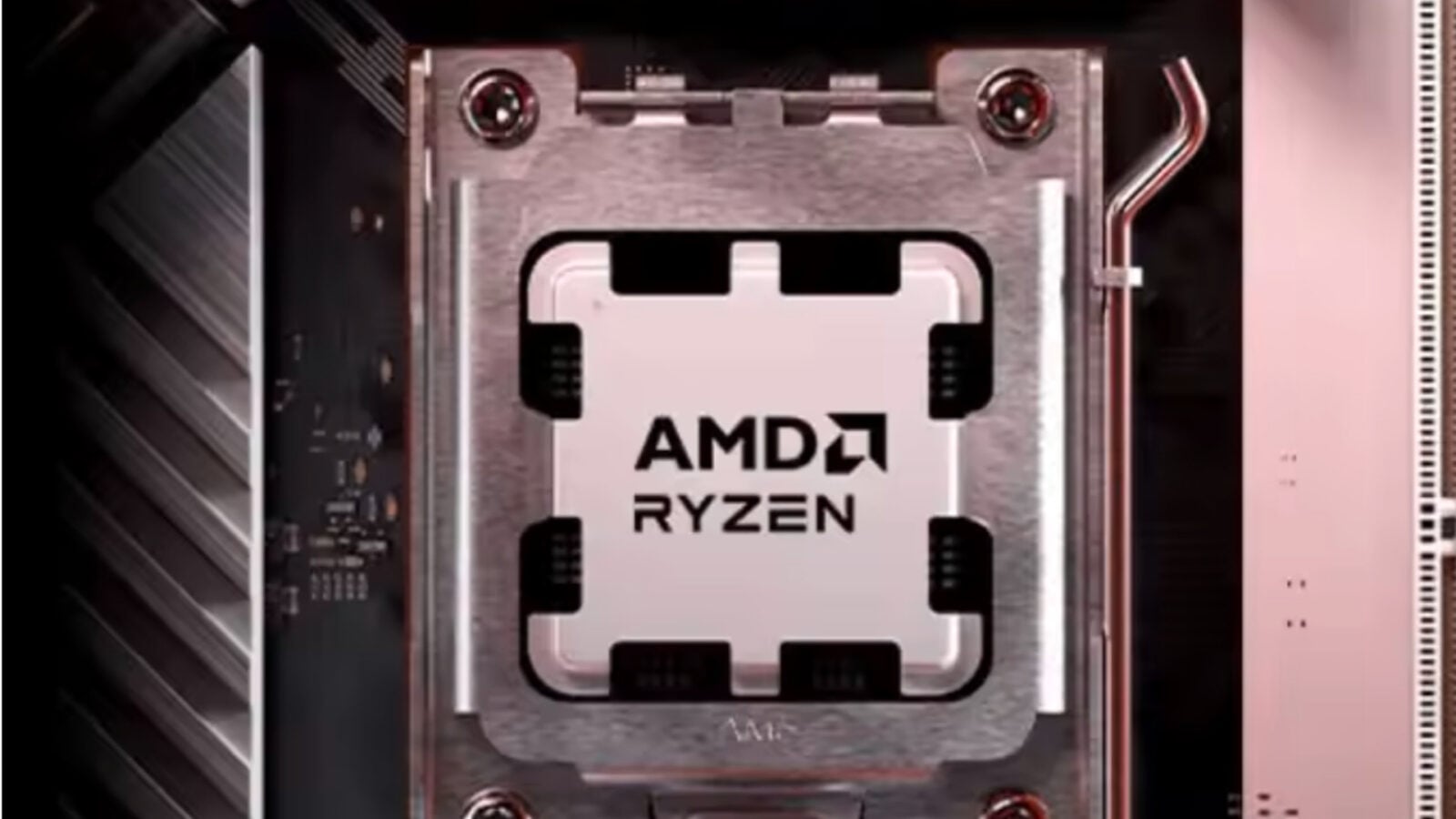
After RAM, it is the processors that are under pressure from AI. Substrate manufacturers are massively redirecting their capacities to servers, and gaming could pay the price.
The shortage of RAM linked to AI, PC gamers remember. DDR5 prices skyrocketed when hyperscalers (Amazon, Google, Microsoft) sucked up most of HBM’s memory production to power their training GPUs. At the peak of this shortage, the scenario is happening again, but this time with processors. More precisely with substrates, these printed circuit boards without which no chip can work. Ibiden, a Japanese substrate giant and key supplier to Intel and AMD, has just released its guidance for fiscal year 2026 (ending March 2027), and the numbers tell a pretty clear story.
Why CPU demand is exploding amid GPU reign
Ibiden provides 330 billion yen in revenue for its Electronics division (compared to 310 billion expected), driven by general server products. The manufacturer anticipates a production load multiplied by 1.8 in 2026 and by 2.4 in 2028 compared to 2024. The reason can be summed up in two words: agentic AI. Unlike model training (which relies almost exclusively on GPUs), agentic inference consumes massive amounts of CPU. Each AI agent that executes tasks autonomously (send an email, place an order, coordinate a data flow) needs a processor to orchestrate its operations. The historical ratio of one CPU to eight GPUs in data centers is shifting to a ratio of one to one.
AMD reframed the issue on May 5, 2026 during its quarterly results. Lisa Su, its general manager, noted the addressable market for server CPUs at $120 billion by 2030 (double the previous estimate), with annual growth of 35%. Arm doubled its CPU revenue forecast for agentic AI to $2 billion by 2028. The group introduced the Arm AGI CPU, a processor designed for AI agents, with Meta as a lead partner. Lip-Bu Tan, the new boss of Intel, summed up the situation in April with unusual frankness for a manufacturer in the midst of restructuring: “The next wave of AI will considerably increase CPU requirements. »
Will gamers foot the AI bill?
The problem is that the substrates are manufactured in the same factories for server processors and for consumer chips. When Ibiden invested 500 billion yen (around $3.3 billion) over three years to expand its capabilities, it was mainly to meet AI demand. Non-AI lines pick up what’s left (and what’s left shrinks).
Amazon illustrates the tension on the demand side: the group has tripled its CPU servers and still finds itself out of stock. On the supply side, TSMC, which melts almost all AMD chips and a growing share of Arm processors, does not have infinite capacity. Each wafer allocated to an Epyc Turin (AMD server CPU) is a wafer that does not manufacture Ryzen 9000 for gamers. The situation is not yet that of an open shortage on the general public market, but the signals are there. Lead times are lengthening, prices are rising, and room for maneuver is shrinking.
The last time a critical component was sucked into AI, consumer graphics cards suffered for two generations. With CPUs, the cycle is likely to be longer: agentic demand, unlike training, does not slow down once the models are built. It accelerates as agents multiply.
👉🏻 Follow tech news in real time: add 01net to your sources on Google, and subscribe to our WhatsApp channel.
Source :
WCCFTECH