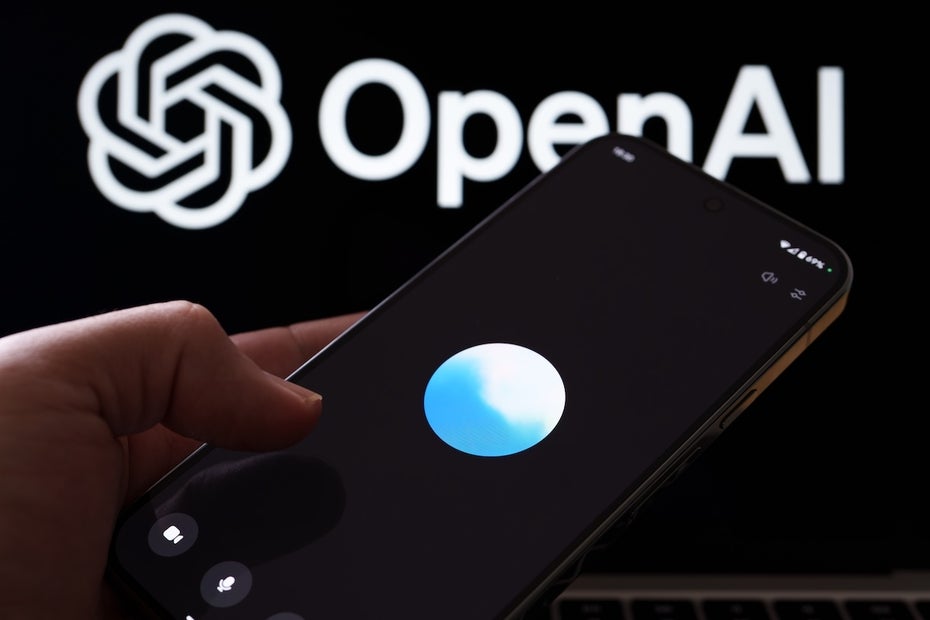
According to media reports, OpenAI is working on its own smartphone based on AI agents. Instead of downloading apps and navigating through different screens, users would interact directly with AI agents who would take over the tasks themselves: writing messages, managing emails, ordering rides, restaurant reservations or research.
Qualcomm and Mediatek will work together to design the customized processor, with production taking place at Luxshare – a company that also assembles Apple devices.
Qualcomm shares rose 13 percent as a result of the report
This is what analyst Ming-Chi Kuo, who has become one of the industry’s most followed hardware analysts thanks to his deep insights into the Apple supply chain, reports on
Editorial recommendations
${content}
${custom_anzeige-badge}
${custom_tr-badge}
${section}
${title}
The OpenAI device would maintain what Kuo calls a “full real-time state”: it continuously senses users’ location, activities, communications, and situational context to provide this data as input to the AI agents. Cristiano Amon, the CEO of Qualcomm, has been advocating exactly this vision for months: in the future, AI agents will replace the mobile operating system and apps as the primary level of interaction. Qualcomm shares rose 13 percent as a result of the report.
The most successful cell phones of all time

The most successful cell phones
Attack on Apple and Samsung?
If the device is successful, Kuo predicts annual shipments of 300 to 400 million units – a figure that would surpass Apple’s iPhone sales volume and put the device in direct competition with Samsung and Apple, which together account for about 40 percent of the global smartphone market.
For comparison: Apple delivers around 230 million iPhones every year, Samsung around 220 million Galaxy smartphones. For a new market entrant to achieve such volumes would be unprecedented in the smartphone era. Whether the OpenAI device can really be as successful as Kuo predicted remains to be seen. According to 9to5Google, the device will be ready towards the end of the year or early 2027; mass production is not expected to start until 2028.
Top Article
${content}
${custom_anzeige-badge}
${custom_tr-badge}
${section}
${title}