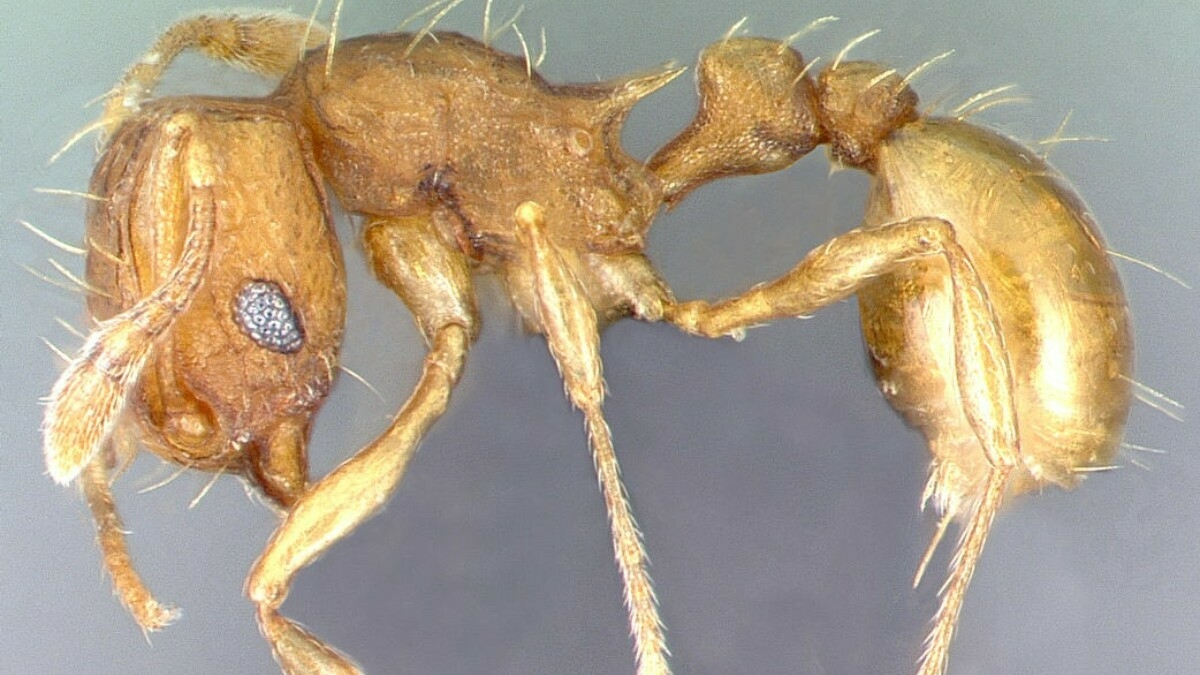
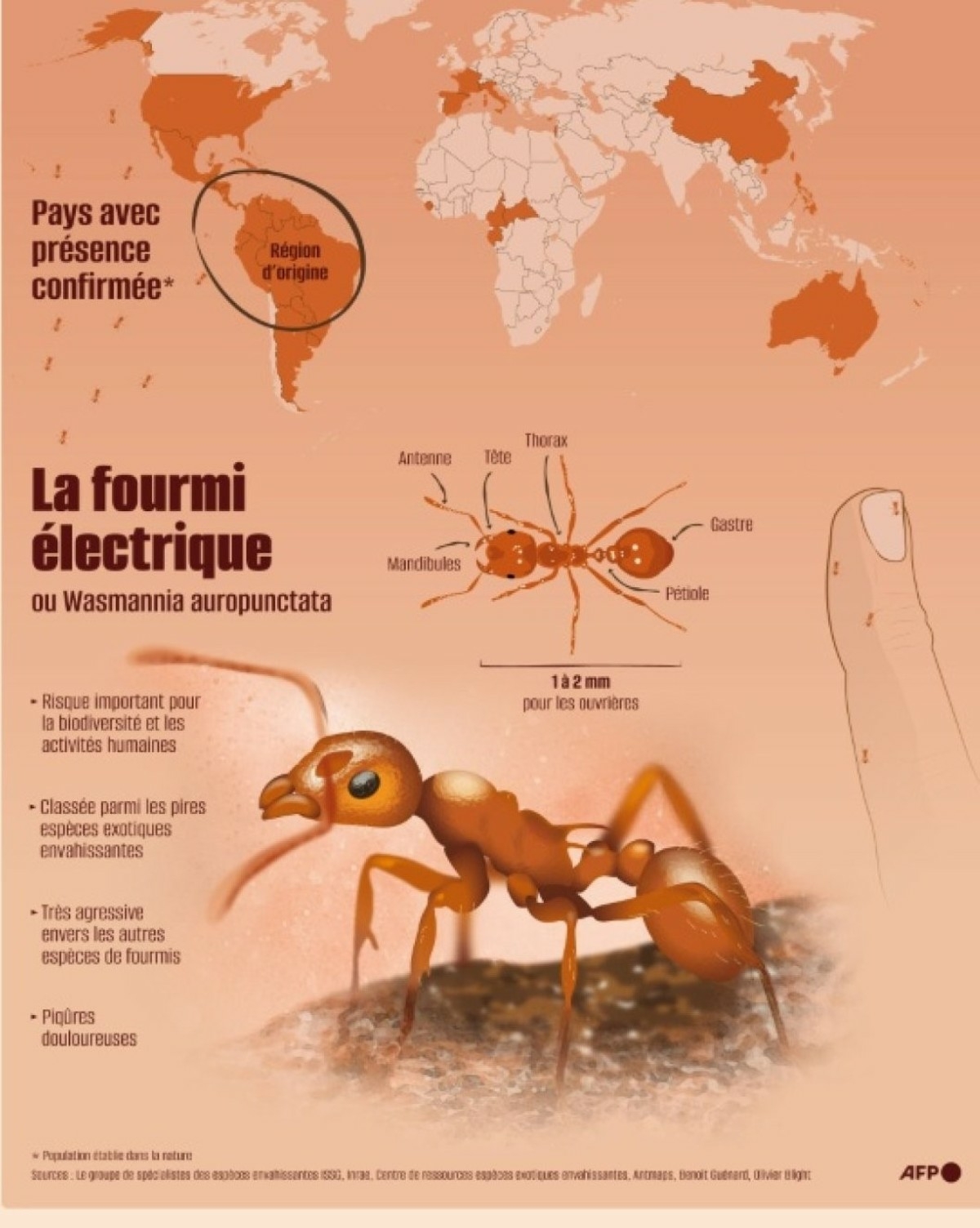
After Toulon in 2022 and La Croix-Valmer in 2024, the discovery of a new colony of electric ants in Cavalaire-sur-Mer in April 2026 sounds like a worrying confirmation. This invader measuring barely 1.5 millimeters, originating from South America, is no longer an isolated case but an established threat. Its progression, slow but inexorable, is almost exclusively linked to human transportparticularly via the potted plant trade. A single queen is enough to colonize hectares.
Why is this ant nicknamed “electric”?
Don’t be fooled by its name, it doesn’t produce any electricity. Its nickname comes from the pain of its sting. A violent sensation, described as a mixture between electric dischargenettle burn and bee sting. Pain that can last for hours. And she never attacks alone. This INSECT operates in groups, multiplying the injection points of its powerful venom.
If the consequences are often benign for humans, a risk of anaphylactic shock exists for people with allergies. The real drama also plays out for domestic animals. Many cases of blindness have been reported in dogs and cats stung in the eyes.
What is its real impact on the environment?
His aggression is limitless. The electric ant “razes everything” in its path. It attacks and eliminates all other arthropods, from spiders to bees. It even attacks small vertebrates, such as baby birds in their nest. Experts speak of “silent forests” in New Caledonia, where its presence has eradicated all other forms of audible life. Its ability to form supercolonieswith densities of up to 20,000 individuals per square meter, is staggering.
This Invasive species doesn’t just destroy local wildlife. It also promotes the proliferation of aphids and mealybugs, creating havoc in agriculture. In Brazil, entire cocoa plantations have been abandoned, with workers refusing to work under constant threat of injections. A prospect that shakes the agricultural and tourist sectors of the south of France.
How does France intend to respond?
The State is finally bringing out the heavy artillery. The first attempts, based on insecticide dispenser boxes, ended in failure. A new ministerial exemption now authorizes, for a period of 180 days, the use of products by direct dustingincluding by drones for difficult-to-access areas. One of the products considered, based on spinosad, is even authorized in organic farming. The objective is clear: total eradication, as long as the infested surfaces remain contained.
France is a pioneer, even a laboratory, in Europe. Spain and Cyprus, also affected, seem overwhelmed. Scientists estimate that eradication is still possible if the infested area remains less than ten hectares. It’s a real race against time to protect the Biodiversity local. The cost of inactioncalculated in billions of potential euros of damage, is a calculation that the authorities can no longer ignore.
Frequently Asked Questions (FAQ)
Is the electric ant dangerous for humans?
Its sting is very painful but generally not fatal, except in cases of severe allergic reaction (anaphylactic shock). It does not transmit diseases. The main danger comes from group attacks which increase the number of bites.
How to recognize the electric ant?
It is tiny, measuring about 1 to 1.5 millimeters, and yellow-orange in color. Due to its size, it is very difficult to spot it alone. It is often the discovery of a colony or a series of painful bites that alerts you to its presence.
What should I do if I think I have found one?
You should definitely not try to destroy the nest yourself. The action to adopt is to immediately report its presence to the competent authorities, such as the town hall or the French Biodiversity Office (OFB), so that an assessment can be carried out.
Image credits : wikipedia / AFP