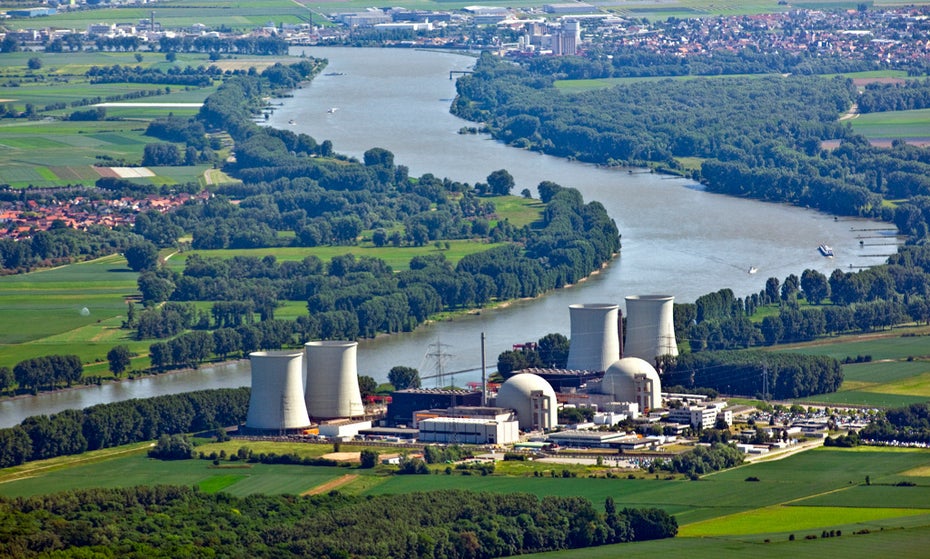
The world’s first commercially usable fusion power plant is to be built in Germany. Until the end of the 2030s. The federal government wants to support this with 2.4 billion euros by 2029. Compared to the sums mentioned for armaments or the expansion of the AI infrastructure, this is comparatively little money for clean, cheap energy in abundance. There’s nothing you can say about that, right?
But. You even have to. The idea may be interesting, but the Fusion Action Plan does not primarily serve the development of new energy technology, but rather the federal government’s ideological self-satisfaction. And that’s why it will most likely not lead to the goal – a fusion power plant – but will only fill the pockets of some companies.
What is behind the Federal Government’s Fusion Action Plan?
How do I get that? To answer this question, we need to look at the unstated premises of the action plan. Those who designed the plan firmly believe that:
- Companies can develop technology much faster and better than pure research institutions,
- The previous technology funding was not yet successful because it was not open enough to technology,
- and technical progress makes an ecological restructuring of the economy unnecessary.
Let’s take a closer look at the premises. The progress that fusion startups around the world are announcing certainly seems to speak for them. For example, some of them are working on coils made of high-temperature superconductors that can be used to generate extremely strong magnetic fields, which in turn enable compact reactors. Small prototypes can be built and improved more quickly than a large facility such as the international research reactor ITER.
However, the startups benefit from decades of government-funded basic research – and that will continue to be the case in the future. A company like Proxima Fusion, for example, would not have been possible without the experiences and results from the Wendelstein 7-X research reactor.
Fusion startups seem to be pushing ahead
And in the future, research startups will continue to rely on scientific results. In order to make rapid progress and keep their investors happy, they are putting off various technical and scientific problems that cannot be solved until they actually want to generate energy from nuclear fusion. This includes, for example, the question of what material the wall of the reactor vessel is made of, because it not only has to withstand extremely high temperatures, but also a massive bombardment of neutrons. To answer this question, companies will also rely on basic government research. The transfer of research results only ensures that the profits from this research can be privatized, while the costs remain with the general public.
So far we know the second premise mainly as an argument to defend combustion engines or to save gas heating systems: Everything has to happen in a technology-neutral manner. When it comes to fusion energy, the argument relates to so-called laser fusion. For decades, the idea of igniting nuclear fusion using extremely powerful lasers was considered academically interesting but practically irrelevant. The National Ignition Facility in the USA had been trying to do exactly that with the world’s most powerful laser since 2009 without success. In 2022, however, researchers in the USA achieved a first breakthrough in which they were able to measure more energy from nuclear fusion for the first time than had previously been irradiated with the laser.
Top Article
${content}
${custom_anzeige-badge}
${custom_tr-badge}
${section}
${title}
Focus on laser fusion
There is still a very, very long way to go before it becomes a power plant that actually delivers more energy than was previously put into it. And the development of ultra-short-duration, high-power lasers costs a lot of money. Nevertheless, two German companies want to work on it. Unlike in the USA, private investors in this country are much more risk-averse.
But there are alternative sources of finance: In contrast to magnetic fusion, this branch of fusion development has not yet been funded by the state in Germany – which is now changing. With the action plan, the Ministry of Research is donating expensive infrastructure to laser fusion companies. The fact that former Research Minister Bettina Stark-Watzinger now works for one of the funded companies – Focused Energy – is certainly just a coincidence. After all, states like Hesse, which invest in these companies in parallel to the direct subsidy, would later also benefit from income. However, since the technology is still at a very early stage, they must initially bear the risk.
The false hope of nuclear fusion
None of this would be so bad if there was an abundance of money. But taking the money from the special fund for infrastructure and climate neutrality can only be explained by a firm belief in the third premise: technical progress will save us from climate change. It’s just a shame that this belief collides with reality. Even well-meaning, technologically optimistic experts assume that significant electricity will only come from fusion power plants around 2050 – even if everything goes smoothly. This is far too late for an effective climate effect.
I say this even though I think the idea of using nuclear fusion as an energy source is extremely exciting, both scientifically and technically. And although I see that a lot of technology is being developed along the way that is not only useful in the energy sector: superconducting coils, for example, could open up completely new performance classes in medical imaging. But instead of directly promoting scientific progress and allowing technical expertise to govern rather than sacred competition, the federal government has once again considered how best to turn a technology into business. That doesn’t always lead to the goal.